


 2026-10-20

 BEST
BestFPC is one of the PCB manufacturers specializing in fine-line flex circuits, offering engineering review, material selection, prototyping, and production support for compact interconnects and multilayer designs. Each project is reviewed against your electrical requirements and assembly constraints.
Working with BestFPC brings fabrication requirements and application constraints into the same discussion. Your team can review critical trace dimensions, copper construction, coverlay openings, and reinforcement before releasing the design for manufacturing.
Send your drawings, target quantities, and critical requirements to sales@bestfpc.com for a manufacturing review and project-specific quotation.
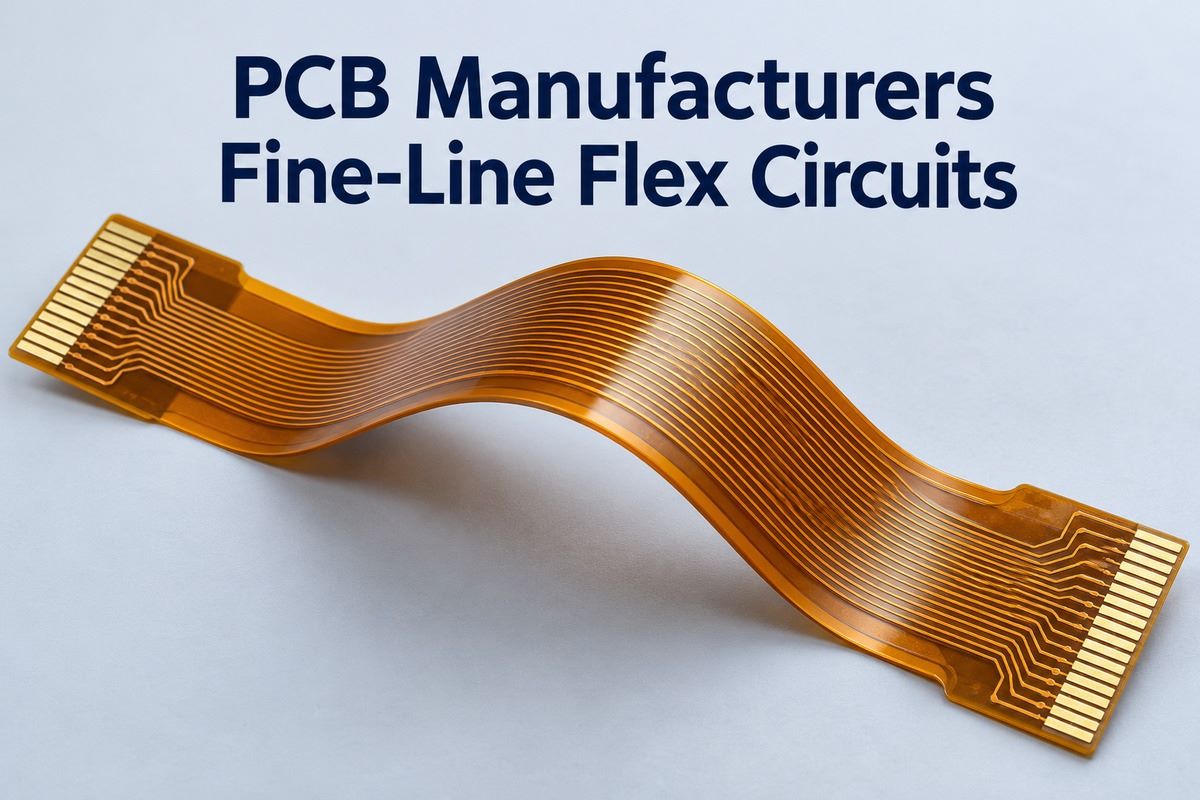
Top 10 Custom PCB Manufacturers for Fine-Line Flex Circuits in China
China offers both specialist flex manufacturers and broader PCB suppliers with flexible-circuit services. The following ten-company shortlist is arranged alphabetically, not by market share or an independently audited performance ranking. It includes companies based in China and international manufacturers with Chinese production operations.
| Manufacturer | Relevant offering | Procurement focus |
|---|---|---|
| A-TECH Circuits | Flex and rigid-flex fabrication | Copper-dependent trace and spacing limits |
| BestFPC | Custom FPC, engineering review, and prototyping | Matching fine features to the complete construction |
| Flex Plus | Fine-line flex and rigid-flex circuits | Compact interconnects and medical applications |
| JHYPCB | Flexible PCB prototypes and fabrication | Layer count, copper thickness, and fine-feature requirements |
| Kinwong | Fine-line FPC and roll-to-roll processing | Dense routing and assembly integration |
| Long-Shine Flex | High-density automotive FPC | Automotive sensing and battery interconnects |
| MFS Technology | HDI flex and rigid-flex manufacturing | Advanced interconnects and early engineering involvement |
| PCBgogo | Custom flexible PCB fabrication | Single-, double-, and multilayer requirements |
| PCBWay | Custom flex ordering and fabrication | Prototype specifications and material options |
| RAYPCB | Flexible PCB fabrication and assembly services | Copper-dependent geometry and inspection requirements |
These companies publish different capability ranges and serve different project needs. Compare quotations against the same drawing, copper thickness, inspection scope, and order quantity.
BestFPC offers a practical starting point when you need engineering feedback alongside custom fabrication. The sections below explain the construction options and support available for your project.
BestFPC Manufacturing Capabilities for Fine-Line Flex Circuits
BestFPC supports single-sided, double-sided, and multilayer flexible circuits. The following standard FPC parameters provide a starting point for design review and quotation.
| Capability | Standard reference | Applicable condition |
|---|---|---|
| Flex layer count | 1–4 layers | All-flex construction |
| Finished board thickness | 0.06–0.60 mm | Depends on the approved stackup |
| Inner-layer line / space | 3 / 3 mil | 18 μm finished copper; before etch compensation |
| Outer-layer line / space | 3.5 / 3.5 mil | 18 μm finished copper; before etch compensation |
| Base laminate | Adhesive and adhesiveless PI | Material grade and thickness selected by project |
| Local reinforcement | PI stiffeners | Position and thickness defined on the drawing |
Three mil equals 0.0762 mm; 3.5 mil equals 0.0889 mm. The line and spacing values above are design references before manufacturing compensation, rather than universal finished-conductor tolerances. Finer local features require a separate review.
The advantage for your project is a capability assessment tied to the actual construction. BestFPC reviews the relationship between copper thickness, routing density, and layer structure, helping you avoid a layout that depends on unrelated minimum specifications being achievable together.
Custom Etched Flex Circuits Built to Your Specifications
BestFPC provides custom etched flex circuits based on your fabrication data and mechanical requirements. Customization covers the features that determine whether the interconnect can be manufactured and installed successfully:
- Circuit pattern: Define signal routes, power conductors, contact pitch, and critical clearances in the released artwork.
- Outline and branches: Shape the circuit around mounting points, internal components, and the available routing path.
- Connection areas: Coordinate exposed pads, coverlay openings, connector-tail thickness, and local reinforcement.
- Surface finish: Select immersion gold, plated gold, OSP, or tin plating according to the contact and assembly requirements.
This approach gives you flexibility to develop the circuit around the product instead of adapting the product to a standard interconnect.
For medical fine line flex circuits, include the intended application, traceability needs, and required qualification documents with the inquiry. Those requirements belong in the agreed manufacturing scope from the start.
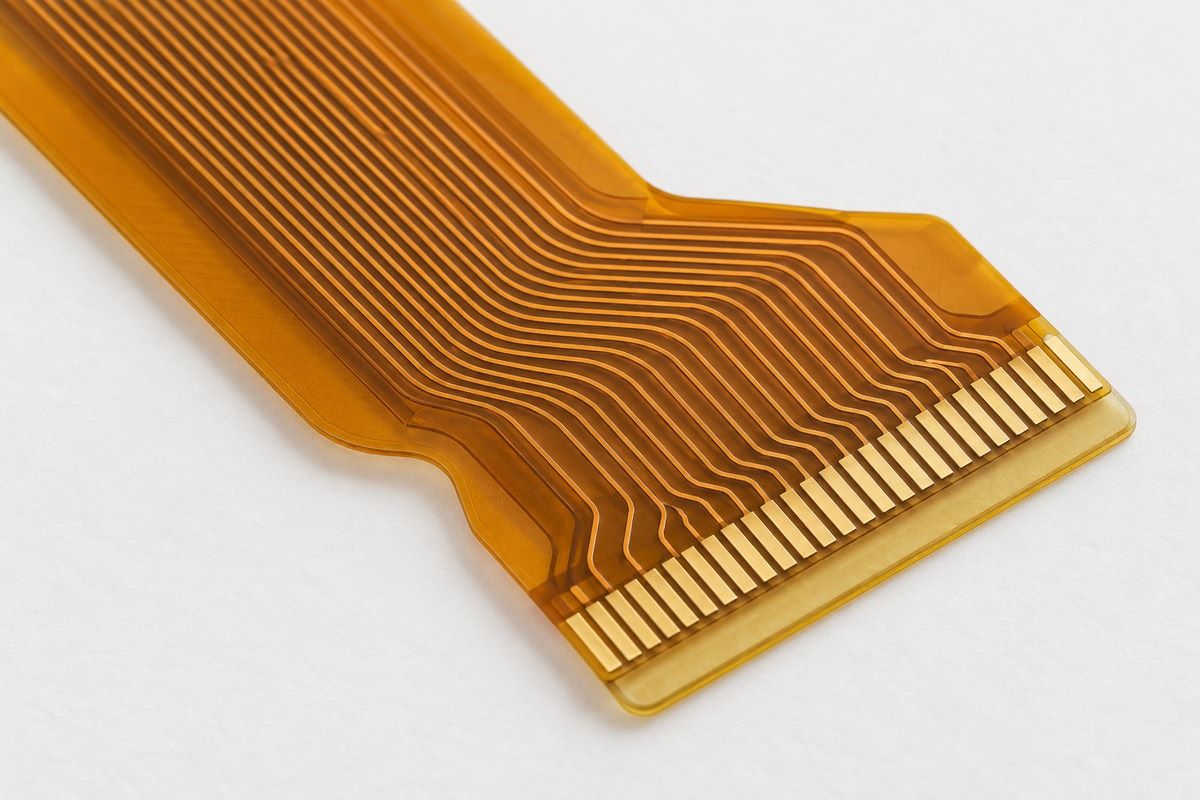
Material and Copper Options for Your Fine-Line Flex Design
BestFPC supports polyimide flex circuit fabrication using adhesive and adhesiveless laminate options. Material selection connects the routing requirements with the thickness, bend behavior, and procurement needs of your design.
- Laminate construction: Adhesive-based PI options include 0.33 oz, 0.5 oz, and 1 oz copper. Adhesiveless PI options also include 2 oz copper for suitable constructions. These are material options, not interchangeable fine-line capabilities.
- Copper thickness: Specify both the base foil and required finished copper. Increasing copper thickness can change the manufacturable trace width and spacing.
- Copper foil grade: Match the foil to the actual installation and movement requirements. For a closer comparison, see our guide to RA vs ED copper.
- Coverlay and reinforcement: Select the coverlay construction and PI stiffener details together with the contact layout and installed thickness.
BestFPC can review your preferred material specification and discuss available alternatives. Defining acceptable substitutions before purchasing helps keep later material decisions aligned with the approved design.
Flex PCB Design Review for Manufacturability
BestFPC provides a pre-production flex PCB design review to identify fabrication concerns while changes are still manageable. For fine-line designs, the review concentrates on features that can affect manufacturability, assembly, and acceptance.
- Trace width and spacing: Check the smallest features against the copper thickness and the layer on which they occur.
- Coverlay registration: Review opening sizes and nearby conductors so pads remain accessible without exposing unintended copper.
- Bend areas: Identify bend locations, intended movement, and the placement of vias, pads, and reinforcement boundaries.
- Connection thickness: Check connector-tail and stiffener dimensions against the mating interface.
- Critical tolerances: Identify which dimensions affect fit or electrical performance so they receive appropriate attention.
Early engineering review helps turn open questions into agreed fabrication requirements. If a feature needs adjustment, your team can evaluate the proposed change before committing to tooling and samples.
Flex PCB Prototyping and Production Support
BestFPC supports flex PCB prototyping, small batches, and production orders. A prototype build provides physical circuits for your team to assess before a larger manufacturing commitment.
The development path can be organized around three stages:
- Prototype fabrication: Build to the reviewed drawing and stackup for initial assembly, connection, and fit evaluation.
- Design validation: Use the samples to check the installed circuit and application-specific electrical or movement requirements. Feed any changes back into the fabrication package.
- Production release: Confirm the approved revision, materials, order quantities, and inspection requirements for repeat builds.
Keeping these decisions connected helps reduce ambiguity between the sample you approved and the circuit you reorder.
Prototype timing is quoted against the actual construction, material availability, and required processes. Share your target delivery date at the inquiry stage so the schedule can be evaluated alongside the design.
Inspection and Electrical Testing for Fine-Line Flex Circuits
BestFPC combines material checks, in-process inspection, and electrical testing within the flexible PCB manufacturing process. Each check addresses a different part of product conformity.
- Material verification: Check incoming materials against the released construction requirements.
- Circuit inspection: Use optical inspection, including AOI at applicable process stages, to identify circuit-pattern defects.
- Dimensional and visual checks: Inspect relevant outline, contact, coverlay, and reinforcement features against the drawing.
- Electrical testing: Check for opens and shorts. Flying-probe testing supports sample and small-batch FPC builds.
For purchasing teams, the benefit is an inspection scope that can be agreed before production. Identify any required reports, impedance verification, or additional qualification tests in the RFQ so their availability and acceptance criteria can be confirmed.
Bare-board electrical testing verifies connectivity and isolation; application testing is still needed to establish performance in the finished device.
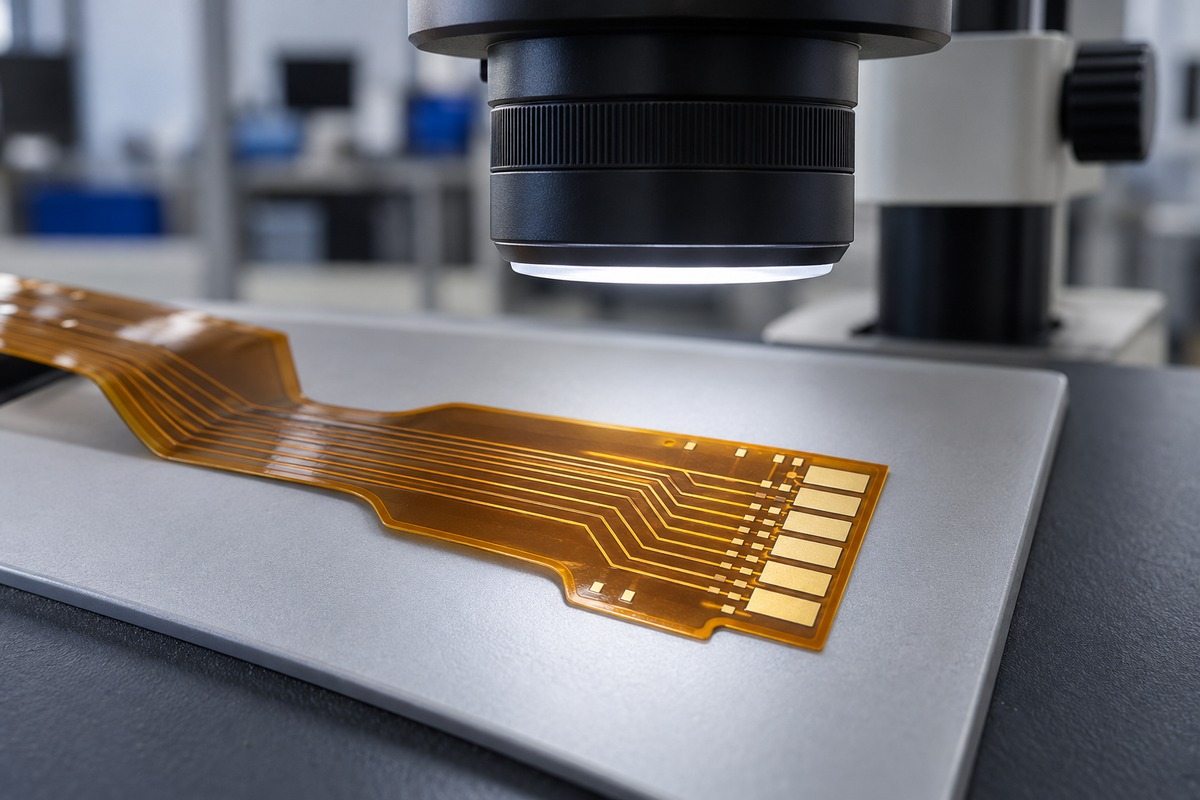
Request a Flex PCB Quote for Your Fine-Line Project
BestFPC can prepare a flex PCB quote from your design files and commercial requirements. A clear inquiry helps engineering and purchasing evaluate the same manufacturing scope.
Include these five groups of information:
- Fabrication files: Gerber data, drill files, outline drawing, and revision number.
- Construction: Layer count, target thickness, laminate, copper, coverlay, surface finish, and stiffeners.
- Critical requirements: Minimum trace / space, connector details, impedance targets, and bend conditions.
- Order plan: Prototype quantity, expected production quantities, and required delivery date.
- Quality scope: Acceptance criteria, inspection reports, traceability, and any assembly requirements.
Flexible PCB cost depends on the construction as a whole. Fine features, copper thickness, layer count, material selection, panel utilization, tooling, and testing can all affect the quotation. Marking the truly critical requirements gives BestFPC a clearer basis for discussing practical cost options.
If your files are still being developed, send the available drawings and describe the unresolved requirements. The initial discussion can establish what is needed for a meaningful quotation.
FAQs about PCB Manufacturers Fine-Line Flex Circuits
Can BestFPC review a design before the final Gerber files are ready?
Yes. Preliminary drawings, the proposed stackup, and critical requirements can support an initial feasibility discussion. Final fabrication approval requires a complete, consistent manufacturing package.
Can I specify the same minimum line width on every layer?
That needs review. Inner and outer layers can have different process limits, and copper thickness changes the available geometry. Identify the critical features by layer rather than applying a single minimum across the whole circuit.
Can the material change after prototype approval?
A proposed substitution should be reviewed before use. Changes to the laminate, copper foil, or adhesive can affect fabrication and product behavior, so the replacement may require additional validation.
Does passing an electrical test prove repeated-bend reliability?
No. Open/short testing checks the circuit at the time of testing. Repeated-bend performance needs evaluation using the intended stackup, mounting arrangement, bend radius, motion, and acceptance criteria.
Can BestFPC quote both prototypes and production quantities?
Yes. Provide the initial quantity and expected production volumes together. This allows the quotation discussion to address development needs, material purchasing, and the later production plan.
Ready to discuss your fine-line flex circuit? Email your files and project requirements to sales@bestfpc.com. BestFPC can help review the construction, clarify manufacturing options, and prepare a quotation for your next build.


.png)
.png)
.png)
.png)

.png)