


 2026-10-20

 BEST
Finding reliable flex PCB suppliers in Korea starts with comparing manufacturing capabilities, quality standards, lead times, and order requirements. South Korea has established flexible PCB manufacturers serving consumer electronics, automotive systems, displays, and other advanced applications. However, not every supplier can accommodate your board specifications, order quantity, or delivery schedule.
Choosing the right supplier involves checking actual production capabilities, comparing quotations, and confirming whether the manufacturer can support your project from prototyping to volume production. Overseas manufacturers such as BestFPC also offer sourcing options for Korean buyers requiring custom flexible PCB fabrication.
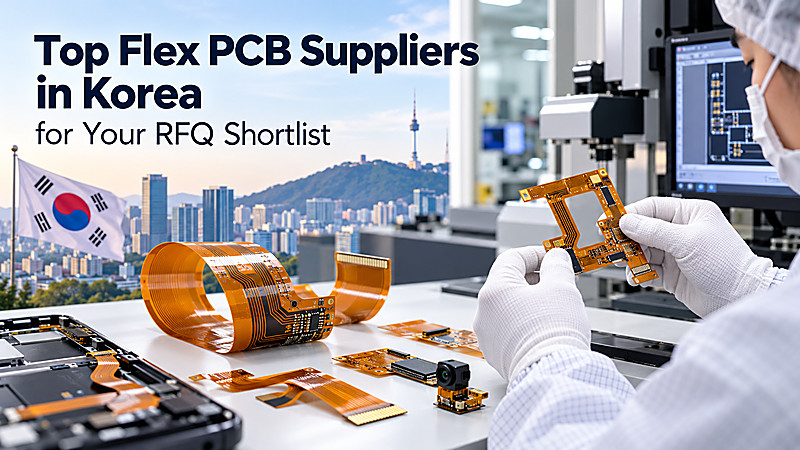
Who Are the Top Flex PCB Suppliers in Korea?
BH, Interflex, SI FLEX, Young Poong Electronics, and Newflex are five established flex PCB suppliers in Korea. Their manufacturing technologies cover fine-pattern FPCB, multilayer flexible circuits, rigid-flex constructions, and specialized electronic interconnections.
|
Supplier |
Manufacturing Capabilities and Technologies |
Applications |
Lead Time / MOQ |
|---|---|---|---|
|
BH |
Fine-pattern FPCB, laser vias, high-density interconnections; 45/45 μm line/space for specified applications |
High-density displays, mobile and automotive electronics |
Confirm by RFQ |
|
Interflex |
Flexible and rigid-flex PCB, fine-pattern SAP technology development, EMI shielding |
Displays, cameras, sensors |
Confirm by RFQ |
|
SI FLEX |
Double-sided and rigid-flex PCB; 50/50 μm line/space for specified products; 6-/8-layer FPCB technology |
Displays, camera modules, mobile electronics |
Confirm by RFQ |
|
Young Poong Electronics |
Single-sided, double-sided, multilayer and rigid-flex PCB |
Wearables, camera modules, display electronics |
Confirm by RFQ |
|
Newflex |
Fine-pattern plating development, stretchable FPC, cavity camera rigid-flex and long-flex technologies |
Cameras, wearables, automotive electronics |
Confirm by RFQ |
Fine-pattern capabilities and development technologies may not be available for every production stackup. Confirm the qualified process limits, available capacity, prototype lead time, and MOQ for your specific design before placing an order.
What Flex PCB Manufacturing Capabilities Should You Compare?
Compare layer count, trace dimensions, material construction, copper thickness, bending requirements, and special fabrication processes. These specifications determine whether a flex PCB manufacturer can produce your circuit to its required electrical and mechanical standards.
| Capability | What to Check | Why It Matters |
|---|---|---|
| Layer Count | Single-sided, double-sided, multilayer, rigid-flex | Determines routing capacity and construction |
| Line Width / Spacing | Minimum trace width and spacing | Affects fine-pitch routing feasibility |
| Base Material | Polyimide type, adhesive or adhesiveless construction | Influences flexibility and thermal performance |
| Copper Type | Rolled annealed (RA) or electrodeposited (ED) | Influences bending fatigue performance |
| Copper Thickness | Base copper and finished conductor thickness | Affects current capacity and mechanical behavior |
| Finished Thickness | Overall thickness and tolerance | Determines flexibility and installation clearance |
| Bend Requirements | Static or dynamic bending, bend radius, cycle life | Helps assess conductor fatigue risk |
| Stiffeners | PI, FR4, stainless steel or approved alternatives | Reinforces connectors and component areas |
| Surface Finish | ENIG, plated gold, OSP or specified alternatives | Affects solderability and contact performance |
| Special Processes | Fine-pitch processing, controlled impedance, laser drilling | Supports specialized electrical and mechanical requirements |
Minimum line width and spacing depend on copper thickness and stackup. For circuits exposed to repeated bending, confirm copper construction, bend radius, and fatigue requirements under the intended operating conditions.
What Quality Certifications and Inspection Reports Should You Request?
Request current quality management certificates, electrical test records, material documentation, and relevant inspection reports before approving a flex PCB supplier. These documents help confirm whether the manufacturer can meet your project's specified quality requirements.
- ISO 9001: Check the certificate's validity, manufacturing location, and quality management scope.
- ISO 13485: Request certification when required for medical-device manufacturing or supplier qualification.
- IATF 16949: For automotive applications, verify the relevant manufacturing facility and its certified scope.
- IPC-6013: Specify the applicable edition, performance class, and acceptance criteria for flexible printed boards. IPC-6013 is a product performance specification, not a company certification.
- Electrical Testing: Request continuity and isolation test records based on the agreed testing requirements.
- Material Traceability: Confirm polyimide, copper foil, adhesive, and coverlay identification, including relevant lot records.
- Dimensional Inspection: Check finished thickness, outline dimensions, hole positions, contact geometry, and stiffener alignment.
- Reliability Testing: Request bend, peel-strength, thermal, or other application-specific test results when required.
For automotive, medical, and other high-reliability projects, agree on material substitutions, inspection deliverables, and engineering change approval procedures before production.
How Should You Compare Flex PCB Quotes and Lead Time?
Compare flex PCB quotations using identical fabrication specifications, order quantities, testing requirements, and delivery terms. Differences in materials, tooling charges, or inspection scope can make quotations difficult to compare accurately.
| Comparison Item | What to Confirm |
|---|---|
| Unit Price | Pricing for the same board revision and quantity |
| MOQ | Minimum acceptable prototype and production quantities |
| Tooling Charges | Whether tooling and setup charges are included |
| Material Specification | Approved polyimide, copper construction, and adhesives |
| Surface Finish | Specified finish and contact requirements |
| Prototype Lead Time | Manufacturing time after engineering approval |
| Production Lead Time | Schedule for the requested production quantity |
| Inspection Scope | Included electrical, dimensional, and reliability tests |
| Packaging | Individual or panelized delivery and protective packaging |
| Shipping Terms | Freight, Incoterms, customs responsibilities, and Korean delivery location |
Confirm whether the quoted lead time includes material procurement, engineering approval, and international shipping to Korea. These stages may be excluded from the manufacturing schedule.
How Do You Choose a Flex PCB Manufacturer for Your Project?
Choose a flex PCB manufacturer that meets your technical specifications, accepts your required order volume, and provides clear manufacturing and delivery commitments. Narrowing your RFQ shortlist to technically qualified suppliers makes the final comparison more reliable.
Step 1: Eliminate Suppliers That Cannot Meet Your Requirements
Remove manufacturers that cannot confirm the required stackup, bending conditions, special processes, or order quantity.
Step 2: Request Comparable Quotations
Send identical fabrication documents to the remaining candidates. Ask each supplier to identify specification deviations, material substitutions, and excluded services.
Step 3: Resolve Technical and Commercial Questions
Clarify outstanding manufacturing requirements, material availability, production scheduling, and contractual conditions before comparing final offers.
Step 4: Shortlist Two or Three Qualified Manufacturers
Select candidates for engineering clarification, prototype qualification, or supplier approval. For new products, verify dimensional accuracy, assembly compatibility, electrical performance, and application-specific bending behavior before volume production.
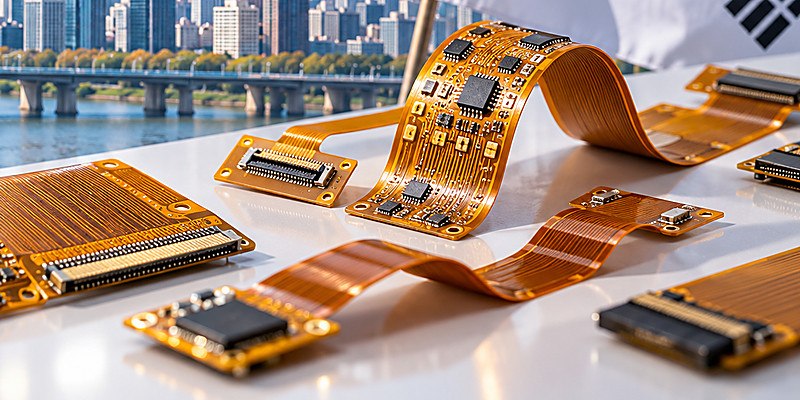
Why Consider BestFPC as Your Overseas Flex PCB Manufacturing Partner?
BestFPC is a China-based flexible PCB manufacturer providing custom fabrication, free DFM reviews, and prototype-to-production support. Korean buyers can work directly with its manufacturing team for custom flex PCB requirements, engineering clarification, and international delivery arrangements.
- Custom Flexible PCB Manufacturing: Single-sided, double-sided, multilayer, and custom-shaped flexible circuits manufactured to approved specifications.
- Free DFM Review: Engineering feedback on stackups, bending areas, coverlay openings, stiffeners, and manufacturing tolerances before production.
- No Minimum Order Quantity: Support for individual prototypes, small batches, and volume orders, subject to project feasibility.
- Flexible Material Options: Adhesive and adhesiveless polyimide constructions, selected copper thicknesses, and multiple surface finishes.
- Quality Control: Manufacturing process inspections and electrical testing according to approved fabrication requirements.
- Quality Certifications: ISO 9001, ISO 13485, IATF 16949, and AS9100D quality management documentation. Current certificates and applicable manufacturing scopes can be reviewed during supplier qualification.
- International Order Support: Direct communication for technical clarification, quotation review, manufacturing schedules, and shipping arrangements.
BestFPC operates as a Chinese manufacturing supplier rather than a Korean domestic factory. Korean customers can request custom flexible PCB manufacturing and shipment to their required delivery location.
What Information Should You Include in Your Flex PCB RFQ?
A complete flex PCB RFQ should include fabrication files, material specifications, target quantities, inspection requirements, and delivery information. Accurate specifications help manufacturers evaluate feasibility and prepare comparable quotations.
- Gerber Files: Copper layers, drill data, coverlay openings, board outline, and approved file revision.
- Fabrication Drawing: Finished dimensions, board thickness, tolerances, and special manufacturing notes.
- Layer Stackup: Layer count, polyimide thickness, copper construction, adhesive requirements, and finished thickness.
- Bending Requirements: Bend location, radius, static or dynamic use, and required cycle life.
- Special Features: Stiffeners, gold fingers, surface finishes, controlled impedance, and special cutouts.
- Order Quantities: Prototype quantity, initial production volume, and estimated repeat demand.
- Quality Requirements: Applicable IPC criteria, inspection records, traceability requirements, and specified reliability tests.
- Delivery Requirements: Korean delivery address, required delivery date, and preferred shipping terms.
Identify any materials, dimensions, or processes that cannot be changed without written approval, particularly when transferring an existing flexible PCB design from another manufacturer.
FAQs About Flex PCB Suppliers in Korea
Q1: What Is the Difference Between FPCB and FPCA When Requesting a Quote?
A1: FPCB refers to a bare flexible printed circuit board, while FPCA refers to a flexible printed circuit assembly with mounted components. Specify whether you require PCB fabrication, component assembly, or both.
Q2: Can I Request an NDA Before Sending My Flex PCB Design Files?
A2: Yes. You can request a non-disclosure agreement before submitting confidential Gerber files, fabrication drawings, or product specifications. Confirm the agreement before sharing sensitive documents.
Q3: Can I Arrange Partial Shipments for a Large Flex PCB Order?
A3: Yes, if the supplier agrees to a split-delivery schedule. Confirm shipment quantities, delivery dates, additional freight charges, and inventory arrangements before production.
Q4: How Should Thin Flexible PCBs Be Packaged for International Shipping?
A4: Thin flexible PCBs should be protected against bending, scratching, and contamination. Protective trays, rigid supports, suitable films, and moisture-resistant packaging where required can reduce transportation damage.
Q5: Can a Flex PCB Supplier Ship Directly to My EMS Partner in Korea?
A5: Yes, depending on the supplier's shipping arrangements. Provide the EMS facility's delivery details and confirm the consignee, customs responsibilities, and required shipment documentation.
Q6: Can I Arrange a Third-Party Inspection Before Shipment?
A6: Some manufacturers allow independent pre-shipment inspections. Confirm inspection access, sampling methods, acceptance criteria, and scheduling before placing the order.
Q7: Who Owns the Tooling and Manufacturing Files After Production?
A7: Ownership depends on the purchase agreement. Clarify tooling ownership, file retention, transfer rights, and reuse restrictions before approving tooling charges or releasing production files.
Q8: What Should I Do If Delivered Flex PCBs Do Not Match the Approved Drawings?
A8: Segregate the affected boards and record the discrepancies with photographs, measurements, and lot information. Contact the manufacturer to arrange an investigation and corrective action under the agreed quality terms.
Conclusion
Choosing among flex PCB suppliers in Korea requires comparing actual manufacturing capabilities, quality documentation, order compatibility, and delivery commitments. A qualified RFQ shortlist helps you find manufacturers that can meet your project's technical and production requirements.
BestFPC provides custom flexible PCB manufacturing, free DFM reviews, and prototype-to-production support for Korean buyers. Send your Gerber files, specifications, and required quantities to sales@bestfpc.com for a manufacturing review and custom quotation.


.png)
.png)
.png)
.png)

.png)