


 2026-11-02

 BEST
Looking for reliable flexible PCB manufacturers in the Netherlands? AQC, KOVO Electronics, NCAB Group Benelux, Fineline QPI, PCB Connect, Bellmann, Value Procurement Centre, and PLTc are eight companies worth considering.
Some focus on advanced multilayer flex circuits, while others provide prototype services, PCB design support, or assembly coordination. Knowing these differences can help you narrow your shortlist before requesting quotations. Below, we compare their technical strengths, lead time, manufacturing costs, and quality requirements.

Who Are the Top 8 Flexible PCB Manufacturers and Suppliers in the Netherlands?
AQC, KOVO Electronics, NCAB Group Benelux, Fineline QPI, PCB Connect, Bellmann, Value Procurement Centre, and PLTc offer flexible PCB products or related engineering services to the Dutch market. Their strengths cover conventional FPC fabrication, complex Rigid-Flex PCB constructions, high-density circuits, and product development support.
|
Company |
Key Flexible PCB Capabilities |
Suitable Projects |
|---|---|---|
|
AQC B.V. |
Single-sided and multilayer Flex PCB, Rigid-Flex PCB, HDI technology, DFM support, and an inspection laboratory |
Complex flex circuits requiring engineering review and additional quality inspection |
|
KOVO Electronics |
Single-sided, double-sided and multilayer Flex PCB, Rigid-Flex PCB, coverlays, stiffeners, and prototype-to-series supply |
Conventional FPC prototypes, connector circuits, and repeat production orders |
|
NCAB Group Benelux |
Multilayer Flex PCB, Rigid-Flex PCB, 0.075/0.075 mm minimum line width/spacing, and documented stackup specifications |
Multilayer flexible circuits and projects requiring detailed technical specifications |
|
Fineline QPI |
Flex PCB, Rigid-Flex PCB, advanced multilayer constructions, HDI, and technical engineering support |
Complex Rigid-Flex structures and high-density electronic interconnections |
|
PCB Connect |
Multilayer Flex PCB, fine-line fabrication, EMI shielding, and laser-drilled holes |
Fine-pitch flexible circuits and space-constrained electronic products |
|
Bellmann |
Flex PCB materials, DFM support, technical inspection, and PCB supply coordination |
Custom PCB projects requiring engineering assistance and repeat-order support |
|
Value Procurement Centre |
Flex PCB, Semi-Flex PCB, Rigid-Flex PCB, HDI, and PCBA sourcing |
Projects combining different PCB technologies, fabrication, and assembly |
|
PLTc B.V. |
Flex PCB, Rigid-Flex PCB, PCB layout, redesign, component sourcing, and assembly support |
New electronic product development, PCB redesign, and layout-intensive projects |
What Flexible PCB Manufacturing Capabilities Should You Compare?
Layer construction, conductor geometry, material thickness, bending performance, and connector compatibility determine whether a supplier can manufacture your flexible PCB reliably. The specifications need to work together within the proposed stackup.
-
Layer count and stackup: Single-sided and double-sided FPCs suit simpler connections, while multilayer Flex and Rigid-Flex PCBs accommodate higher routing density. NCAB lists 1–8 flexible layers within its stated UL scope and up to 12 layers without that coverage.
-
Line width and spacing: Fine-pitch connections require accurate etching and registration. PCB Connect lists minimum line/space values of 25/25 μm for certain single-sided constructions and 40/40 μm for double-sided circuits. These limits should be checked against the required copper thickness.
-
Polyimide and copper materials: Adhesive-based and adhesiveless polyimide, rolled-annealed or electrodeposited copper, and dielectric thickness affect flexibility, finished thickness, and thermal performance.
-
Bending performance: Circuits folded during installation have different requirements from those exposed to repeated movement. Copper construction, bend radius, conductor placement, and layer arrangement influence fatigue resistance.
-
Stiffeners and connector fit: FR-4 or polyimide stiffeners reinforce connector contacts and component areas. Their thickness and placement must match the connector's mechanical specifications.
-
PCB assembly: For populated flexible circuits, check whether the supplier supports SMT assembly, panelization, carrier fixtures, component inspection, and electrical testing.
A wearable sensor with moving parts may need thin polyimide and a copper construction selected for repeated bending. A stationary FPC inside an industrial controller may instead prioritize connector thickness, dimensional stability, and assembly accuracy.
Netherlands-Based vs. Overseas Flexible PCB Manufacturers: Which Is Better?
Netherlands-based suppliers can offer convenient local engineering communication and purchasing support, while overseas manufacturers may provide competitive manufacturing costs, specialized fabrication, and direct factory assistance. The differences become clearer when you compare the requirements that affect your project.
| Comparison Factor | Netherlands-Based Suppliers | Overseas Flexible PCB Manufacturers |
|---|---|---|
| Prototype lead time | Local coordination may be convenient, although fabrication may take place overseas | Quick-turn manufacturing may be available; international delivery time must be included |
| Mass production lead time | Depends on factory capacity, material availability, and order quantity | Depends on production scheduling, materials, testing, and shipping |
| Manufacturing cost | May include local sourcing, engineering, and coordination costs | Direct factory quotations may be competitive for repeat or higher-volume orders |
| Technical capabilities | Depends on the supplier and its manufacturing resources | Specialized factories may offer fine-line routing, HDI, multilayer FPC, and Rigid-Flex PCB fabrication |
| Engineering support | Local technical discussions and design consultation | Direct manufacturing engineering, stackup review, and DFM feedback |
| Quality control | Inspection and corrective actions may be coordinated through manufacturing partners | Factory-level process control, inspection, and traceability may be handled directly |
| PCB assembly | Available through selected suppliers and assembly partners | Some manufacturers combine fabrication, SMT assembly, sourcing, and testing |
| Delivery costs | Local dispatch may simplify logistics; actual product origin determines import requirements | International freight, customs clearance, and applicable import charges must be included |
For urgent prototypes, the confirmed arrival date matters more than the fabrication schedule alone. For complex or repeat-production projects, verified manufacturing capability, quality consistency, and total delivered cost should carry more weight.
What Affects Flexible PCB Manufacturing Costs in the Netherlands?
Layer count, materials, circuit complexity, panel utilization, order quantity, and testing requirements are the main factors affecting flexible PCB manufacturing costs. Several design adjustments can reduce expenditure without compromising performance.
-
Layer count and stackup: Additional copper layers require more processing, alignment, and lamination. If routing and electrical requirements allow, a two-layer FPC may be more economical than a four-layer construction. Removing necessary layers, however, can introduce routing or signal-integrity problems.
-
Polyimide and copper selection: Specialized copper foil, nonstandard film thickness, and certain adhesiveless constructions can increase material costs. Choosing a qualified standard material may reduce purchasing costs and improve availability.
-
Line width and spacing: Very fine conductors require tighter process control and can reduce manufacturing yield. Keep extremely small traces within the areas that need them instead of applying the same geometry throughout the board.
-
PCB outline and panel utilization: Irregular outlines, excessive cutouts, and wide spacing between circuits increase material waste. Adjusting the panel layout can improve utilization and reduce unit costs during repeat production.
-
Stiffeners and surface finishes: Multiple reinforcement areas, complicated coverlay openings, and specialized finishes add processing steps. Use reinforcement where mechanical support is needed and select surface finishes according to the connector or soldering requirements.
-
Order quantity and tooling: Prototype orders distribute setup costs across fewer boards. Requesting quotations for several quantities, such as 20, 100, and 500 pieces, can reveal a more economical production quantity without creating unnecessary inventory.
-
Assembly and testing: SMT fixtures, component sourcing, electrical testing, X-ray inspection, and specialized reliability tests affect the final PCBA price. Define the required inspection scope early to avoid unexpected charges.
For some products, replacing separate rigid boards, connectors, and flexible cables with a Rigid-Flex PCB can reduce assembly operations. Although fabrication may cost more, the complete assembled product can be less expensive.
The largest savings usually come from eliminating unnecessary design complexity, improving material utilization, and reducing assembly work—not from cutting essential materials or inspection requirements.
What Is the Lead Time for Flexible PCB Orders in the Netherlands?
Flexible PCB lead time in the Netherlands depends on layer count, order quantity, material availability, and manufacturing complexity. KOVO Electronics provides specific turnaround figures for prototypes and production orders, while other Dutch-market suppliers generally confirm schedules according to the submitted design.
Prototype lead time: KOVO Electronics offers single-sided and double-sided FPC prototypes starting from 8 working days, while multilayer prototypes start from 10 working days. These schedules apply to prototype quantities of up to 10 pieces, giving buyers an initial planning range of 8–10 working days or longer, depending on construction.
Small-batch production lead time: KOVO offers small-series flexible PCB production starting from 12 working days for quantities up to approximately 250 pieces. Material selection, fabrication requirements, and design approval can affect the final schedule.
Medium- and large-volume production lead time: KOVO offers production starting from 15 working days for medium-series orders, including quantities around 10,000 pieces or more. Repeat orders may be arranged through scheduled releases, depending on the agreed purchasing and production conditions.
Other Netherlands-based suppliers: AQC, NCAB Group Benelux, Fineline QPI, PCB Connect, Bellmann, Value Procurement Centre, and PLTc provide flexible PCB products or related services. Their specific turnaround times need to be confirmed for the required construction, quantity, and delivery destination.
For urgent projects, request the factory completion date and expected arrival date at your Netherlands facility. Special materials, multilayer lamination, additional inspection, and PCB assembly may extend the overall lead time.
Which Quality Standards Matter for Flexible PCB Manufacturers in the Netherlands?
Flexible PCB manufacturers in the Netherlands should follow recognized IPC standards and provide appropriate quality certifications. ISO 9001 is a common starting point, while medical, automotive, and aerospace projects may require additional certifications.
-
ISO 9001: Quality management covering manufacturing processes, inspection, and traceability.
-
IPC-6013F: Qualification and performance requirements for Flex and Rigid-Flex PCBs.
-
IPC-A-600: Visual acceptability standards for bare PCBs.
-
IPC-A-610: Assembly quality requirements for SMT and through-hole components.
-
ISO 13485: Quality management certification relevant to medical electronics.
-
IATF 16949: Automotive quality management certification for applicable suppliers.
-
AS9100D: Aerospace quality management certification.
-
RoHS and REACH: Applicable EU substance restrictions and chemical compliance requirements for products supplied to the Netherlands.
Before selecting a supplier, verify its certificate validity, manufacturing site, and applicable IPC acceptance requirements. For high-reliability projects, request relevant electrical test results, material traceability, and inspection records.
How Do You Choose the Right Flexible PCB Manufacturer in the Netherlands?
Choose a flexible PCB manufacturer based on verified technical capabilities, bending reliability, assembly compatibility, quality control, lead time, and total delivered cost. These checks help eliminate unsuitable suppliers before you commit to an order.
-
Verify actual manufacturing capabilities: Confirm that the supplier can meet your layer count, finished thickness, line width/spacing, copper thickness, and hole specifications. Check these parameters against the complete stackup. A minimum trace width of 0.05 mm, for example, may not be available with every copper thickness or multilayer construction.
-
Check experience with your FPC design: For dynamic-flex applications, provide the bend radius, movement frequency, and expected cycle count. A suitable manufacturer should be able to discuss copper selection, coverlay construction, and routing around the bend area. For Rigid-Flex PCB designs, ask about lamination control, rigid-to-flex transitions, and layer registration.
-
Confirm connector and assembly compatibility: For ZIF connectors, verify the finished contact thickness, stiffener dimensions, and critical tolerances. For assembled FPCs, confirm component support, SMT fixtures, soldering processes, and inspection. A board that passes electrical testing but does not fit its connector is not ready for production.
-
Request manufacturing quality evidence: Check relevant ISO certificates and IPC acceptance requirements. For multilayer or high-reliability FPCs, request electrical testing, material traceability, dimensional inspection, and microsection reports where applicable. Dynamic-flex projects should include agreed bending-test conditions.
-
Check prototype and volume production capability: A supplier that handles ten prototypes may not be equally suited to recurring orders of several thousand pieces. Confirm whether the required materials, stackup, and critical manufacturing processes can be maintained when production quantities increase.
-
Compare realistic delivery schedules: Ask for separate prototype and production schedules, including material availability, inspection, and shipment to the Netherlands. Prioritize confirmed arrival dates over advertised minimum fabrication times.
-
Evaluate total delivered cost: Compare tooling, material requirements, testing, assembly, shipping, and applicable import charges using identical specifications and quantities. A lower unit price offers little benefit if additional processes or unexpected revisions increase the total cost.
-
Use the DFM response to make the final decision: Submit the same manufacturing package to two or three suitable suppliers. A competent manufacturer should identify unsupported features, confirm the proposed construction, explain necessary modifications, and provide a complete quotation. Remove candidates that cannot meet essential requirements or explain how they will control critical manufacturing risks.
For complex or high-reliability designs, give technical compliance and quality evidence priority over price. For urgent prototypes, prioritize confirmed delivery. For repeat production, focus on consistent manufacturing, inspection records, and dependable supply.
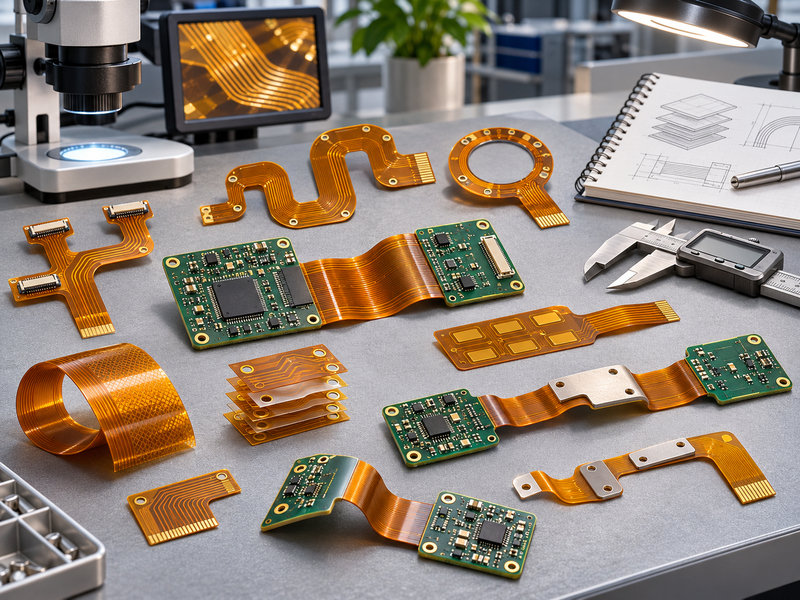
Why Consider BestFPC for Flexible PCB Supply to the Netherlands?
BestFPC helps Netherlands-based customers manufacture custom flexible PCBs, resolve design issues before production, and coordinate fabrication and assembly through one supplier. Projects can begin with a single prototype and move into larger production quantities once the design is approved.
The advantages for Dutch customers include:
-
Avoid costly design revisions: Free DFM review helps identify stackup conflicts, unsuitable bend-area layouts, coverlay opening issues, stiffener placement problems, and critical tolerance risks before fabrication begins.
-
Start with one prototype: No MOQ means you can validate a new flexible circuit without committing to a large batch. Prototype and production quotations can be prepared around your actual order quantities.
-
Manufacture customized FPCs: Single-sided, double-sided, multilayer flexible circuits, and Rigid-Flex PCB constructions are available for compact, high-density, and mechanically demanding designs. Material and process feasibility are reviewed for each construction.
-
Reduce unnecessary manufacturing costs: Engineering review can identify opportunities to simplify materials, conductor geometry, stiffeners, and panel layouts while preserving electrical and mechanical requirements.
-
Simplify PCB assembly: FPC fabrication, SMT assembly, component sourcing, and testing can be coordinated through one supplier. This reduces the need to manage separate PCB and assembly providers.
-
Support quality-critical applications: BestFPC lists ISO 9001, ISO 13485, IATF 16949, and AS9100D among its quality credentials. Relevant current certificates and manufacturing scopes can be provided for supplier qualification.
-
Support projects from prototype to production: Engineering assistance, small-batch manufacturing, production orders, and shipment coordination help customers plan manufacturing around approved design requirements and delivery dates.
For example, a compact medical sensor may need a flexible connection with reinforced contact areas and surface-mounted components. Reviewing the circuit construction, stiffener dimensions, and assembly process together can prevent connector fit problems and unnecessary design revisions.
BestFPC manufactures in China and supports overseas customers with custom fabrication, engineering review, and assembly services. For Dutch companies developing specialized FPC products, this provides a direct manufacturing option with engineering assistance before production.
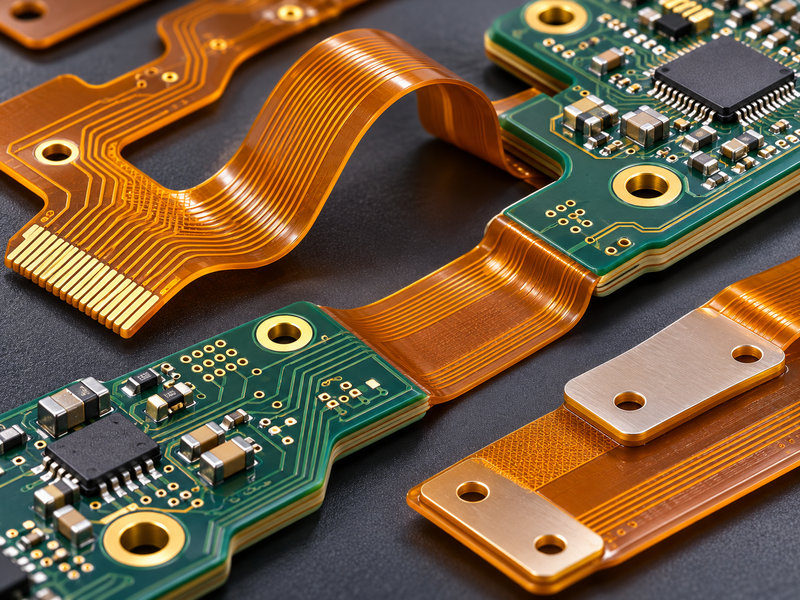
FAQs About Flexible PCB Suppliers in the Netherlands
Q1: Can I order a flexible PCB if I only have a physical sample?
A1: Some PCB engineering providers offer reverse-engineering services using physical samples. The process may include circuit tracing, dimensional measurements, material identification, and preparation of new manufacturing files. Hidden layers and the original stackup may require additional investigation.
Q2: How should rigid and flexible regions be identified in Rigid-Flex PCB files?
A2: Provide a mechanical drawing showing rigid sections, flexible sections, transition boundaries, bend lines, and critical dimensions. The stackup should identify the materials and layers in each region. A 3D model can help clarify how the board fits inside the final enclosure.
Q3: Can vias or solder joints be placed in a repeated bending area?
A3: They should generally be kept outside areas subjected to repeated bending. Plated holes and solder joints create local stiffness changes that can concentrate mechanical stress and lead to cracking. Unavoidable exceptions require engineering review and appropriate reliability testing.
Q4: Can an FR-4 stiffener be used with through-hole components on a flexible PCB?
A4: Yes, provided the construction allows sufficient space for component leads and solder joints. The stiffener may need openings for through-hole connections, and its thickness must be compatible with the component arrangement and assembly process.
Q5: Is ENIG suitable for flexible contacts that are repeatedly inserted?
A5: ENIG is widely used for solderable contacts but may not provide adequate wear resistance for repeated mechanical insertion. Appropriately specified electrolytic hard gold may be more suitable, depending on the connector design and expected insertion cycles.
Q6: What happens if the flexible PCB material changes after prototype approval?
A6: Changes in polyimide thickness, adhesive construction, or copper foil can affect finished thickness, bending performance, impedance, and thermal behavior. The revised material should be reviewed against the approved design and any affected requirements revalidated before production.
Q7: Can I supply my own components for flexible PCB assembly?
A7: Yes. Manufacturers offering consignment assembly can use customer-supplied components. Provide the BOM, component quantities, packaging details, placement files, and assembly instructions. Component availability and soldering compatibility should be confirmed before scheduling production.
Q8: Do flexible PCBs require special storage before SMT assembly?
A8: Flexible PCBs should be protected from moisture, contamination, and mechanical damage. Follow the manufacturer's recommended storage conditions and any specified drying procedures before soldering. Improper handling can contribute to delamination or dimensional instability.
How Can You Request a Flexible PCB Quote for Delivery to the Netherlands?
Need a flexible PCB that fits a compact enclosure, withstands repeated bending, or meets a demanding production schedule? BestFPC offers custom FPC and Rigid-Flex PCB manufacturing, free DFM review, no MOQ, and SMT assembly support. Send your Gerber files, drawings, material requirements, quantity, target delivery date, and Netherlands delivery location to sales@bestfpc.com. For assembly projects, include the BOM, placement files, and testing requirements. If your design is still being developed, you can submit preliminary specifications for an engineering review. BestFPC can identify potential manufacturing issues and prepare a quotation covering the fabrication, assembly, and delivery services your project requires.


.png)
.png)
.png)
.png)

.png)