


 2026-10-29

 BEST
When you need a fast turn rigid-flex PCB prototype, finding a manufacturer that can meet your deadline without compromising quality is essential. Complex stackups, special materials, and additional manufacturing steps can delay production. But which rigid-flex PCB designs are suitable for expedited manufacturing, and how can you avoid unnecessary delays?
BestFPC provides rapid rigid-flex PCB prototyping and expedited manufacturing services for time-sensitive projects. With free DFM reviews, advanced manufacturing capabilities, and engineering support, we help identify production challenges early, shorten avoidable delays, and establish practical delivery schedules for your prototypes.
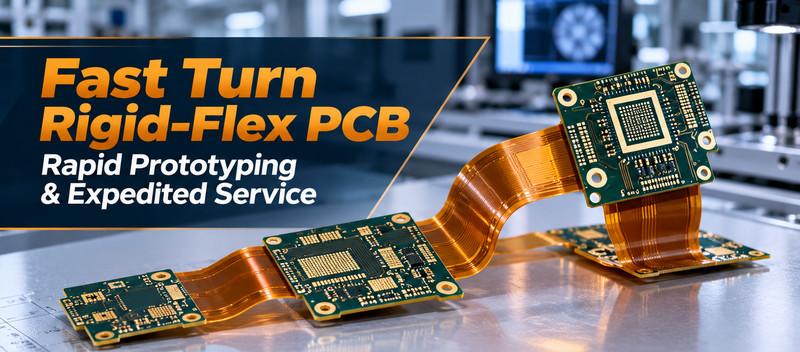
Which Rigid-Flex PCB Structures Are Suitable for Fast-Turn Prototyping?
Conventional 4-layer and 6-layer rigid-flex PCBs are generally easier to manufacture on an expedited schedule. More complex 8-layer and HDI structures can also be considered, depending on their lamination requirements, via configurations, and material availability.
| Rigid-Flex PCB Type | Typical Construction | Fast-Turn Suitability |
|---|---|---|
| 4-Layer Rigid-Flex PCB | Four conductive layers in rigid sections, often with two continuous flex layers | Well suited to rapid prototyping with conventional materials and via structures |
| 6-Layer Rigid-Flex PCB | Six-layer rigid sections connected through integrated flexible layers | Suitable when drilling and lamination requirements are relatively straightforward |
| 8-Layer Rigid-Flex PCB | Higher-density rigid sections with flexible interconnections | Requires closer review of layer registration, stackup complexity, and processing steps |
| HDI Rigid-Flex PCB | Blind vias, buried vias, microvias, or sequential lamination | Depends on the number of lamination stages and the required via structure |
| Multi-Section Rigid-Flex PCB | Multiple rigid areas connected by flexible sections | Depends on transition geometry, material construction, and manufacturing complexity |
A higher layer count does not necessarily mean a longer manufacturing cycle. An 8-layer rigid-flex PCB using conventional through-hole connections may require fewer specialized operations than a 6-layer HDI construction with stacked microvias.
BestFPC reviews the stackup, flexible-layer arrangement, and manufacturing requirements to determine which expedited production options are feasible.
What Factors Affect Fast Turn Rigid-Flex PCB Lead Time?
Complex lamination, material availability, precision drilling, and rigid-to-flex transition requirements are the main factors affecting fast turn rigid-flex PCB lead time. Identifying these challenges before production helps prevent avoidable delays and manufacturing defects.
BestFPC addresses common fabrication challenges with practical engineering solutions.
| Manufacturing Challenge | BestFPC Solution |
|---|---|
| Multiple lamination cycles caused by blind or buried vias | Review layer connections and recommend simpler interconnection structures when the electrical design allows |
| Special polyimide or bonding materials with limited availability | Check available materials and evaluate suitable alternatives for customer approval |
| Delamination or copper damage at rigid-to-flex transitions | Optimize coverlay boundaries, resin-flow allowances, transition clearances, and bonding construction |
| Fine-line circuitry and demanding copper requirements | Evaluate trace dimensions, finished copper thickness, and manufacturing tolerances together |
| Incomplete or conflicting fabrication files | Identify missing drill information, stackup inconsistencies, and critical design issues during the free DFM review |
| Additional surface finishing or testing requirements | Confirm the required processes before arranging expedited fabrication |
For example, a rigid-flex PCB with buried vias may require internal drilling, plating, and inspection before final lamination. These operations cannot be skipped without affecting the approved construction.
By resolving manufacturing challenges early, BestFPC helps reduce unnecessary engineering revisions and keeps urgent prototype orders moving through the required production stages.
How Can You Shorten Rigid-Flex PCB Prototype Lead Time?
A complete manufacturing package and an approved PCB stackup can significantly reduce avoidable delays during rigid-flex PCB prototyping. Even when expedited production is available, unresolved specifications can hold an order before fabrication begins.
The following steps help prepare a design for faster manufacturing:
-
Finalize the PCB Stackup. Confirm the layer arrangement, copper thicknesses, rigid and flexible materials, and finished thickness requirements before placing the order.
-
Define the Bending Requirements. Provide the bend location, direction, radius, and expected movement. A one-time installation fold and a dynamic bending application may require different flexible constructions.
-
Prepare Complete Fabrication Files. Include Gerber or ODB++ data, NC drill files, board outlines, stackup drawings, impedance requirements, and critical mechanical tolerances.
-
Resolve Engineering Questions Early. Approving necessary DFM adjustments before production prevents last-minute interruptions and additional manufacturing preparation.
-
Provide the Required Delivery Date. Share the prototype quantity, destination, and expected arrival date so the fabrication and shipping schedules can be coordinated.
For urgent projects, the required arrival date matters as much as the manufacturing turnaround. A prototype completed quickly but delivered after the planned testing date can still delay the entire development schedule.
Fast Turn vs. Standard Rigid-Flex PCB Prototyping: Which Fits Your Project?
Fast-turn rigid-flex PCB prototyping is better suited to urgent engineering validation, while standard manufacturing is appropriate for projects with flexible development schedules. Both follow the approved manufacturing and quality requirements.
| Comparison | Fast Turn Rigid-Flex PCB | Standard Rigid-Flex PCB |
|---|---|---|
| Best Application | Urgent prototypes and time-critical product validation | Planned prototypes, pilot runs, and repeat production |
| Production Schedule | Expedited manufacturing arrangements based on available capacity | Standard manufacturing schedule |
| Material Planning | Available, approved materials are preferred | More flexibility for special material procurement |
| Engineering Preparation | Critical manufacturing issues resolved before rush production | Standard engineering review and approval |
| Complex HDI Structures | Require individual expedited feasibility assessment | Follow the normal approved manufacturing schedule |
| Quality Requirements | Full agreed inspection and testing | Full agreed inspection and testing |
| Delivery Planning | Coordinated around the required project arrival date | Based on the agreed standard delivery schedule |
An expedited order is most valuable when earlier prototype delivery allows engineering validation, enclosure testing, or product integration to proceed without unnecessary waiting.
What Manufacturing Capabilities Support Fast Turn Rigid-Flex PCB Prototyping?
BestFPC supports multilayer rigid-flex PCB fabrication, fine-line circuitry, controlled impedance, and advanced interconnection structures. These manufacturing capabilities allow engineers to evaluate both conventional prototypes and more complex rigid-flex designs.
| Manufacturing Parameter | BestFPC Capability |
|---|---|
| Rigid-Flex PCB Layer Count | Up to 20 layers, depending on the manufacturing facility |
| Finished Board Thickness | 0.3–3.0 mm |
| Minimum Flexible Section Width | 2.0 mm |
| Inner-Layer Trace / Space | 3/3 mil at 18 μm finished copper |
| Rigid Outer-Layer Trace / Space | 3.5/3.5 mil at 18 μm finished copper |
| Flex Outer-Layer Trace / Space | 5/4.5 mil at 18 μm finished copper |
| Minimum Mechanical Drill Diameter | 0.15 mm at board thickness ≤1.6 mm; 0.20 mm at thickness ≤2.5 mm |
| Laser Microvia Diameter | 3–4 mil for applicable conventional constructions |
| Controlled-Impedance Tolerance | ±10% |
| Maximum Inner-Layer Finished Copper | 2 oz |
| Maximum Outer-Layer Finished Copper | 3 oz |
| Surface Finishes | ENIG, electrolytic gold, OSP, and immersion tin; ENEPIG available for special-process review |
Trace and space dimensions are specified before compensation. Manufacturing feasibility depends on the combined stackup, copper thickness, via structure, and assigned production facility.
For rapid rigid-flex PCB prototyping, BestFPC can evaluate:
-
Multilayer Rigid-Flex Structures: Different rigid and flexible layer combinations for compact electronic assemblies.
-
HDI Interconnections: Blind vias, buried vias, and laser microvias for high-density routing requirements.
-
Precision Lamination: Layer registration, bonding control, and thickness management across rigid and flexible regions.
-
Custom Rigid-Flex Constructions: Multiple rigid sections, customized flexible connections, and different regional thickness requirements.
-
Controlled-Impedance Circuits: Stackup and routing requirements for high-speed and signal-sensitive applications.
Our engineers evaluate these manufacturing requirements together to determine a practical fabrication approach and achievable expedited schedule.
How Is Quality Maintained During Fast Turn Rigid-Flex PCB Manufacturing?
Fast-turn manufacturing must maintain reliable electrical connections, accurate dimensions, and durable rigid-to-flex transitions. Expedited scheduling cannot replace the inspections needed to identify manufacturing defects.
BestFPC maintains quality control throughout the fabrication process:
-
Inner-Layer AOI: Detects trace defects, incomplete etching, and spacing problems before lamination.
-
Lamination Control: Checks layer registration, bonding conditions, coverlay positioning, and rigid-to-flex transition construction.
-
Drilling and Plating Inspection: Verifies hole formation and metallization. Microsection analysis can be used for critical plated interconnections.
-
Electrical Testing: Detects open circuits and shorts in finished bare boards.
-
Dimensional Inspection: Checks board outlines, finished thicknesses, and specified mechanical tolerances.
-
Reliability Verification: Controlled-impedance testing, bend testing, and additional inspections are available according to the application requirements.
Rigid-to-flex transitions require particular attention. Although a board may pass electrical testing, unsuitable transition geometry or excessive bending strain can still lead to mechanical failure.
BestFPC reviews these critical features during manufacturing preparation and controls the relevant fabrication processes to reduce defects in completed prototypes.
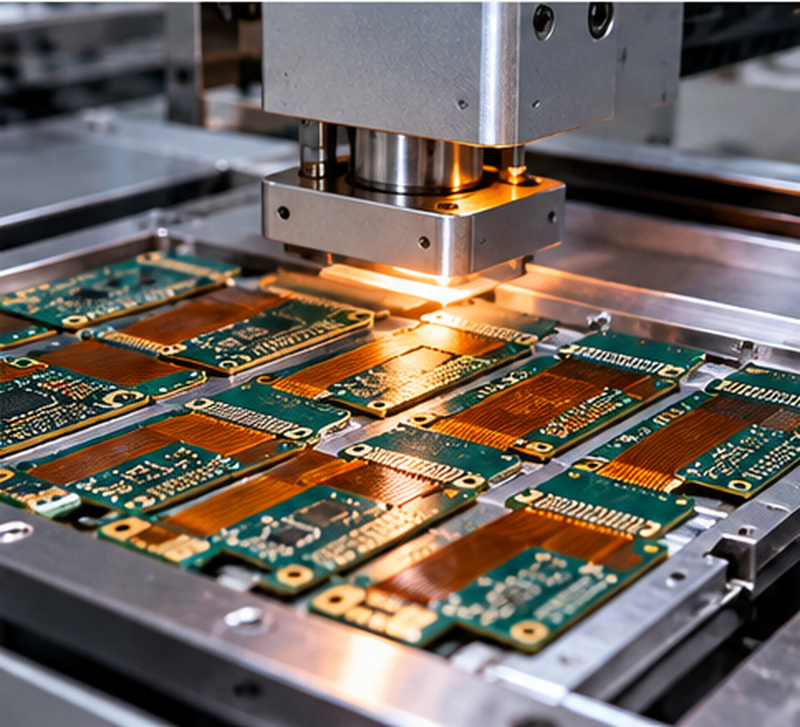
How Does BestFPC Handle Expedited Rigid-Flex PCB Prototype Orders?
BestFPC coordinates engineering review, production preparation, fabrication, and delivery for urgent rigid-flex PCB prototype orders. The manufacturing schedule is established around the approved construction and customer's required arrival date.
Our expedited service follows four main stages:
-
Manufacturing Feasibility Review: Engineers evaluate the PCB construction, critical manufacturing requirements, and any unresolved technical issues. The team determines whether expedited fabrication is practical for the submitted design.
-
Production Preparation: Required materials, manufacturing resources, and process arrangements are confirmed before the approved order enters production.
-
Fabrication and Quality Inspection: The boards move through the required manufacturing operations and inspections. Complex constructions receive the processing necessary to meet the agreed specifications.
-
Packaging and Delivery: Finished boards are inspected, packaged, and prepared for shipment to the specified destination.
For overseas projects, BestFPC coordinates the fabrication completion date with the available shipping arrangements so customers can plan subsequent testing and product integration.
Why Choose BestFPC for Rapid Rigid-Flex PCB Prototyping and Expedited Service?
BestFPC provides custom rigid-flex PCB manufacturing, free DFM reviews, and expedited prototype support to help engineers and purchasing teams manage demanding development schedules.
Our services offer several practical advantages:
-
Free DFM Review: Manufacturing engineers identify stackup conflicts, transition risks, and fabrication issues before production, reducing unnecessary engineering delays.
-
Multilayer Manufacturing Capabilities: Support conventional and advanced rigid-flex structures, including HDI, fine-line circuitry, and customized interconnections.
-
Expedited Production Support: Evaluate urgent orders according to actual manufacturing complexity, material availability, and available production capacity.
-
Strict Quality Control: Maintain electrical testing, dimensional verification, and critical process inspections throughout manufacturing.
-
Engineering and Production Coordination: Address manufacturing questions directly and keep approved prototype requirements consistent throughout fabrication.
-
One-Stop Manufacturing Services: Support rigid-flex PCB fabrication and optional assembly for projects requiring assembled electronic prototypes.
With manufacturing operations in Shenzhen, China, BestFPC supports international customers requiring custom rigid-flex PCB prototypes, small-batch production, and reliable manufacturing communication.
For medical electronics, industrial control equipment, aerospace-related electronics, and other compact electronic applications, our team helps customers evaluate their designs and select suitable manufacturing arrangements.
FAQs About Fast Turn Rigid-Flex PCB Orders
Q1. Does BestFPC accept low-volume rigid-flex PCB prototype orders?
A1. Yes. BestFPC supports prototype and small-batch orders. Available quantities depend on the board construction and manufacturing requirements.
Q2. Can multiple PCB revisions be included in one order?
A2. Yes. Different revisions can be quoted together, but each version must have clearly identified fabrication files and quantities.
Q3. Can rigid-flex PCB prototypes be supplied in panel form?
A3. Yes. Panelized manufacturing is available where the board construction permits it. Panel dimensions and handling requirements should be included in the fabrication data.
Q4. Can connector areas include additional stiffeners?
A4. Yes. PI, FR-4, and other suitable stiffener materials can be evaluated according to the component and mechanical requirements.
Q5. Can different rigid sections have different finished thicknesses?
A5. Yes, for feasible custom constructions. The layer arrangement, bonding structure, and required dimensional tolerances determine manufacturing suitability.
Q6. Can I request partial shipment for an urgent prototype order?
A6. Partial shipment may be arranged when production progress, inspection, and packaging requirements allow it.
Q7. Can approved prototype files be reused for repeat orders?
A7. Yes. Approved fabrication data and documented revisions can support subsequent manufacturing orders.
How Can You Request a Fast Turn Rigid-Flex PCB Quote?
BestFPC offers fast turn rigid-flex PCB manufacturing, rapid prototyping, free DFM reviews, and expedited fabrication services for projects requiring reliable manufacturing and shorter development schedules.
For an accurate quotation, please provide:
-
Gerber or ODB++ Files: Complete fabrication data, including drill files and board outlines.
-
PCB Stackup: Layer count, materials, copper thicknesses, and rigid/flex thickness requirements.
-
Technical Specifications: Controlled impedance, via structures, bending requirements, surface finish, and critical tolerances.
-
Order Quantity: Required prototype quantity and expected repeat volume, if applicable.
-
Required Delivery Date: The date the finished boards must arrive.
-
Delivery Location: Destination country and city.
-
Quality Requirements: Any special inspection or testing requirements.
Our engineering team will evaluate the manufacturing requirements, identify potential production challenges, and review suitable expedited fabrication options.
Need fast turn rigid-flex PCB prototypes for an urgent project? Contact BestFPC at sales@bestfpc.com for a free DFM review and expedited manufacturing quotation. Get your design evaluated and confirm a practical production schedule before your next development deadline.


.png)
.png)
.png)
.png)

.png)