


 2026-10-29

 BEST
Finding the best rigid-flex PCB suppliers for portable medical equipment requires more than comparing prices and delivery schedules. Medical device manufacturers need a supplier that can handle complex multilayer constructions, maintain consistent manufacturing quality, and deliver reliable PCB assemblies.
BestFPC provides custom rigid-flex PCB fabrication and assembly for portable diagnostic instruments, patient monitoring devices, and compact medical electronics. With ISO 13485 quality management, free DFM reviews, multilayer manufacturing, and one-stop PCB assembly services, we help medical OEMs source reliable circuits for their equipment.
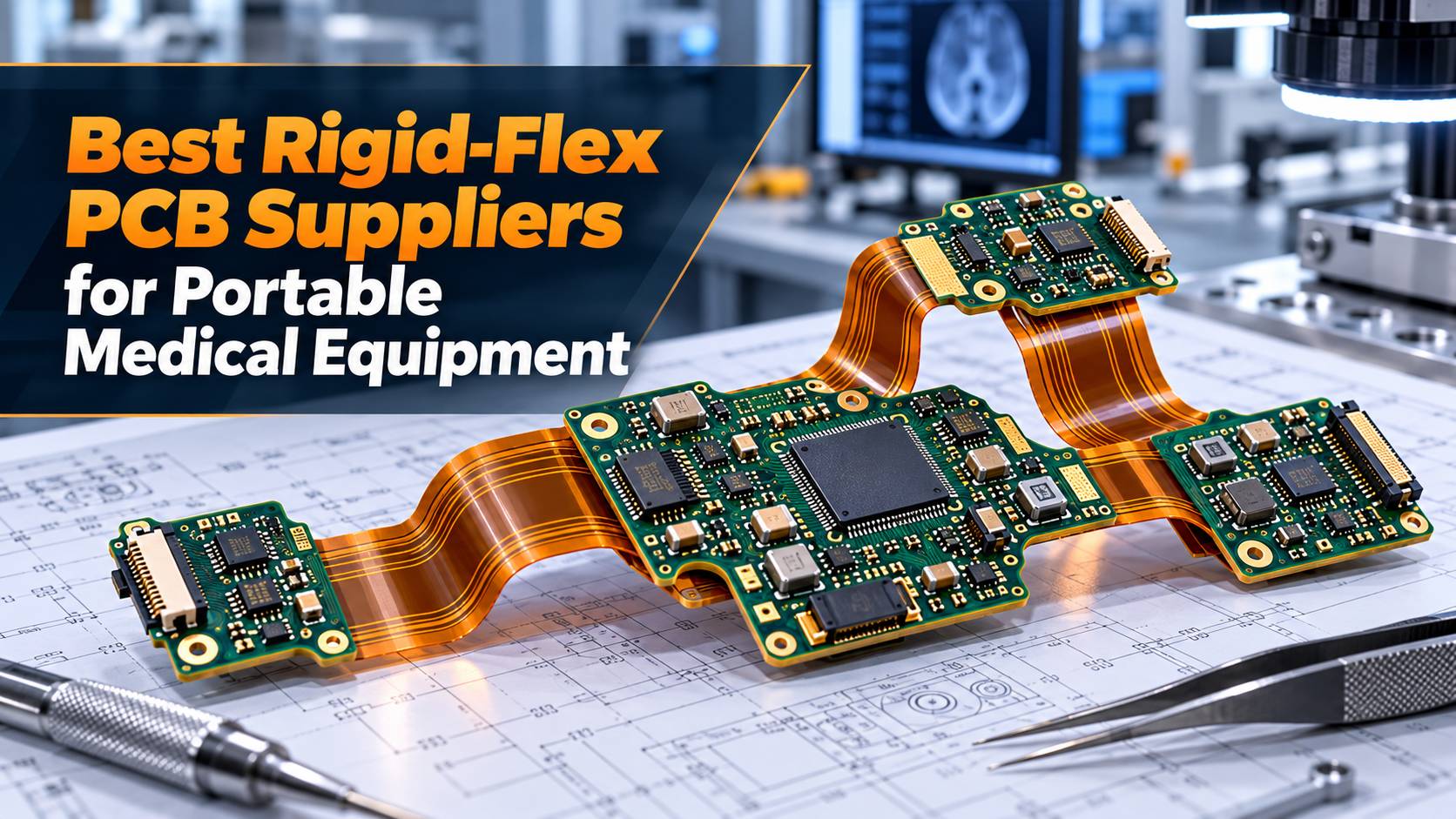
Why Choose BestFPC as Your Rigid-Flex PCB Supplier for Portable Medical Equipment?
BestFPC combines advanced rigid-flex PCB manufacturing, engineering support, and assembly services to help medical equipment manufacturers reduce sourcing complexity and maintain consistent product quality.
Our key advantages include:
-
Free DFM Review: Check stackup feasibility, rigid-to-flex transitions, bend regions, drilling requirements, and assembly compatibility before manufacturing.
-
Advanced Manufacturing Capabilities: Support multilayer rigid-flex PCBs, HDI structures, blind and buried vias, fine-line routing, and controlled impedance.
-
Quality Certifications: UL, ISO 13485, ISO 9001, and RoHS compliance documentation support customer quality and regulatory requirements.
-
One-Stop Manufacturing Services: PCB fabrication, component sourcing, SMT assembly, and agreed testing services are coordinated through one manufacturing partner.
-
Prototype and Volume Production: Support engineering samples, small-batch orders, and ongoing production requirements.
-
Flexible Lead Time: Expedited manufacturing options and production schedules are evaluated according to project complexity and material availability.
As a China-based medical rigid-flex PCB manufacturer, BestFPC supports international customers with custom PCB production and assembly. Our engineering team reviews each project's manufacturing requirements to confirm that the proposed construction can be produced consistently.
How Does BestFPC Compare with Other Rigid-Flex PCB Suppliers for Portable Medical Equipment?
The best rigid-flex PCB suppliers for portable medical equipment differ in manufacturing capabilities, quality certifications, assembly services, and production arrangements. Choosing the right supplier depends on the technical and commercial requirements of the medical device.
| Supplier | Location / Supply Model | Rigid-Flex PCB Capabilities | Quality Qualifications | Assembly Services |
|---|---|---|---|---|
| BestFPC | China-based manufacturer | 2–20 layers within standard range, HDI, blind/buried vias, controlled impedance | ISO 13485, ISO 9001, UL; RoHS compliance | SMT assembly, component sourcing, inspection and agreed testing |
| All Flex Solutions | United States | Medical rigid-flex circuits, 20+ layer options, specialized flex constructions | IPC Class 3 manufacturing capability; confirm current certification scope | SMT assembly, cleaning and electrical testing |
| Sierra Circuits | United States | HDI rigid-flex, multilayer fabrication, microvias and controlled impedance | ISO 13485, ISO 9001, AS9100D | PCB fabrication, component procurement and assembly |
| Epec Engineered Technologies | US-based supplier with global manufacturing support | Advanced multilayer rigid-flex, fine-line processing, blind/buried vias | ISO 9001 and AS9100 qualifications at applicable facilities | Component attachment, connector assembly and testing options |
| Minco | United States | Custom rigid-flex circuits, specialized materials and high-reliability interconnections | ISO 9001, AS9100D, Nadcap accreditation | Custom circuit assembly and integration services |
BestFPC is suitable for buyers seeking a China-based manufacturing partner with PCB fabrication, component sourcing, and SMT assembly services. Sierra Circuits is an option for medical OEMs requiring US-based HDI manufacturing, while All Flex Solutions and Minco specialize in customized flexible and rigid-flex constructions.
Epec Engineered Technologies offers engineering-supported supply for complex PCB requirements, including specialized manufacturing and component attachment.
Supplier selection should consider the approved PCB specifications, current certification scope, manufacturing location, assembly requirements, and delivery commitments. No single supplier is the best fit for every portable medical device.
What Rigid-Flex PCB Manufacturing Capabilities Does BestFPC Offer?
BestFPC manufactures 2–20-layer rigid-flex PCBs within its standard process range, with more complex constructions evaluated individually. These circuits combine rigid component-mounting areas with flexible interconnections, allowing medical electronics to fit inside compact enclosures.
| Manufacturing Parameter | BestFPC Capability | Application / Conditions |
|---|---|---|
| Rigid-Flex Layer Count | 2–20 layers, standard range | Higher layer counts require engineering review |
| Finished Board Thickness | 0.3–3.0 mm | Depends on the approved stackup |
| Inner-Layer Trace / Space | 3/3 mil (0.076/0.076 mm) | 18 μm finished copper, before compensation |
| Rigid Outer-Layer Trace / Space | 3.5/3.5 mil (0.089/0.089 mm) | 18 μm finished copper, before compensation |
| Flex Outer-Layer Trace / Space | 5/4.5 mil (0.127/0.114 mm) | 18 μm finished copper, before compensation |
| Mechanical Drill Diameter | 0.15 mm | Board thickness ≤1.6 mm; drill-tool diameter |
| Flexible Materials | Polyimide, adhesive and adhesiveless options | Selected according to flexibility and electrical requirements |
| Via Technology | Through-holes, blind and buried vias | Depends on HDI construction and stackup |
| Controlled Impedance | 50 Ω, 90 Ω, 100 Ω, 110 Ω and custom targets | Tolerances confirmed before fabrication |
| Surface Finishes | ENIG, ENEPIG, gold plating, immersion silver | Selected according to component and assembly requirements |
These values describe individual manufacturing capabilities. The achievable combination of layer count, copper thickness, minimum line width, and finished board thickness must be confirmed for the complete PCB construction.
For portable medical equipment, rigid-flex circuits are particularly useful when multiple electronic sections must fit within restricted spaces.
Typical applications include:
-
Portable Ultrasound Equipment: Compact circuit interconnections between control electronics and imaging-related modules.
-
Handheld Diagnostic Instruments: Integrated rigid and flexible sections for sensors, processing circuits, and display connections.
-
Portable Patient Monitors: Compact signal-processing and interface assemblies.
-
Medical Sensor Modules: High-density circuits requiring controlled mechanical installation and reliable electrical interconnections.
BestFPC Manufacturing Experience
BestFPC has completed a 7-layer HDI rigid-flex PCB with blind and buried vias, demonstrating its capability to manufacture complex multilayer interconnections.
| Project Parameter | Manufacturing Specification |
|---|---|
| PCB Construction | 7-layer HDI rigid-flex PCB |
| Via Technology | Blind and buried vias |
| Minimum Hole Size | 0.10 mm across the board |
| Finished Board Thickness | 1.40 mm |
| Outer-Layer Copper | 1 oz |
| Inner-Layer Copper | 0.5 oz |
| Single-Ended Impedance Target | 50 Ω |
| Differential Impedance Target | 100 Ω |
| Surface Finish | ENIG |
The project required coordination of internal via processing, multilayer lamination, blind via formation, and controlled-impedance routing.
BestFPC completed the seven-layer construction with the specified finished thickness and ENIG surface finish. This manufacturing example demonstrates experience with complex HDI rigid-flex structures, although it is not presented as a medical device qualification case.
The 0.10 mm minimum hole size applies to the board as a whole, while the impedance values represent project design targets.
What Custom Rigid-Flex PCB Fabrication and Assembly Services Can BestFPC Provide?
BestFPC provides custom rigid-flex PCB fabrication, component sourcing, and SMT assembly services for medical equipment manufacturers that require bare boards or completed electronic assemblies.
Our manufacturing services cover PCB fabrication and assembly.
Rigid-Flex PCB Fabrication
-
Material and Stackup Preparation: Confirm approved rigid and flexible materials, copper thicknesses, layer construction, and mechanical requirements.
-
Circuit Formation: Manufacture inner-layer circuits, flexible copper patterns, and coverlay openings.
-
Lamination and Drilling: Integrate rigid and flexible sections, drill specified holes, and complete plated interconnections.
-
Outer-Layer Processing: Complete circuit patterns, solder mask where applicable, surface finishing, and board profiling.
-
Electrical Inspection: Verify circuit continuity, isolation, dimensional requirements, and applicable workmanship criteria.
Rigid-Flex PCB Assembly
-
Component Sourcing: Procure approved electronic components according to the customer BOM.
-
SMT Preparation: Prepare stencils, assembly panels, and support fixtures suitable for rigid-flex handling.
-
Component Placement: Assemble compatible SMT components, including fine-pitch packages on supported rigid sections.
-
Soldering and Inspection: Perform controlled soldering followed by AOI and specified X-ray inspection.
-
Functional Testing: Conduct agreed assembly-level testing using customer-approved procedures.
Rigid-flex PCB assembly requires appropriate mechanical support during solder paste printing, component placement, and reflow. Unsupported flexible sections can move during assembly and affect solder joint quality.
By combining PCB fabrication and assembly services, BestFPC helps customers coordinate manufacturing requirements, component procurement, and production schedules through one supplier.
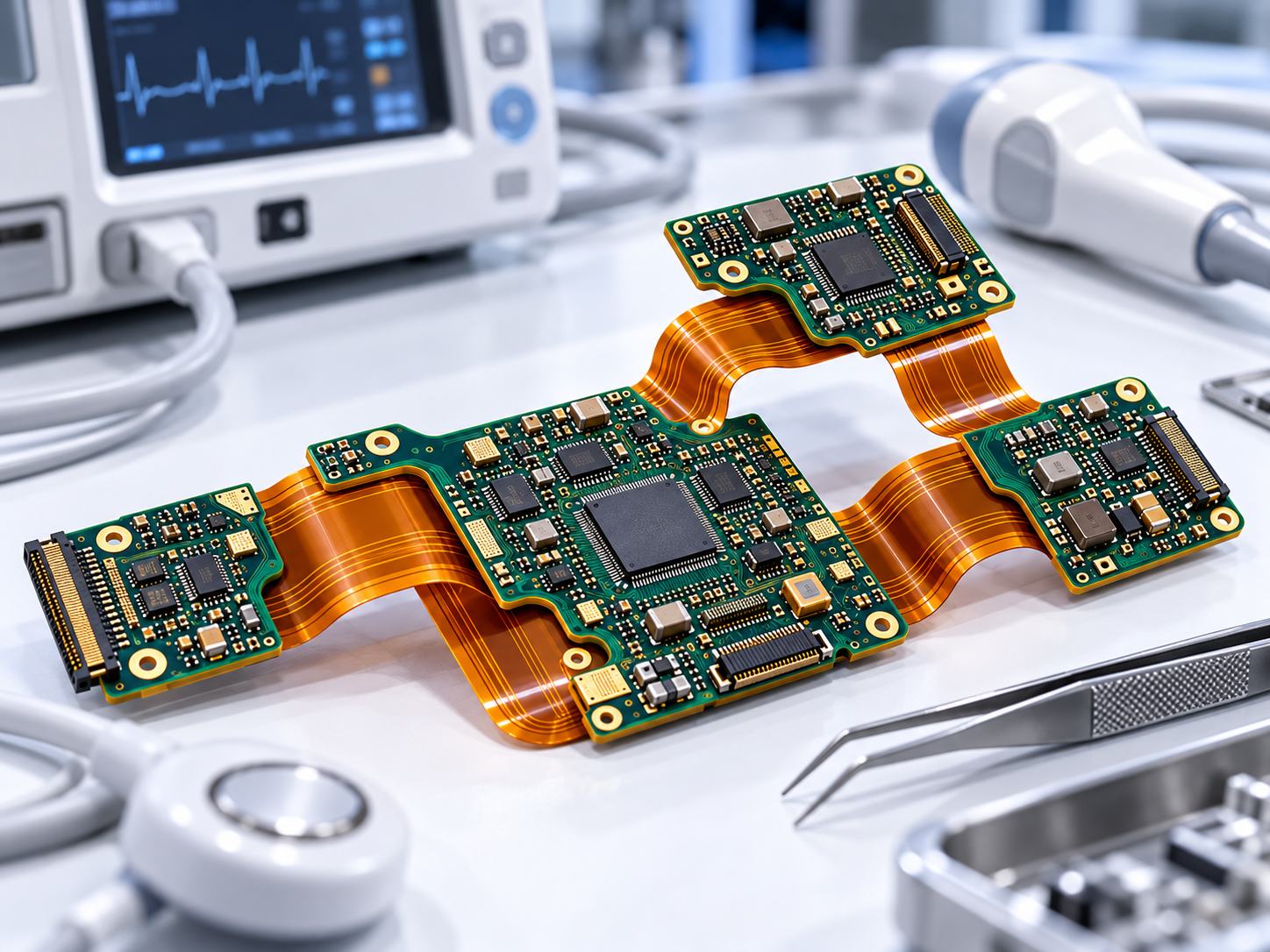
Which Quality Certifications Does BestFPC Hold for Medical PCB Manufacturing?
BestFPC holds ISO 13485, ISO 9001, and UL certifications and supports RoHS compliance, providing medical equipment manufacturers with documented quality management and product compliance support.
-
ISO 13485:2016: Supports medical device quality management requirements, including controlled manufacturing processes and quality documentation.
-
ISO 9001:2015: Supports standardized production processes, consistent quality management, and continual improvement.
-
UL Certification: Covers applicable PCB safety and material requirements within the certified scope.
-
RoHS Compliance: Confirms that applicable materials or products meet restrictions on specified hazardous substances, supported by relevant compliance documentation.
BestFPC can provide relevant certification and compliance documents to support medical OEM supplier qualification.
ISO 13485 and ISO 9001 are quality management system certifications, while UL certification and RoHS compliance address different product and material requirements. These qualifications support PCB sourcing but do not replace finished medical device approval.
How Does BestFPC Test Medical Rigid-Flex PCB Quality and Reliability?
BestFPC performs electrical testing and manufacturing inspection to verify rigid-flex PCB quality, with additional reliability tests arranged according to the customer's medical equipment requirements.
Portable medical electronics may experience transportation vibration, temperature changes, handling stress, and repeated use. The appropriate inspection plan depends on the PCB structure and expected operating conditions.
| Inspection or Test | Verification Purpose | Application |
|---|---|---|
| Electrical Continuity and Isolation | Detect open and short circuits | Bare-board verification |
| Automated Optical Inspection | Identify detectable conductor and assembly defects | PCB fabrication and SMT inspection |
| Microsection Analysis | Examine plating, hole structures, and layer integrity | Multilayer and HDI qualification |
| Controlled Impedance Testing | Verify specified transmission-line impedance | High-speed medical electronics |
| Thermal Stress or Cycling | Evaluate interconnection integrity under defined thermal conditions | Environmental qualification |
| Bend Testing | Assess flexible copper and transition-region durability | Installation or dynamic bending applications |
| X-ray Inspection | Examine hidden solder joints | BGA and bottom-terminated packages |
| Functional Testing | Verify assembled PCB operation against approved procedures | Completed PCB assemblies |
For rigid-flex PCB fabrication, IPC-6013F provides qualification and performance requirements, including criteria for plated interconnections and rigid-to-flex transition regions. IPC Class 3 requirements may be specified for high-reliability applications, while IPC-A-610 provides applicable electronic assembly acceptance criteria.
These are manufacturing and acceptance standards, not quality management certifications.
Medical equipment manufacturers can specify additional qualification requirements according to the device application. Test conditions, sampling plans, acceptance limits, and required reports are confirmed before production.
What Is the Lead Time for Medical Rigid-Flex PCB Fabrication and Assembly?
The lead time for medical rigid-flex PCB manufacturing depends on layer count, HDI complexity, material availability, assembly requirements, and testing scope. BestFPC supports expedited manufacturing for eligible projects, with delivery schedules confirmed after engineering review.
| Production Type | Lead Time | Key Considerations |
|---|---|---|
| Expedited Rigid-Flex PCB Prototype | Confirmed individually | Approved stackup, available materials and production capacity |
| Selected Standard Rigid-Flex PCB Production | Approximately 8–12 days | Construction, quantity and manufacturing requirements |
| Complex HDI Rigid-Flex PCB | Quoted individually | Blind/buried vias, sequential lamination and inspection |
| PCB Fabrication and SMT Assembly | Quoted individually | PCB completion, BOM availability, assembly and testing |
| Medical Qualification Builds | Quoted individually | Additional verification, documentation and customer approvals |
The 8–12-day range is an indicative fabrication schedule for selected rigid-flex constructions, not a guaranteed lead time for all medical PCB projects.
BestFPC reviews the Gerber files, BOM, quantity, and quality requirements before confirming production dates. PCB fabrication, component assembly, and international transportation are scheduled according to the project requirements.
For time-sensitive medical electronics orders, early confirmation of materials and component availability helps reduce avoidable production delays.
What Affects the Cost of Custom Rigid-Flex PCBs for Portable Medical Equipment?
The cost of a medical rigid-flex PCB depends on manufacturing complexity, material selection, order quantity, assembly requirements, and qualification testing.
The main factors include:
-
Layer Count and Stackup: Additional rigid and flexible layers increase material consumption, lamination operations, and inspection requirements.
-
HDI Technology: Blind vias, buried vias, fine-pitch routing, and sequential lamination add manufacturing complexity.
-
Material Selection: Polyimide thickness, copper construction, and specialized bonding materials affect fabrication costs.
-
Mechanical Requirements: Multiple rigid sections, narrow flexible connections, irregular outlines, and tight tolerances require additional process control.
-
PCB Assembly: Fine-pitch components, specialized fixtures, component sourcing, and inspection affect total assembly costs.
-
Quality Requirements: Additional testing, qualification procedures, and documentation increase the manufacturing scope.
Order quantity also affects unit pricing because tooling, engineering preparation, and production setup are distributed across the manufacturing batch.
For portable medical equipment, the total PCB fabrication and assembly cost can be more important than the individual bare-board price. A rigid-flex construction may reduce separate connectors, cables, and assembly operations when the device architecture supports their elimination.
BestFPC provides fabrication-only and combined PCB assembly quotations based on the customer's approved manufacturing requirements.
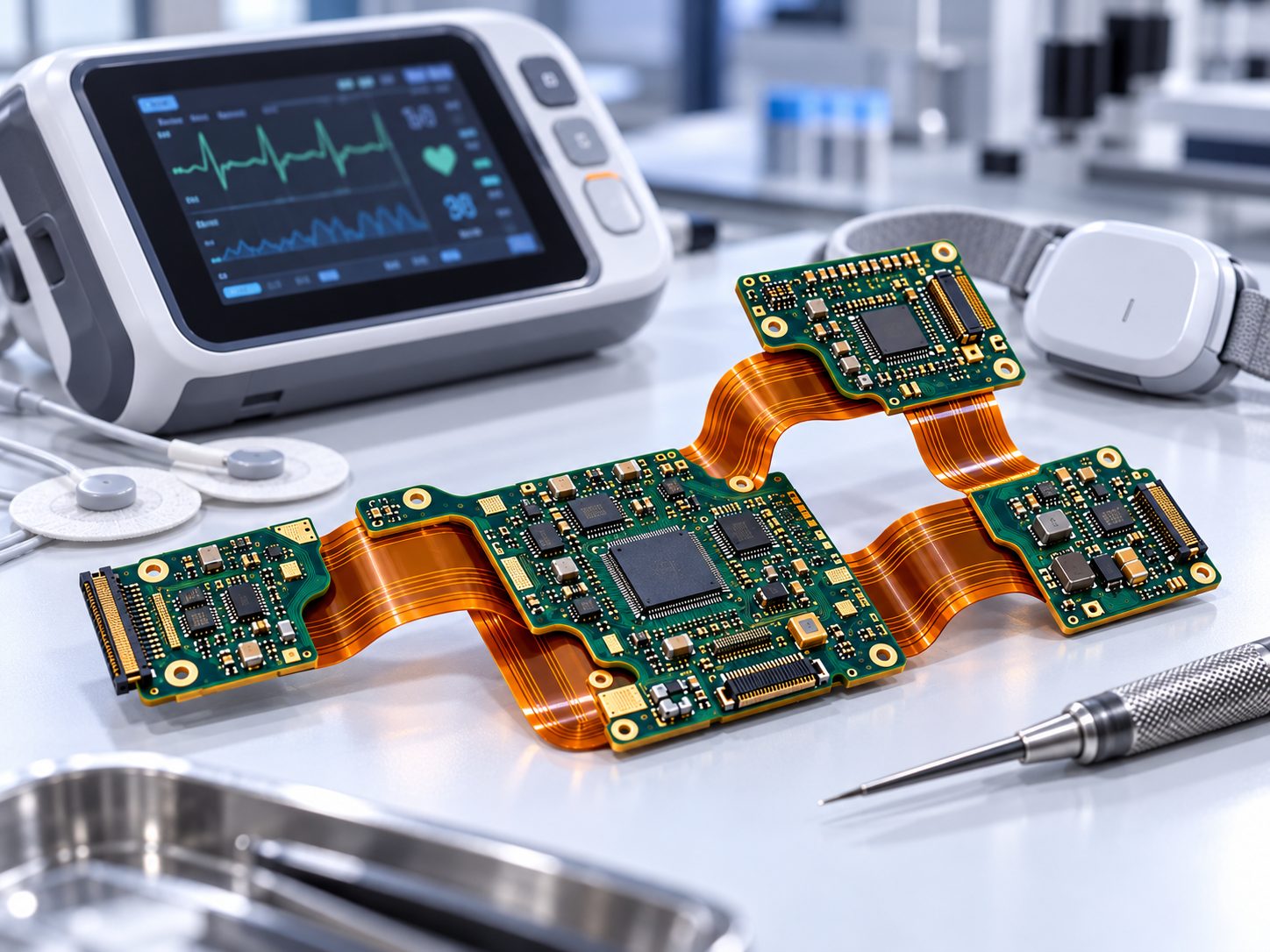
What Information Is Needed for a Free DFM Review and Custom Rigid-Flex PCB Quote?
BestFPC provides free DFM reviews and custom quotations for medical rigid-flex PCB fabrication and assembly projects.
To request a quotation, please provide:
-
PCB Files: Gerber or ODB++ files and fabrication drawings.
-
PCB Specifications: Layer count, materials, thickness, and bend requirements.
-
Assembly Files: BOM and assembly drawings, if required.
-
Quality Requirements: IPC standards and testing needs.
-
Order Details: Quantity, target delivery date, and delivery location.
Our engineering team reviews the manufacturing requirements and confirms fabrication feasibility, assembly services, and delivery arrangements.
Looking for a reliable rigid-flex PCB supplier for portable medical equipment? BestFPC provides custom multilayer PCB manufacturing, component sourcing, and SMT assembly services for medical electronics projects.
Contact us via this email: sales@bestfpc.com for a free DFM review and custom quotation
FAQs About Rigid-Flex PCB Suppliers for Portable Medical Equipment
Q1: Can BestFPC provide inspection reports with each production lot?
A1: Yes. Inspection reports and lot documentation can be arranged according to the agreed quality requirements.
Q2: What packaging options are available for medical rigid-flex PCB assemblies?
A2: ESD-protective packaging, separators, and mechanical protection for flexible sections can be arranged according to the product requirements.
Q3: Can rigid-flex PCBs be folded after SMT assembly?
A3: Yes, when the PCB construction is designed for the specified installation bend. Component locations and mechanical limits must be considered.
Q4: Can BestFPC accept customer-supplied electronic components?
A4: Yes, subject to agreed component handling, inspection, consignment, and traceability requirements.
Q5: What happens if an electronic component becomes obsolete during production?
A5: Any replacement component must be evaluated and approved according to the customer's change-control requirements before use.
Q6: Can medical OEMs sign an NDA before sharing PCB files?
A6: Yes. Confidentiality agreements can be discussed before transferring sensitive PCB manufacturing and assembly information.
Q7: Can the approved rigid-flex PCB stackup remain unchanged for repeat orders?
A7: Yes. Repeat orders can follow the approved manufacturing revision, with controlled changes handled through the agreed approval process.
Q8: Who owns the tooling and assembly fixtures used for medical PCB orders?
A8: Tooling ownership, storage, reuse, and associated charges should be defined in the purchasing agreement before production preparation begins.


.png)
.png)
.png)
.png)

.png)