


 2026-10-20

 BEST
BestFPC provides custom polyimide flexible PCB fabrication backed by over 20 years of manufacturing experience. We manufacture single-sided, double-sided, and multilayer flexible circuits with customized PI substrates, copper constructions, coverlay, and stiffeners.
With free DFM reviews, no minimum order quantity (MOQ), and quality-controlled production, BestFPC supports custom orders from individual prototypes to volume manufacturing.

What Types of Polyimide Flexible PCBs Can BestFPC Manufacture?
BestFPC manufactures single-sided, double-sided, and multilayer polyimide flexible PCBs with custom outlines, fine-line circuits, and reinforced connection areas.
| PCB Type | Construction | Typical Applications |
|---|---|---|
| Single-Sided Flexible PCB | One copper circuit layer on a PI substrate | Sensors, LED modules, display connections |
| Double-Sided Flexible PCB | Two copper circuit layers, with plated through-holes where required | Wearable devices, sensor modules, control electronics |
| Multilayer Flexible PCB | Three or more copper circuit layers in a customized PI-based stackup | High-density interconnects, industrial controls, communication modules |
Each type can be manufactured with custom shapes, connector tails, exposed contacts, and localized stiffeners to match your product's mechanical and electrical requirements.
What Customization Options Are Available for Polyimide Flexible PCBs?
BestFPC offers adhesive-based and adhesiveless PI laminates, multiple copper weights, customized coverlay, stiffeners, and surface finishes.
| Customization Item | Available Options | Selection Considerations |
|---|---|---|
| PI Substrate | 0.5, 1, 2, 3 mil adhesiveless-core PI options | Substrate thickness and finished stackup |
| Laminate Construction | Adhesive-based and adhesiveless PI | Bonding structure, thickness, and thermal requirements |
| Copper Foil | 0.33 oz, 0.5 oz, 1 oz; selected 2 oz constructions | Current capacity, copper type, and bending requirements |
| Coverlay | PI coverlay with custom openings | Trace insulation and pad exposure |
| Stiffeners | PI: 3, 5, 7, 9 mil; FR4 by project review | Connector support and local finished thickness |
| Surface Finish | ENIG, OSP, immersion tin, plated gold | Solderability, contact wear, and application requirements |
| Board Outline | Custom profiles, branches, slots, and cutouts | Installation space and mechanical fit |
For repeated bending, copper type, copper thickness, stackup, and bend radius must be evaluated together. Rolled annealed (RA) copper is commonly considered for dynamic-flex applications, although the actual performance depends on the complete construction.
Surface finishes also require attention. Nickel-bearing finishes such as conventional ENIG should generally be kept away from areas subject to repeated bending unless the construction has been qualified for that use.
Material availability and compatible thickness combinations are confirmed before fabrication.
What Are BestFPC's Polyimide Flexible PCB Fabrication Capabilities?
BestFPC supports fine-line polyimide flexible PCB fabrication with multilayer construction and controlled thickness requirements. Manufacturing limits depend on the complete stackup, copper thickness, and fabrication process.
| Manufacturing Parameter | BestFPC Reference Capability | Applicable Conditions |
|---|---|---|
| Layer Count | 1–4 layers | Standard all-flex constructions; higher counts by review |
| Finished Board Thickness | 0.06–0.60 mm | Depends on the approved stackup |
| Inner-Layer Line Width / Spacing | 3/3 mil (0.076/0.076 mm) | 18 μm finished copper; before manufacturing compensation |
| Outer-Layer Line Width / Spacing | 3.5/3.5 mil (0.089/0.089 mm) | 18 μm finished copper; before manufacturing compensation |
| Controlled Impedance | Project-specific | Impedance value and tolerance confirmed with the stackup |
| Drilled Hole Size and Tolerance | Confirmed by fabrication review | Depends on hole type, plating, and pad geometry |
| Outline Tolerance | Confirmed by fabrication review | Depends on board dimensions and profiling method |
These values are reference capabilities, not simultaneous limits for every construction. A fine-line design using thin copper may require different processing conditions from a thicker-copper circuit.
Finished thickness also excludes the assumption that reinforced areas share the same thickness. Connector regions with stiffeners require a separate total-thickness check.
For tight tolerances, complex outlines, or specialized layer constructions, BestFPC confirms feasibility against your fabrication files before production.
How Does BestFPC Review Your Files Before Fabrication?
BestFPC provides a free DFM review to identify manufacturing problems before production.
- Stackup: Check PI materials, copper construction, adhesive layers, and finished board thickness.
- Circuit Patterns: Verify trace width, spacing, pad geometry, and clearances against the manufacturing process.
- Bending Areas: Check bend radius, conductor placement, vias, and features that could concentrate mechanical stress.
- Coverlay and Stiffeners: Review opening registration, reinforcement positions, connector thickness, and bonding requirements.
- Mechanical Dimensions: Verify holes, slots, board outlines, and critical tolerances.
For example, placing a plated through-hole in a repeatedly bending area can increase the risk of copper fatigue. BestFPC can identify such features during manufacturing review and recommend adjustments.
Any proposed changes require customer approval before fabrication.
How Does BestFPC Ensure Polyimide Flexible PCB Quality?
BestFPC checks PI materials, copper circuits, coverlay, lamination, reinforcement, and electrical connectivity against approved manufacturing requirements.
| Inspection Item | What Is Checked | Quality Purpose |
|---|---|---|
| Incoming PI Materials | Material specification, thickness, and condition | Verify approved materials before fabrication |
| Copper Circuit Inspection | Trace width, spacing, etching quality, and registration | Identify circuit-pattern defects |
| Coverlay Inspection | Opening alignment, surface condition, wrinkles, and visible bonding defects | Check insulation coverage and exposed pad areas |
| Lamination Inspection | Layer registration, bonding condition, and visible voids or delamination | Check laminated construction |
| Bend-Area Inspection | Conductor layout, visible damage, and features within specified bending areas | Identify nonconforming features and visible defects |
| Stiffener Inspection | Position, dimensions, bonding, and reinforced-area thickness | Verify connector fit and mechanical support |
| Electrical Testing | Circuit continuity and isolation | Detect open and short circuits |
| Final Inspection | Board outline, critical dimensions, surface finish, and visible damage | Verify finished-board conformity |
| Reliability Testing (If Specified) | Bend endurance, adhesion, or thermal tests according to agreed methods | Evaluate specified mechanical or environmental performance |
Optical inspection identifies visible circuit-pattern defects, while electrical testing checks continuity and isolation. Flying-probe testing is available for applicable prototype and small-batch orders.
For dynamic-flex applications, bend-cycle testing must use defined conditions, including bend radius, cycle count, movement, and acceptance criteria. Visual inspection alone cannot establish bending life.
BestFPC publishes quality-system certifications including ISO 9001:2015, ISO 13485:2016, IATF 16949, and AS9100D. Current certificates and applicable scopes can be requested for supplier qualification.
What Affects Polyimide Flexible PCB Fabrication Cost and Lead Time?
PI material selection, layer count, copper thickness, fine-line requirements, and order quantity directly affect fabrication cost. Material availability, process complexity, production scheduling, and additional testing also influence delivery time.
| Factor | Cost Impact | Lead Time Impact |
|---|---|---|
| PI Material | Specialized laminates may increase material costs | Non-stock materials may require procurement time |
| Layer Count | Additional layers require more processing | Additional lamination and inspection stages |
| Copper Thickness | Thicker copper can increase material and processing requirements | Depends on material availability and process requirements |
| Fine-Line Features | Greater precision and yield-control requirements | May require additional process control |
| Board Outline and Panel Utilization | Complex shapes or poor material utilization increase cost | May require additional tooling or profiling |
| Coverlay and Stiffeners | Additional materials and bonding operations | Additional alignment and processing stages |
| Surface Finish | Specialized finishes may require additional processing | Depends on the selected finish and production route |
| Order Quantity | Affects setup cost per board and material utilization | Affects production planning and scheduling |
| Special Testing | Additional qualification or inspection requirements | May extend the agreed testing schedule |
Two polyimide flexible PCBs of similar size can have different manufacturing costs because of copper construction, routing density, reinforcement, or material requirements.
BestFPC confirms pricing and lead time based on your approved specifications, material availability, and required quantity.
Why Choose BestFPC for Polyimide Flexible PCB Fabrication?
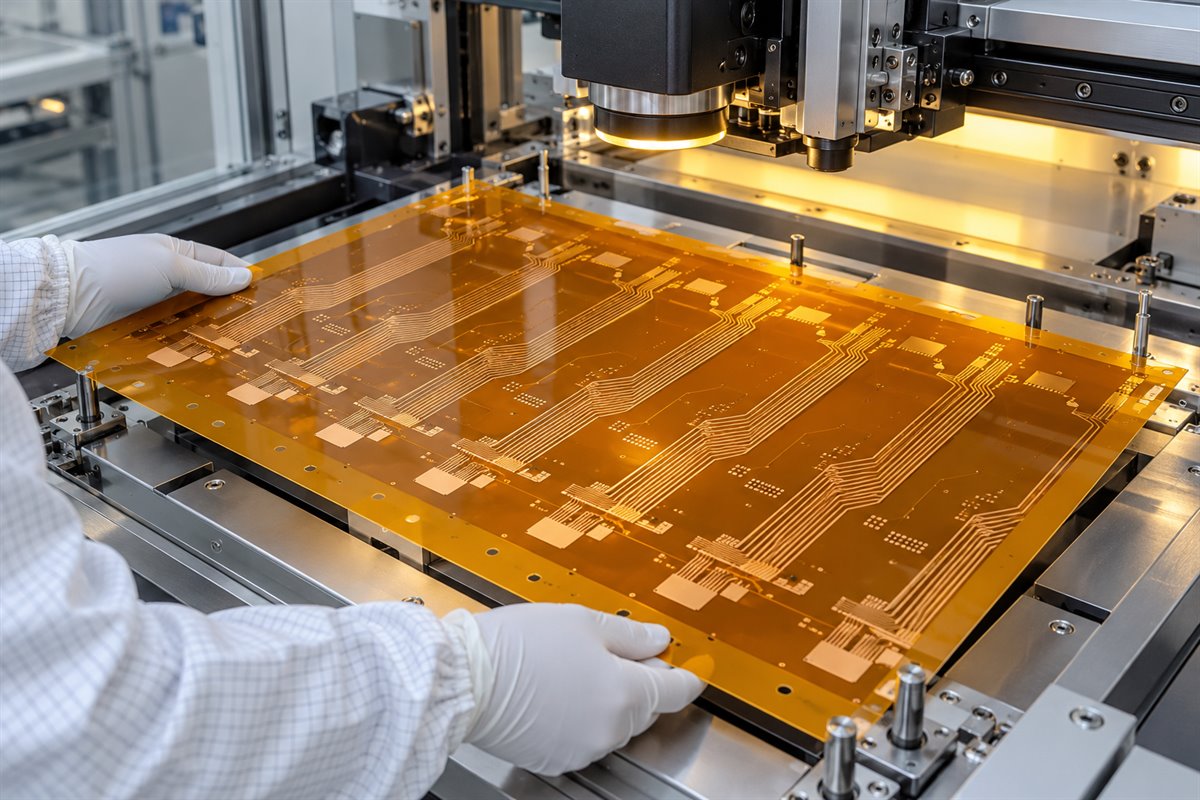
BestFPC is a China-based flexible PCB manufacturer with over 20 years of experience, providing custom fabrication, engineering support, and flexible ordering.
- 20+ Years of FPC Experience: Work with a manufacturing team familiar with PI materials, multilayer structures, fine-line circuits, and customized flexible constructions.
- Free DFM Review: Identify potential manufacturing problems before production, reducing unnecessary revisions and tooling changes.
- No MOQ: Order a single prototype or small batch to verify your product without committing to excess inventory.
- Custom Manufacturing: Manufacture boards according to your approved materials, stackup, outline, and connector requirements.
- Fabrication and Assembly Services: Source bare flexible PCBs or request FPC assembly to reduce coordination between separate suppliers.
- Quality Documentation: Request applicable certifications, inspection requirements, and supporting records for supplier qualification.
What Information Do You Need for a Polyimide Flexible PCB Quote?
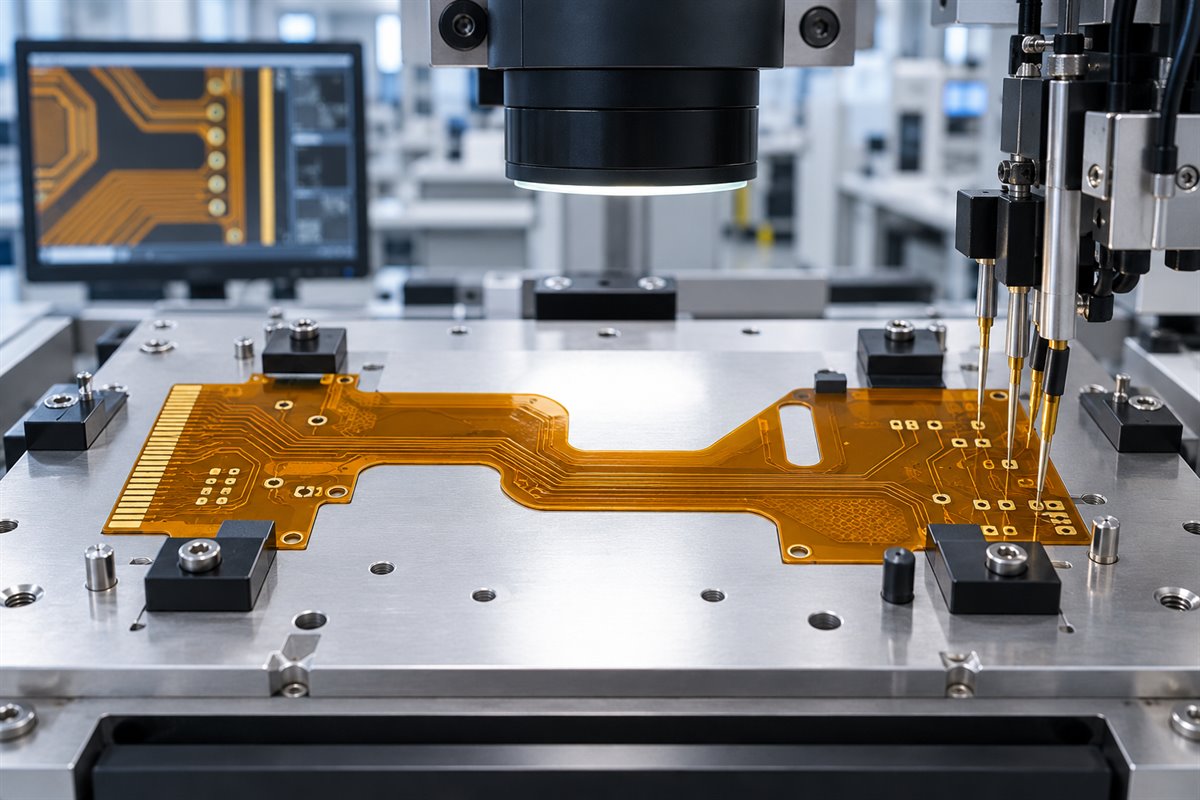
Send BestFPC your fabrication files, board specifications, order quantity, and delivery requirements for a project-specific quotation.
- Gerber and Drill Files: Copper patterns, holes, coverlay openings, and board outlines.
- Fabrication Drawing: Dimensions, finished thickness, critical tolerances, and special features.
- Material Specifications: PI substrate, copper thickness, stackup, and surface finish.
- Mechanical Requirements: Bend radius, bending conditions, stiffener dimensions, and connector specifications.
- Order Details: Required quantity, delivery destination, and target schedule.
- Quality Requirements: Acceptance criteria, inspection documents, and any additional tests.
If your stackup or material selection is not finalized, send the available drawings and specifications for a preliminary manufacturing review.
Request a quote: sales@bestfpc.com
FAQs About Polyimide Flexible PCB Fabrication
Q1: Does polyimide flexible PCB fabrication include component assembly?
A1: Bare-board fabrication and assembly are separate services. BestFPC also provides FPC assembly. Include your BOM, placement files, and assembly drawings when requesting assembled boards.
Q2: Can polyimide flexible PCBs be supplied in panels for SMT assembly?
A2: Yes. Panelized FPCs support automated handling and assembly. Panel dimensions, tooling holes, fiducials, and separation methods should match your assembly equipment.
Q3: Is a flexible PCB with an FR4 stiffener the same as a rigid-flex PCB?
A3: No. An FR4 stiffener provides local mechanical reinforcement, while a rigid-flex PCB integrates rigid and flexible circuit sections into its electrical structure.
Q4: Do thin polyimide flexible PCBs require carriers during SMT assembly?
A4: Thin FPCs often need temporary support during solder paste printing, placement, and reflow. Carrier requirements depend on board thickness, panel layout, and assembly equipment.
Q5: Can polyimide flexible PCBs be delivered pre-folded?
A5: Pre-forming may be possible when specified before production. Bend radius, fold direction, material construction, and packaging requirements must be reviewed before confirming this option.
Q6: How should exposed connector contacts be protected during shipping?
A6: Protective packaging, separators, or trays can help prevent scratches and contamination. Specify special contact-protection requirements when placing your order.
Q7: Can an existing polyimide flexible PCB design be transferred to BestFPC?
A7: Yes. Provide the current manufacturing files, approved stackup, and material requirements. Material or process substitutions must be reviewed and approved before producing an equivalent board.
Q8: How should finished polyimide flexible PCBs be stored?
A8: Keep finished boards in clean, dry conditions and avoid unnecessary bending or pressure on connector contacts. Follow the packaging and storage requirements associated with the selected surface finish.
Conclusion
BestFPC offers custom polyimide flexible PCB fabrication backed by 20+ years of manufacturing experience, with free DFM reviews, no MOQ, and quality-controlled production.
Need a reliable supplier for your custom polyimide flexible PCB? Send your Gerber files, specifications, and required quantity to sales@bestfpc.com for a manufacturing review and quotation.


.png)
.png)
.png)
.png)

.png)