


 2026-03-23
 BEST
BESTTable of Contents
- What Is LCP FPC and Why It Is Critical for 5G mmWave
- Why Germany Is Accelerating Demand for LCP-Based Flexible PCBs
- LCP vs PI vs mPI: Material Comparison for mmWave Applications
- Key Design Challenges in LCP FPC for 5G mmWave
- Industry Applications in Germany: Automotive, Telecom, Industrial, Medical
- Cost vs Performance: Is LCP Worth the Investment?
- FAQ: LCP FPC for 5G mmWave
- Why BESTFPC Is Your Ideal LCP FPC Manufacturing Partner
- Conclusion
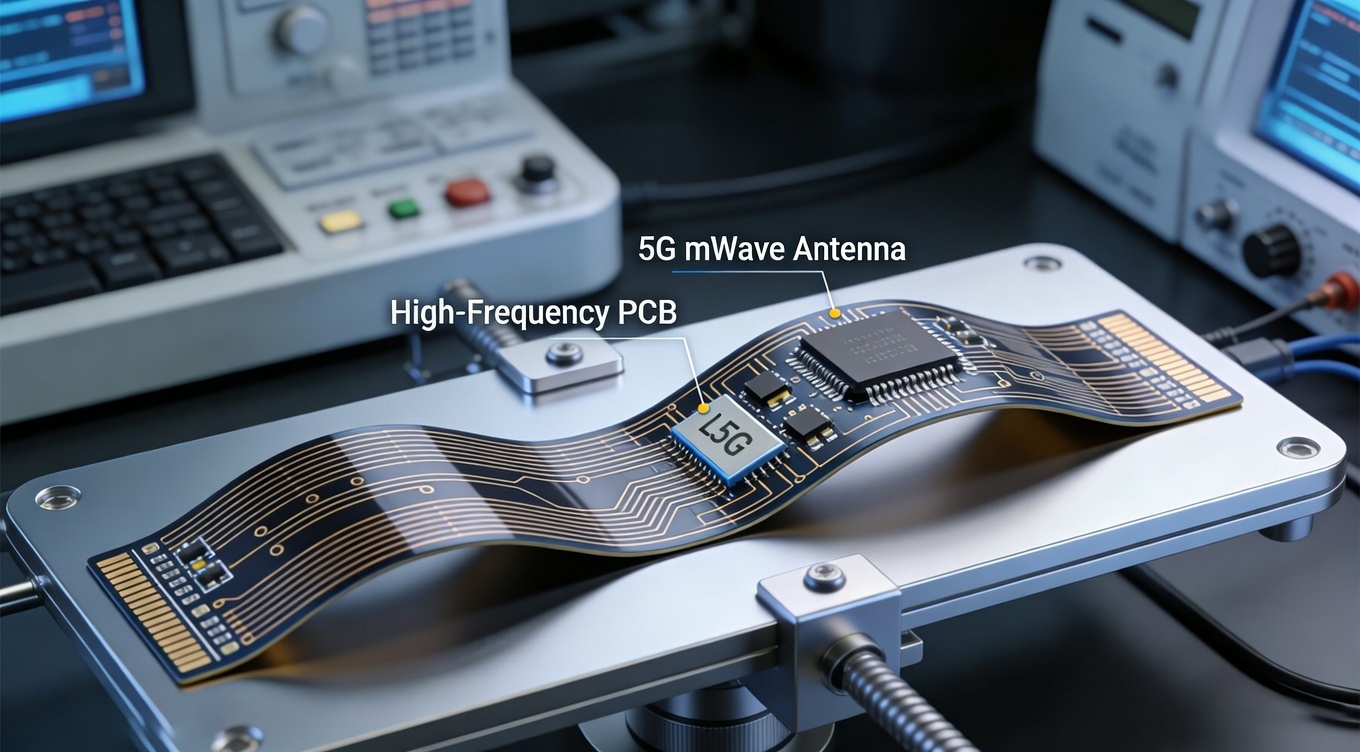
What Is LCP FPC and Why It Is Critical for 5G mmWave
Liquid Crystal Polymer (LCP) flexible printed circuits represent one of the most advanced material technologies in high-frequency PCB engineering. Unlike traditional polyimide (PI) substrates, LCP offers extremely low dielectric constant (Dk) and ultra-low dissipation factor (Df), making it highly suitable for millimeter-wave (mmWave) applications above 24 GHz.
In 5G mmWave systems, signal transmission occurs at frequencies such as 28 GHz, 39 GHz, and even higher bands, where signal loss becomes a critical issue. Conventional materials such as FR4 or standard PI introduce excessive dielectric loss, leading to signal attenuation and degraded performance. LCP materials, however, maintain stable electrical properties across high-frequency ranges, ensuring minimal signal loss and improved transmission efficiency.
Another major advantage of LCP is its near-zero moisture absorption. In high-frequency circuits, moisture can significantly alter dielectric properties, leading to impedance instability. LCP’s moisture absorption rate is typically below 0.04%, compared to much higher values for PI materials. This makes LCP ideal for outdoor and high-humidity environments.
LCP FPCs also provide excellent dimensional stability, which is essential for maintaining precise impedance control in high-density flexible circuits. As mmWave designs require extremely tight tolerances, even minor dimensional changes can impact signal integrity.
Additionally, LCP materials support thin, lightweight, and highly flexible designs, making them ideal for compact 5G devices such as antennas, modules, and wearable communication systems.
For Germany’s advanced electronics sector, where precision and reliability are critical, LCP FPC technology has become a key enabler for next-generation 5G mmWave systems.
Why Germany Is Accelerating Demand for LCP-Based Flexible PCBs
Germany is one of Europe’s leading technology hubs, with strong capabilities in automotive engineering, telecommunications infrastructure, and industrial automation. The adoption of 5G mmWave technology is driving demand for high-performance PCB materials, particularly LCP-based flexible circuits.
In the automotive sector, Germany’s transition toward autonomous driving and connected vehicles requires advanced radar and communication systems. These systems rely on high-frequency signal transmission, where LCP FPCs provide superior performance compared with traditional materials.
The telecommunications industry is another major driver. As Germany expands its 5G infrastructure, telecom equipment manufacturers require PCB materials capable of handling mmWave frequencies with minimal signal loss. LCP FPCs are widely used in antenna modules, RF front-end circuits, and high-speed interconnects.
Germany’s industrial automation sector, often referred to as Industry 4.0, also benefits from LCP technology. Smart factories rely on high-speed wireless communication systems that require reliable and stable PCB materials.
In addition, the medical technology sector is increasingly adopting wireless communication systems for monitoring and diagnostics. These applications demand compact, lightweight, and reliable PCBs, making LCP an attractive material choice.
Because of these factors, German companies are actively seeking suppliers that can provide high-quality LCP FPC solutions with consistent performance and reliable manufacturing processes.
LCP vs PI vs mPI: Material Comparison for mmWave Applications
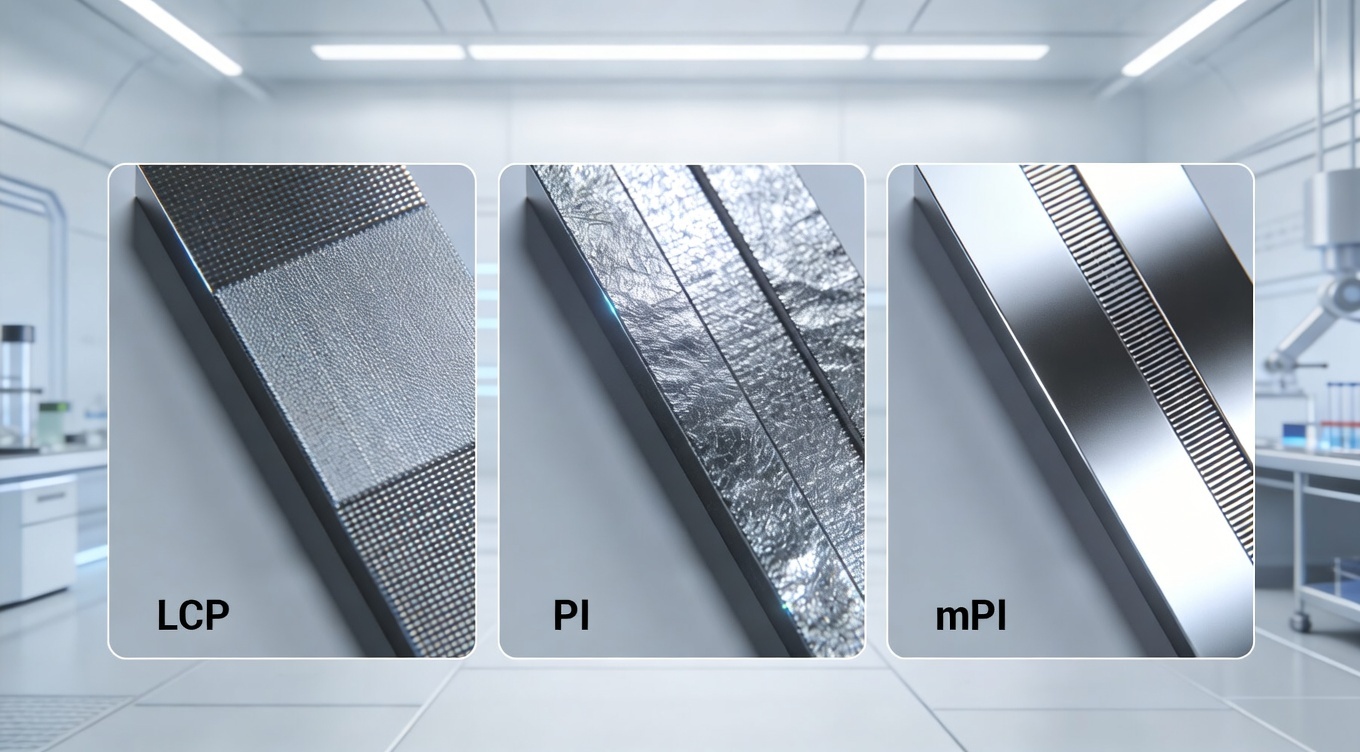
Selecting the right material is one of the most critical decisions in high-frequency PCB design. Engineers often compare LCP with traditional polyimide (PI) and modified polyimide (mPI).
Electrical Performance
- LCP: ultra-low dielectric loss, ideal for mmWave
- PI: moderate loss, suitable for lower-frequency applications
- mPI: improved over PI but still inferior to LCP
Moisture Absorption
- LCP: near zero moisture absorption
- PI: relatively high moisture absorption
- mPI: improved but not comparable to LCP
Cost Comparison
- LCP: highest cost
- mPI: medium cost
- PI: lowest cost
Processing Complexity
LCP materials require more advanced processing techniques, including precise lamination and handling, which can increase manufacturing complexity.
Despite the higher cost, LCP provides unmatched performance for high-frequency applications, making it the preferred choice for 5G mmWave systems.
Key Design Challenges in LCP FPC for 5G mmWave
Designing LCP-based flexible circuits for mmWave applications involves several technical challenges that must be carefully addressed.
One of the primary challenges is impedance control. At mmWave frequencies, even small variations in trace width or dielectric thickness can significantly affect impedance. Designers must use precise simulation tools and maintain tight manufacturing tolerances.
Another challenge is signal loss management. Although LCP minimizes dielectric loss, conductor loss and surface roughness can still impact performance. Engineers often use smooth copper surfaces and optimized trace geometries to reduce signal attenuation.
Thermal management is also important. High-frequency circuits can generate heat, and LCP materials must be integrated with proper thermal design strategies to ensure stable operation.
Additionally, manufacturing precision plays a critical role. LCP FPCs require advanced fabrication processes such as laser drilling, fine-line etching, and high-accuracy lamination.
Finally, designers must consider mechanical reliability. Flexible circuits must maintain performance under bending and mechanical stress, which requires careful layout design and material selection.
Industry Applications in Germany: Automotive, Telecom, Industrial, Medical
Germany’s industrial landscape provides a wide range of applications for LCP FPC technology, each with unique technical requirements.
Automotive Radar and Communication Systems
German automotive manufacturers are leaders in autonomous driving technology. LCP FPCs are used in radar sensors and communication modules that operate at mmWave frequencies. These applications require high reliability, low signal loss, and resistance to environmental conditions.
5G Infrastructure and Telecom Equipment
Telecom companies in Germany rely on LCP FPCs for high-frequency antenna modules and RF circuits. These systems require stable impedance and minimal signal attenuation.
Industrial Automation (Industry 4.0)
Smart factories use wireless communication systems for real-time data exchange. LCP materials provide the performance needed for high-speed communication.
Medical Devices
Medical electronics require compact and reliable communication systems. LCP FPCs enable miniaturized designs with stable performance.
Cost vs Performance: Is LCP Worth the Investment?
Although LCP materials are more expensive than traditional PCB substrates, their performance benefits often justify the cost in high-frequency applications.
The main cost factors include:
- raw material cost
- processing complexity
- yield optimization
However, the benefits include:
- reduced signal loss
- improved reliability
- longer product lifespan
For high-end applications such as 5G mmWave systems, the performance advantages of LCP typically outweigh the higher initial cost.
FAQ: LCP FPC for 5G mmWave
What is LCP material in flexible PCBs?
LCP is a high-performance polymer with excellent electrical properties, ideal for high-frequency circuits.
Why is LCP used in 5G mmWave?
Because it offers ultra-low signal loss and stable electrical performance at high frequencies.
Is LCP better than polyimide?
For high-frequency applications, yes. However, it is more expensive.
Why BESTFPC Is Your Ideal LCP FPC Manufacturing Partner
For companies developing advanced 5G mmWave systems, selecting the right PCB manufacturer is critical.
BESTFPC provides:
- advanced LCP flexible PCB manufacturing
- rigid-flex PCB solutions
- HDI high-frequency PCB technology
- strict quality control systems
With strong engineering support and advanced production capabilities, BESTFPC helps customers successfully develop high-performance LCP FPC solutions.
Conclusion
LCP flexible PCBs are becoming essential for 5G mmWave applications, particularly in advanced markets such as Germany. Their superior electrical performance, low moisture absorption, and high reliability make them the ideal choice for high-frequency designs.
Although the cost is higher, the long-term benefits in performance and reliability make LCP a valuable investment for next-generation electronic systems.
Partnering with an experienced manufacturer like BESTFPC ensures that your designs achieve both technical excellence and production reliability.


.png)
.png)
.png)
.png)

.png)