


 2026-10-27

 BEST
Finding a reliable flexible PCB manufacturer in Canada requires comparing actual manufacturing capabilities, quality standards, production locations, and total delivery costs. A supplier may offer quick prototypes but lack the capacity or processes required for complex rigid-flex PCBs or volume production.
Canada has several established flexible PCB suppliers, each with different strengths. Comparing seven Canadian manufacturers, understanding local versus overseas sourcing, and checking the right qualification evidence will help you choose a supplier that fits your project's technical requirements and budget.
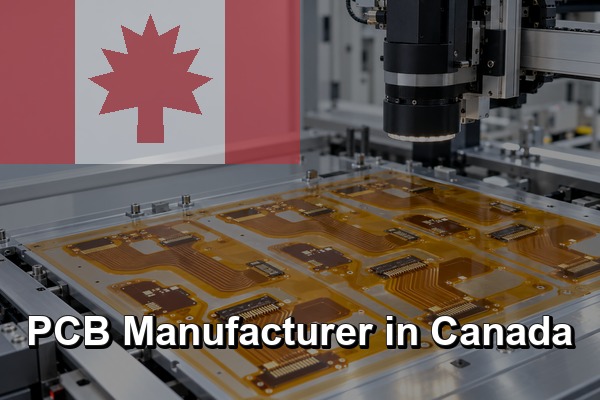
Which Flexible PCB Manufacturers Are Available in Canada?
Seven Canadian-based flexible PCB manufacturers and manufacturing service providers worth comparing are Candor Industries, CCI Canadian Circuits, Circoflex, Metaplast Circuits, PFC Flexible Circuits, Siber Circuits, and Camptech II Circuits. Below is a comparison table of 7 Canadian flexible circuit board manufacturers for your reference.
| Manufacturer | Location | Main Manufacturing Capabilities | Best-Fit Projects |
|---|---|---|---|
| Candor Industries | Toronto, Ontario | Up to 10-layer flex and rigid-flex PCBs, thin cores, sequential blind/buried vias, impedance control | Complex multilayer flex and advanced rigid-flex PCBs |
| CCI Canadian Circuits | Surrey, British Columbia | Flex and rigid-flex fabrication, stackup engineering; broader HDI and sequential lamination capabilities | Custom flex and rigid-flex projects requiring Canadian engineering support |
| Circoflex | Toronto, Ontario | Single-, double-, and multilayer flex, rigid-flex, electrical testing, turnkey assembly, and Taiwan volume-production option | Rapid prototyping and prototype-to-volume manufacturing programs |
| Metaplast Circuits | Toronto, Ontario | Flex and rigid-flex circuits, specialty laminates, high-density and hybrid PCB manufacturing | Specialty-material circuits and complex prototype-to-mid-volume projects |
| PFC Flexible Circuits / OSI Electronics | Scarborough, Ontario | Flex and rigid-flex fabrication, HDI, long-length circuits, DFM, SMT assembly and testing | Medical, industrial, and turnkey flexible PCB assemblies |
| Siber Circuits | Markham, Ontario | Up to 12-layer flex and rigid-flex PCBs, polyimide materials, impedance control, domestic and offshore manufacturing options | Multilayer flex, dynamic-flex, and high-reliability projects |
| Camptech II Circuits | Markham, Ontario | Up to 10-layer flexible PCBs, rigid-flex, microvias, blind/buried vias, PCB assembly | Advanced interconnects and projects requiring fabrication and assembly |
A Canadian supplier address does not necessarily mean every order is manufactured in Canada. Before placing an RFQ, confirm the fabrication, assembly, and testing locations for your specific project, especially when Canadian-origin production is required.
How Do You Choose a Flexible PCB Manufacturer for Your Project?
Compare these seven requirements to identify flexible PCB manufacturers capable of meeting your project's technical and production needs.
-
PCB Type and Layer Count: Confirm support for single-sided, double-sided, multilayer flex, or rigid-flex PCBs. For complex constructions, check the complete stackup, flex-section thickness, and rigid-to-flex transitions rather than layer count alone.
-
Material Compatibility: Verify the required polyimide, copper type and weight, adhesive system, coverlay, surface finish, and finished thickness. Special materials may affect both availability and manufacturing costs.
-
Bending Performance: Identify whether the circuit is static, flex-to-install, or dynamic. For repeated bending, compare the supplier's experience with your bend radius, copper construction, movement conditions, and cycle requirements.
-
Manufacturing Precision: Match your minimum line width/spacing, hole size, via structure, and impedance requirements to the supplier's capabilities. Fine-line specifications should be checked against the actual copper thickness and stackup.
-
Prototype and Volume Capacity: Confirm support for your initial order and forecast production quantities. Check whether production scaling requires different tooling, materials, or manufacturing sites.
-
PCB Assembly Services: For assembled flexible circuits, check support for stiffeners, panelization, SMT fixtures, component sourcing, and functional testing. Determine whether fabrication and assembly can be coordinated by the same supplier.
-
Engineering and Manufacturing Experience: Prioritize suppliers with relevant experience in similar flex or rigid-flex constructions. A comparable manufacturing example and a reviewed stackup are more useful than general capability claims.
Shortlist manufacturers that can meet your complete technical requirements before comparing prices. This prevents a low quotation from becoming an expensive redesign or production problem.
Canadian vs. Overseas Flex PCB Manufacturers: Which Should You Choose?
Canadian flexible PCB manufacturers are often preferable for projects requiring domestic production, local factory access, or simplified logistics. Overseas manufacturers can offer competitive volume manufacturing and integrated assembly services when international sourcing is permitted.
| Comparison Factor | Canadian Manufacturers | Overseas Manufacturers |
|---|---|---|
| Engineering Communication | Domestic factory visits and in-person technical discussions may be easier | Primarily remote communication, with responsiveness varying by supplier |
| Prototype Delivery | Domestic shipping avoids international customs clearance | Production speed must be evaluated together with international transit |
| Manufacturing Cost | Pricing depends on local capacity, processes, and order size | May offer more competitive unit pricing for suitable production volumes |
| Technical Capabilities | Established flex and rigid-flex manufacturing, subject to individual factory limits | Wider international supplier selection for specialized processes and production capacity |
| Quality Control | Domestic factory audits and direct inspections may be easier to arrange | Requires verified certifications, manufacturing records, and effective supplier qualification |
| Production Origin | Appropriate for projects requiring verified Canadian fabrication | Suitable when overseas production is permitted |
| Assembly Services | Available from selected Canadian suppliers | Integrated PCB fabrication, component sourcing, and assembly may be available |
| Logistics | Domestic transportation simplifies shipping and customs requirements | International freight, customs clearance, and import responsibilities must be considered |
Some Canadian suppliers also provide hybrid manufacturing arrangements, combining local engineering support with overseas production capacity.
This can be useful for projects moving from prototypes to larger orders, but the production site and any changes affecting approved materials, processes, or acceptance criteria must be controlled.
When overseas sourcing is allowed, comparing Canadian and international quotations against identical specifications can help identify the most suitable combination of cost, quality, and delivery.
What Affects Flex PCB Costs and Delivery Time in Canada?
The main causes of quotation differences are PCB construction, material selection, production quantity, tooling, testing, and delivery scope. Two manufacturers quoting the same Gerber files may not include identical services or materials.
For a fair comparison, check these five items:
-
Materials and Stackup: Compare the same polyimide, copper weight, adhesive system, coverlay, and finished thickness. Different material selections can affect price, flexibility, and reliability.
-
Unit Price and Tooling: Request prices at the same quantities, separating one-time tooling charges from recurring fabrication costs. Confirm whether tooling can be reused for repeat orders.
-
Testing and Inspection: Check whether electrical testing, impedance verification, dimensional inspection, microsections, and required reports are included in the quotation.
-
Assembly Costs: Separate bare-board prices from component sourcing, SMT assembly, fixtures, programming, and functional testing where applicable.
-
Shipping and Import Charges: Compare freight, agreed Incoterms, customs responsibilities, applicable duties, and nonrecoverable taxes rather than manufacturing prices alone.
For purchasing comparisons, use:
Total Delivered Cost = PCB Manufacturing + Tooling + Required Testing + Assembly (if applicable) + Freight + Applicable Import Costs
For example, a supplier offering lower unit prices but higher tooling and transportation charges may be more competitive at 5,000 pieces than at 50 prototypes.
How Should You Compare Lead Time?
Use three dates in every quotation:
-
Production Release Date: When the approved files, materials, and manufacturing requirements are released to production.
-
Factory Dispatch Date: When completed boards are scheduled to leave the manufacturing facility.
-
Canadian Delivery Date: When the shipment is expected to reach the agreed Canadian destination.
Material shortages, unresolved engineering questions, special testing, and customs clearance can affect the final schedule.
The delivery date matters more than the advertised fabrication turnaround, particularly for projects with fixed prototype evaluation or production launch deadlines.
How Can You Verify a Flexible PCB Manufacturer's Reliability?
A reliable flexible PCB manufacturer should provide verifiable certifications, manufacturing records, and test results. Check these seven factors before placing an order:
-
Quality Certifications: Verify applicable ISO 9001, ISO 13485, IATF 16949, or AS9100D certificates, including validity, manufacturing site, and certification scope.
-
DFM Review: Check whether the supplier identifies specific manufacturing risks involving stackup, bend areas, vias, coverlay, stiffeners, and tolerances before production.
-
Manufacturing Experience: Request evidence of similar flex or rigid-flex PCB builds, particularly for complex multilayer structures, fine-line circuits, or dynamic bending applications.
-
Inspection and Testing: Confirm the agreed IPC-6013 requirements, electrical testing, dimensional inspection, and impedance or bending tests where applicable. IPC-6013F is the current revision, but an existing approved project may specify an earlier revision.
-
Material Traceability: Check whether polyimide, copper foil, production batches, and inspection results can be traced to the delivered PCB lots.
-
Prototype-to-Production Consistency: Verify that approved materials, stackups, production processes, and inspection criteria remain controlled during volume manufacturing.
-
Quality Issue Resolution: Confirm the supplier's procedures for rejected boards, root-cause investigations, corrective actions, and replacement arrangements.
Warning signs include unverifiable certifications, missing test records, unexplained material substitutions, unclear manufacturing locations, and repeated defects without documented corrective actions.

Why Consider BestFPC for Flexible PCB Supply to Canada?
BestFPC is a China-based flexible PCB manufacturer offering Canadian customers custom FPC fabrication, rigid-flex manufacturing, free DFM reviews, and assembly services. For projects that allow overseas sourcing, BestFPC offers several practical advantages:
-
Free DFM Review: Identify potential fabrication issues involving stackup, bend areas, coverlay, stiffeners, tolerances, and via structures before production. This helps reduce unnecessary tooling revisions and prototype delays.
-
No Minimum Order Quantity (MOQ): Order prototypes, small batches, or production quantities without committing to an unnecessarily large initial order, subject to manufacturing and material availability.
-
20+ Years of Manufacturing Experience: Work with a team experienced in polyimide materials, fine-line circuitry, multilayer flex, rigid-flex constructions, and custom manufacturing requirements.
-
Flexible PCB Manufacturing Capability: BestFPC offers single-sided, double-sided, multilayer, and rigid-flex PCB fabrication, with published 2/2 mil minimum line width/spacing for applicable constructions. Layer count, copper thickness, and other specifications are confirmed against the submitted stackup.
-
Quality Certifications: BestFPC lists ISO 9001, ISO 13485, IATF 16949, and AS9100D among its quality-system credentials. Current certificates and the covered manufacturing scope can be requested during supplier qualification.
-
Turnkey FPC Assembly: Combine flexible PCB fabrication, component sourcing, SMT assembly, and applicable inspection or functional testing under one manufacturing partner, reducing coordination between separate suppliers.
-
Prototype-to-Production Support: Maintain approved fabrication files, construction requirements, and inspection criteria when moving from initial samples to repeat orders.
-
International Delivery: Request quotations that account for the Canadian destination, order quantity, shipping terms, and required delivery date.
BestFPC is best suited to Canadian customers who permit China-based manufacturing and want flexible ordering, engineering support, and coordinated fabrication and assembly.
Projects requiring Canadian-origin production should instead select a supplier with an approved manufacturing facility in Canada.
FAQs About Flexible PCB Manufacturers in Canada
Q1: Do Canadian flexible PCB manufacturers accept small prototype orders?
A1: Many offer prototype services, but minimum quantities, tooling charges, and turnaround depend on the supplier and PCB construction.
Q2: Can a Canadian EMS company assemble flexible PCBs manufactured overseas?
A2: Yes. The fabricator and EMS provider should agree on panel format, stiffeners, handling fixtures, soldering conditions, and inspection responsibilities before shipment.
Q3: What is the difference between IPC Class 2 and Class 3 flexible PCBs?
A3: Class 2 applies to dedicated-service electronic products, while Class 3 addresses high-performance products where continued operation is especially important. The specified performance class determines applicable acceptance requirements.
Q4: Who owns the tooling for a custom flexible PCB?
A4: Tooling ownership depends on the purchase agreement. Confirm ownership, storage, reuse rights, and transfer conditions before paying tooling charges.
Q5: Can flexible PCBs be delivered in panels for SMT assembly?
A5: Yes. Panel design should account for fiducials, assembly support, component placement, handling, and depanelization requirements.
Q6: Can flexible PCBs use selective stiffeners?
A6: Yes. FR4, polyimide, and other suitable materials can reinforce connectors and component mounting areas. Thickness, position, and attachment depend on the PCB construction.
Q7: What packaging is suitable for shipping flexible PCBs to Canada?
A7: Packaging should protect against deformation, abrasion, contamination, and moisture where relevant. Flat supports, protective separators, and suitable moisture-control packaging may be required.
Q8: Can I request a flexible PCB quote with Gerber files only?
A8: A preliminary estimate may be possible, but accurate pricing normally requires the stackup, materials, finished thickness, surface finish, quantity, and special manufacturing or testing requirements.
How Can You Get a Free DFM Review and Flex PCB Quote?
BestFPC offers free DFM reviews and manufacturing quotations for flexible PCB fabrication, rigid-flex PCBs, and turnkey FPC assembly.
For an accurate quotation, provide:
-
Manufacturing Files: Gerber or ODB++, drill files, fabrication drawing, and design revision.
-
PCB Specifications: Layer count, stackup, materials, copper thickness, finished thickness, coverlay, stiffeners, and surface finish.
-
Bending Requirements: Static or dynamic application, bend radius, and mechanical conditions where applicable.
-
Order Details: Required quantity, target delivery date, and Canadian delivery location.
-
Quality Requirements: Applicable standards, inspection scope, testing, and traceability requirements.
-
Assembly Documents (If Required): BOM, pick-and-place data, assembly drawings, and functional testing instructions.
Send your files to sales@bestfpc.com for a free manufacturing DFM review and project-specific quotation covering your approved PCB requirements, order quantity, and Canadian delivery destination.


.png)
.png)
.png)
.png)

.png)