


 2026-10-27

 BEST
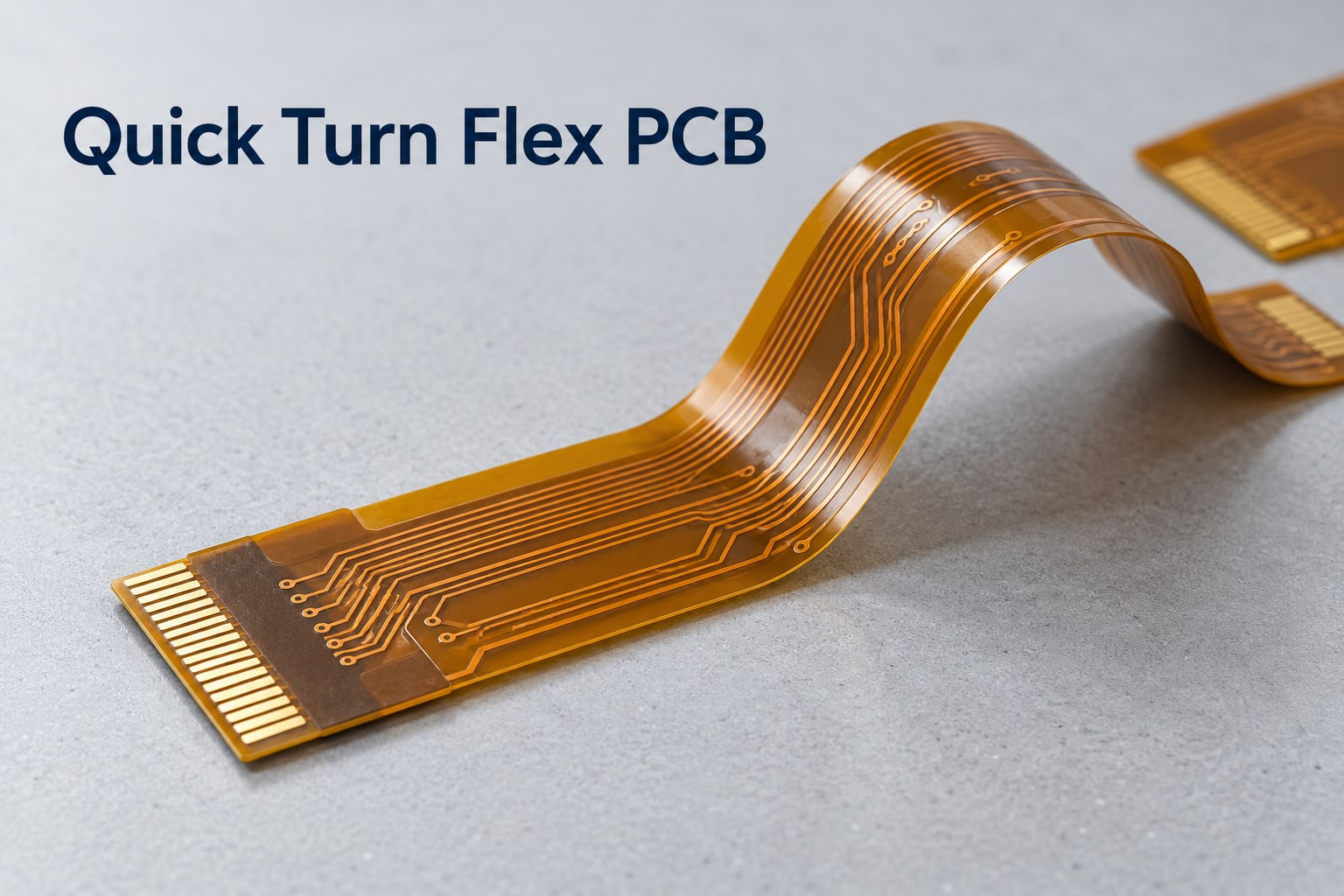
When a prototype build is approaching, you need more than a board price and a promised date. You need a manufacturing team that understands the design, raises the right questions early and helps keep engineering, purchasing and production moving together. For US customers sourcing quick turn flex PCBs, that working relationship can matter as much as fabrication speed.
BestFPC serves US customers from our production facilities in China, where experienced engineering, production, quality and sales teams bring years of working together to your project, from prototypes through repeat production. Our experienced managers bring DFM, manufacturing and quality decisions together, with optional assembly coordination when your project needs it. Send your Gerber files, quantities and required US receipt date to sales@bestfpc.com, and tell us what matters most for your next build.
Why US Buyers Choose BestFPC for Quick Turn Flex PCB
A tight production schedule calls for more than a fast quote. At BestFPC, you work with an experienced manufacturing team that understands your design priorities, responds to urgent requirements, and supports your project from prototyping to repeat production.
10+ Years of Team Continuity
Our engineering, production, quality, and sales leaders have each spent over 10 years with BestFPC. Their long-standing collaboration means fewer handoffs, faster communication, and experienced people managing your project at every stage.
Coordinated Quick-Turn Scheduling
When your deadline moves forward, our teams work together to review material availability, manufacturing capacity, and inspection requirements. This coordinated approach helps us prioritize urgent orders and keep your production plans moving.
Experience Serving Medical Brands
Years of working with established medical-device brands have shaped how we manage quality, technical communication, and production consistency. We bring that same attention to detail to your flex PCB project, whether you're ordering prototypes or preparing for repeat production.
Certified Quality Management
Our ISO 9001, ISO 13485, IATF 16949, and AS9100D certifications, together with applicable UL recognition, support our commitment to controlled manufacturing and consistent quality. These credentials give your purchasing and engineering teams valuable evidence when evaluating BestFPC as a manufacturing partner.
Manufacturing takes place in China, with dedicated support for US customers. Share your Gerber files and target delivery date with BestFPC to see how our team can support your next build.
Quick Turn Flex PCB Manufacturing Capabilities
Single-sided, double-sided and multilayer flex circuits give your team options for routing connections within limited space. Our conventional FPC capabilities combine a choice of PI constructions, copper weights and local reinforcement, so the board can be developed around its electrical and mechanical interfaces.
| Parameter | Conventional FPC Capability |
|---|---|
| Layer count | 1–4 layers |
| Finished flex board thickness | 0.06–0.60 mm |
| Base construction | Adhesive-based and adhesiveless polyimide |
| Adhesive-based PI core thickness | 0.5, 1 and 2 mil |
| Adhesiveless PI core thickness | 0.5, 1, 2 and 3 mil |
| Adhesive-based core copper options | 0.33, 0.5 and 1 oz |
| Adhesiveless core copper options | 0.33, 0.5, 1 and 2 oz |
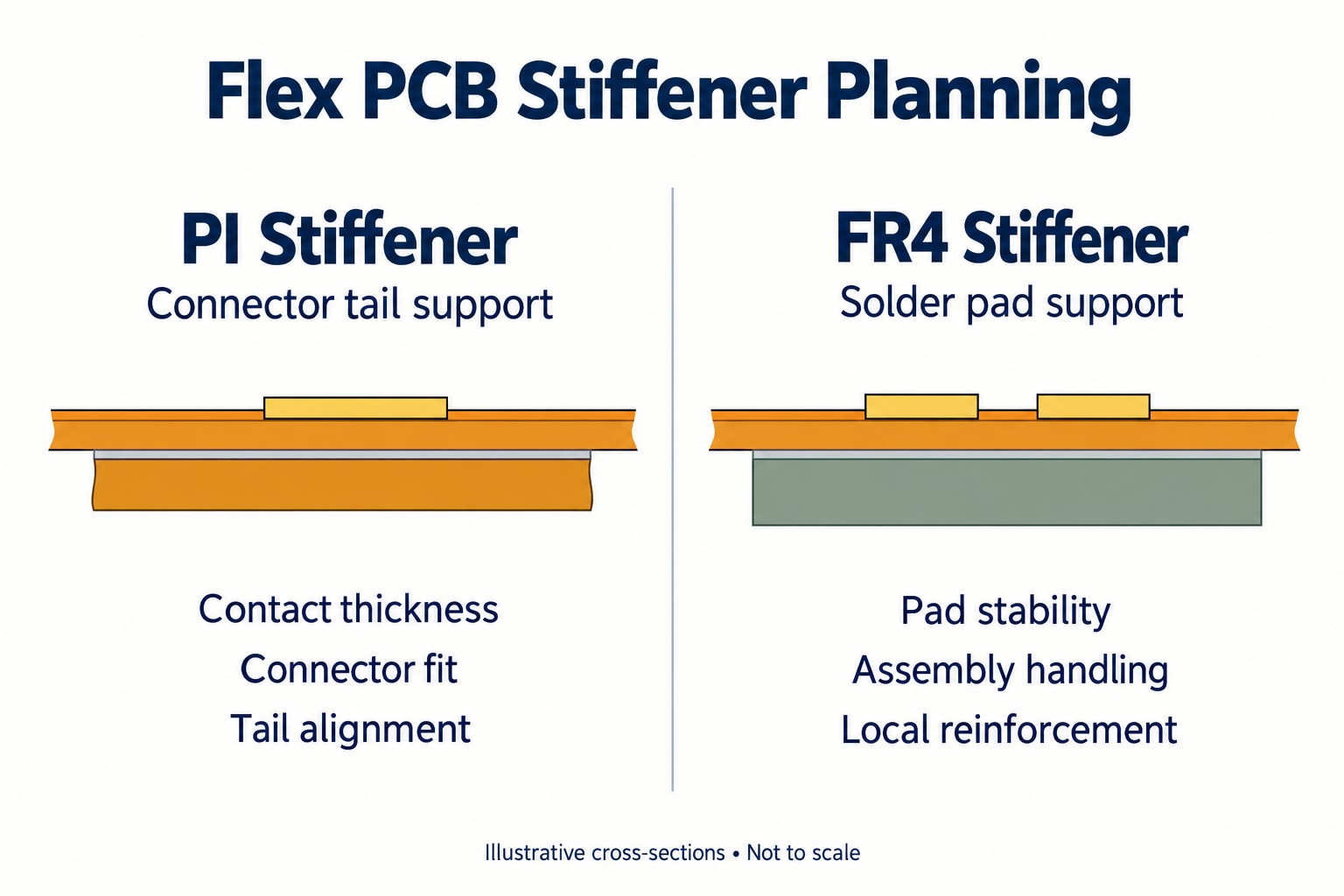
| PI stiffener thickness options | 3, 5, 7 and 9 mil |
| Controlled impedance tolerance | ±10%, subject to stack-up review |
Core and stiffener thicknesses describe individual materials; finished board thickness reflects the complete construction. We review these choices together so the stack-up, connector fit and manufacturing route agree before the order starts.
For higher layer counts or specialized materials, include the details with your files. Material procurement and process complexity influence the available turnaround, so manufacturing options and delivery timing are established for the actual construction rather than assumed from a single capability figure.
Flex PCB Prototyping and DFM for US Engineering Teams
A prototype is more useful when it tests the intended construction. Our flex PCB prototyping review targets the details that can otherwise trigger file revisions, connector-fit problems or production interruptions. You own the circuit design and product validation; we focus on making the board manufacturable and preparing for assembly where it is included.
Our DFM discussion connects design details to the next build:
- Stack-up and copper: Layer order, dielectric construction and copper specifications give fabrication a complete picture beyond the Gerber artwork.
- Connector and stiffener fit: Contact-area thickness, reinforcement outline and installation side must work with the mating connector.
- Coverlay openings: Clearly defined exposed pads and insulated areas help prevent ambiguity during manufacturing preparation.
- Bend zones: Marking bend locations and distinguishing installation bends from repeated movement gives the review the right mechanical context.
- Material alternatives: Approved alternatives may expand sourcing options; changes go through your engineering team before use.
For teams working across US and China time zones, a complete file package and one engineering contact help keep decisions moving. Consistent part numbers, revisions and a clear controlling drawing reduce the chance of reopening questions already answered.
Quick Turn Flex PCB Lead Times for US Orders
Plan around approximately 1.5 weeks of FPC manufacturing for suitable projects, with expedited routes reviewed against your design and deadline. Approved files, material availability, board construction and production capacity determine the schedule; the standard planning reference is not our fastest possible turnaround.
Fast delivery depends on how quickly the right decisions reach the production floor. Our sales, engineering, production and quality teams have worked together for years. When you bring us an urgent date, sales clarifies what must arrive and when, engineering works through open drawing questions, production reviews materials and available capacity, and quality plans the release checks alongside the build.
That coordination helps avoid a familiar frustration: receiving a promising date from one department, only to discover an unresolved issue in another. If a material or drawing decision affects timing, the discussion can focus on a practical next step while your team still has time to act.
Your delivery plan separates four milestones:
- Engineering release: Approve the production revision and close manufacturing questions.
- Material readiness: Have the specified laminate, coverlay and stiffeners ready.
- Manufacturing and inspection: Complete fabrication and the agreed release checks.
- US delivery: Allow for transit and customs processing after factory dispatch.
The start condition and dispatch date belong in writing. For assembled boards, component sourcing and assembly scheduling are reviewed separately. Share your US ZIP code, receiving deadline and any split-delivery options so we can coordinate around the hardware your team needs first.
Flex PCB Cost for US Buyers
A useful flex PCB quote shows what you are buying and where the cost changes as quantities grow. We price the released design, materials, tooling and inspection needs together, then use your prototype and repeat-order quantities to make the purchasing options clearer.
| Cost Item | Quote Details |
|---|---|
| Board fabrication | Layer count, dimensions, copper, coverlay, stiffeners and finish |
| Non-recurring engineering and tooling | Initial setup charges and their treatment on repeat orders |
| Expedited processing | Availability, additional charge and resulting dispatch date |
| Inspection and reports | Electrical tests, dimensional checks and requested records |
| Assembly | Component sourcing, placement and testing |
| Delivery | Freight, delivery terms and responsibility for import charges |
Panel utilization and material selection are practical places to explore cost improvements. We review them against the board's function, with engineering approval for any change to construction, flexibility or connector fit.
For US purchasing teams comparing domestic and overseas sources, the deciding figure is the total cost for the same delivered order. Include freight, tooling and necessary tests in the comparison. That gives you a sound basis for choosing a supplier without discovering omitted charges after the purchase order is issued.
Quality Control for Quick Turn Flex Circuits
Your team needs boards that pass incoming checks and behave consistently from one order to the next. Our experienced quality supervisor connects day-to-day inspection with engineering and production decisions, helping keep critical features and agreed acceptance criteria visible throughout the build.
Our certifications help you qualify a manufacturing partner with established controls for quality, traceability and consistent production:
- ISO 9001: Quality-management controls support consistent processes, corrective action and follow-through when a problem needs resolution.
- ISO 13485: Medical-device quality-management disciplines emphasize controlled documentation, traceability and changes that require careful review.
- IATF 16949: Automotive quality-management disciplines focus on defect prevention, process consistency and reducing variation across repeat production.
- AS9100D: Aerospace quality-management requirements strengthen risk management, process control and traceability, supporting manufacturing consistency across prototype and repeat production builds.
- UL recognition: Applicable PCB recognition identifies covered materials and constructions, giving buyers a defined basis for checking board-level safety requirements.
For supplier qualification, we match the relevant BestFPC / Best Technology certificate and UL documentation to the manufacturing facility, activity and board construction in your order. This gives your purchasing and quality teams a clear basis for approval rather than a list of logos.
On the board itself, each inspection addresses a specific risk:
- Optical inspection: Detect manufacturing defects in the etched circuitry.
- Bare-board electrical testing: Check connections for opens and shorts.
- Visual and dimensional inspection: Verify the outline, exposed contacts, coverlay and reinforcement against the production drawings.
- Controlled impedance verification: Check the agreed targets and applicable construction, with the specified verification records.
For assembled boards, SPI, AOI, X-ray and functional testing are selected to suit the assembly and test plan. They complement bare-board electrical testing. Tell us which reports and traceability details your receiving team needs so production release and incoming acceptance follow the same criteria.
From Flexible PCB Prototypes to Repeat Production
Once the prototype is approved, the next order should build on that work. We manufacture flexible PCB prototypes and repeat orders with attention to the released construction, while reviewing tooling, panelization and assembly arrangements for the new quantity.
Carry four decisions forward into production:
- One released revision: Consolidate approved prototype changes into a complete manufacturing package.
- Defined material choices: Identify the specifications that stay fixed and the alternatives open to review.
- Consistent acceptance criteria: Preserve the approved electrical, dimensional and inspection needs.
- A realistic order plan: Provide quantities and expected release patterns so pricing and scheduling reflect production rather than prototype economics.
If the first order is for bare boards, share the later assembly plan early. The BOM, placement data and testing needs help us plan reinforcement and flex handling alongside fabrication, giving your team a more coherent transition to assembled hardware.
Quick Turn Flex PCB Case Study for a US Customer
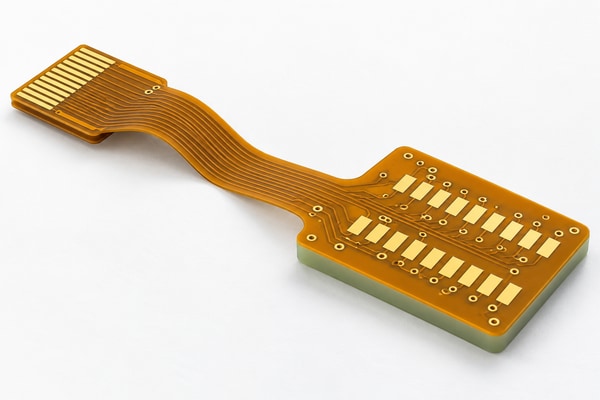
A US customer's evaluation-kit adapter combined a two-layer flex circuit, a ZIF tail and a reinforced solder-pad area. The order called for 15 boards plus two spares, supplied in panels.
Our proposed expedited plan targets five working days through fabrication and final inspection, starting with approved production files, all materials ready and reserved manufacturing capacity. International transit is scheduled separately against the US receiving date.
DFM and material control: The customer-approved 1 mil adhesiveless PI replaces an outdated 0.5 mil drawing note. Our plan carries that decision into fabrication data and checks the adhesive build-up at both reinforced areas: 0.32 ±0.03 mm at the ZIF tail and 0.945 ±0.03 mm beneath the solder pads.
Five-day manufacturing plan: Days 1–2 cover material preparation, drilling, hole metallization, circuit imaging, plating, etching and optical inspection. Day 3 covers coverlay alignment, lamination and curing. Day 4 covers ENIG finishing, PI/FR4 stiffener bonding and panel profiling. Day 5 is reserved for electrical testing, dimensional and visual inspection, and packing after release.
Quality and production continuity: Checks prioritize connector thickness, stiffener position, coverlay openings and continuity/isolation against the agreed IPC Class II criteria. The approved stack-up, panel layout and inspection checkpoints provide a reusable baseline for future production orders.
For the buyer, this plan connects material selection, mechanical fit and dispatch preparation in one coordinated route, helping prevent conflicting drawings or reinforcement details from disrupting the next build.
PCB Specifications
| Parameter | Project Specification |
|---|---|
| Circuit construction | 2-layer FPC |
| Copper | 1/3 oz on L1 and L2 |
| Base material | 1 mil adhesiveless PI, customer approved |
| Coverlay | 1/2 mil yellow coverlay |
| Surface finish | ENIG: Au 1–4 µin; Ni 100–200 µin |
| ZIF-tail reinforcement | 200 µm PI stiffener; FPC + PI total: 0.32 ±0.03 mm |
| Solder-pad reinforcement | 800 µm FR4 stiffener; FPC + FR4 total: 0.945 ±0.03 mm |
| Quality class | IPC Class II |
| Delivery panel size | 234.80 × 208.00 mm |
| Order quantity | 15 boards + 2 spares |
Get a Quick Turn Flex PCB Quote for Your US Project
Send us the files that define the board and the date that matters to your project. Together, they let us turn a quick turn flex PCB inquiry into a manufacturing proposal with meaningful pricing and timing.
For a useful first review, include:
- Gerber and drill files, with part number and revision.
- Stack-up, fabrication drawing and critical dimensions.
- Material, copper, surface finish, coverlay and stiffener specifications.
- Prototype quantities and expected repeat-order quantities.
- Inspection, impedance and documentation needs.
- US delivery ZIP code and required receipt date.
- BOM, component placement file and test details for assembled orders.
Point out any fixed build date and whether split deliveries are worth exploring. That helps us focus the discussion on the decisions that affect your schedule, rather than exchange quotes based on incomplete assumptions.
Email your files to sales@bestfpc.com to start your manufacturing review and quote.
FAQs about Quick Turn Flex PCB
Are your quick turn flex PCBs manufactured in the USA?
We manufacture in China and supply US customers. Let us know about any country-of-origin restrictions at the start so your purchasing team can establish whether this route fits the project.
Can you manufacture single-sided, double-sided and multilayer flex PCBs?
Yes. Our conventional FPC range includes 1–4 layers. Send the stack-up and material specifications so the production schedule reflects the complete board construction.
Can you provide a 48- or 72-hour turnaround?
Send your files and deadline for an expedited-build review. Availability depends on construction, materials and scheduling; a 48- or 72-hour turnaround is not a standard commitment for every order. US transit time is separate from manufacturing time.
When does the manufacturing lead time begin?
The quotation should state the start condition. Production timing depends on engineering approval, material readiness and order release, rather than the date of the initial inquiry.
Can a material change shorten the schedule?
An available alternative may open up an earlier manufacturing route. Your engineering team approves the change first so timing improvements preserve the board's functional needs.
Can we order bare boards first and assembly later?
Yes. Start with bare-board fabrication and share the intended assembly plan. We review the later assembly separately, with early attention to reinforcement, mounting and flex handling.
Can prototype boards become the basis for repeat production?
Yes. The approved revision, construction and acceptance criteria provide the starting point. Pricing, tooling and scheduling are then reviewed for the next order quantity.
Whether you are preparing a first prototype or looking for a new manufacturing partner, bring us the details that make your project demanding. At BestFPC, the people discussing your files, coordinating production and overseeing quality work together to help you move the next build forward.
Send your Gerber files, quantities and required US receipt date to sales@bestfpc.com for a project-specific quote.


.png)
.png)
.png)
.png)

.png)