


 2026-10-19

 BEST
A flex PCB can pass electrical testing yet still fail during assembly because its connector section is too thick or its bending area cracks. For buyers searching flex PCB Malaysia, the real challenge is finding a manufacturer that can meet their exact specifications without causing production delays or unexpected costs.
A reliable flex PCB supplier should offer proven manufacturing capabilities, consistent quality, and dependable delivery. This guide explains how to compare local and overseas manufacturers, verify production capabilities, and avoid costly sourcing mistakes. BestFPC provides custom flex PCB manufacturing and assembly services from China for Malaysian customers.
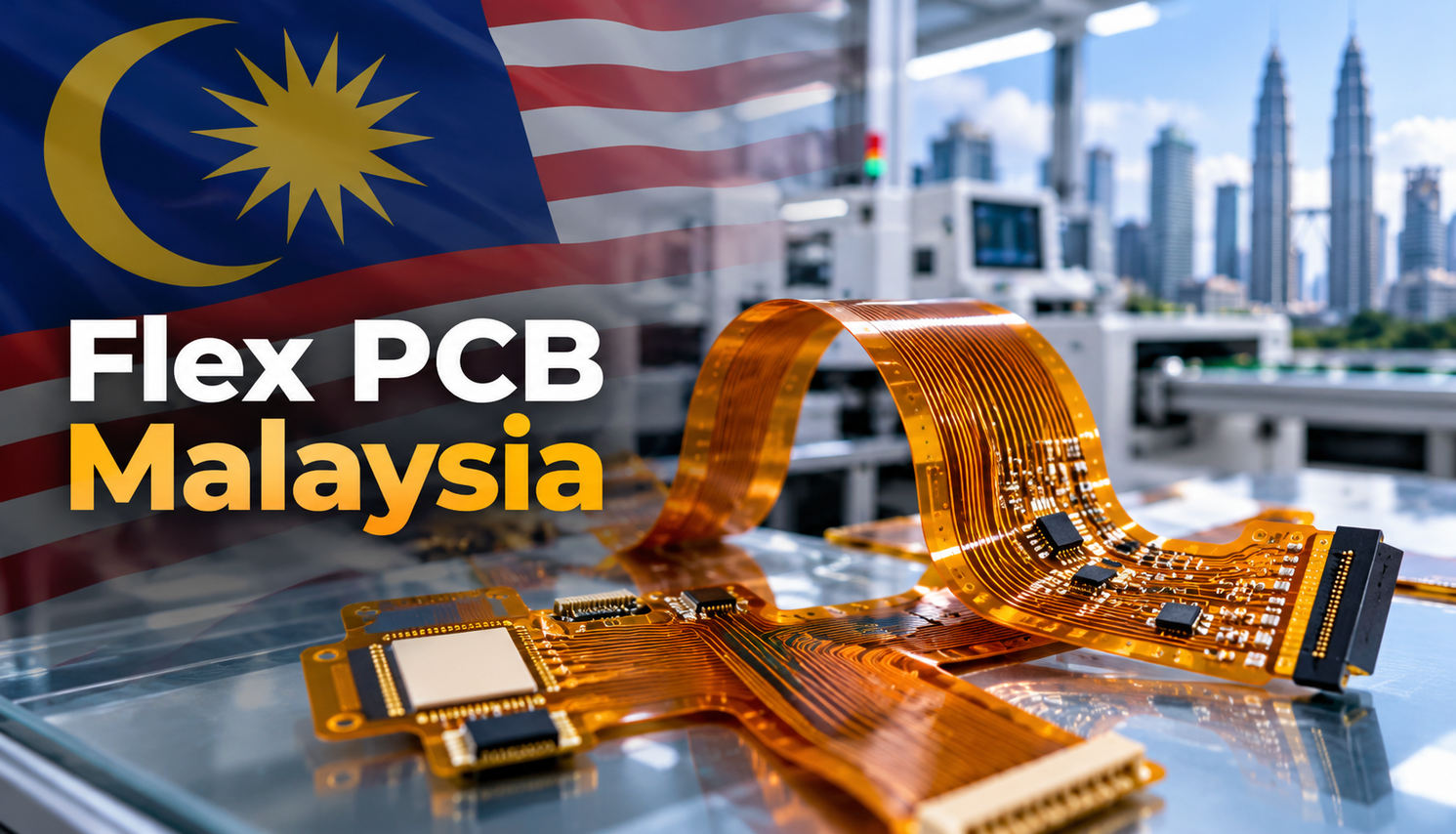
Where Can You Find Flex PCB Suppliers Serving Malaysia?
Start with Malaysian manufacturing directories, FPC factory websites, EMS referrals, and overseas manufacturers that supply Malaysia. Focus on companies with actual flexible circuit manufacturing experience rather than general PCB distributors.
- Local FPC Manufacturers: Look for manufacturers in Penang, Selangor, and Johor. Confirm whether they operate their own FPC fabrication facilities.
- Manufacturer Websites: Check factory locations, supported PCB constructions, manufacturing capabilities, and examples of completed projects.
- EMS and Engineering Referrals: Ask existing assembly partners about suppliers experienced with similar materials, connectors, or bending requirements.
- Overseas Manufacturers: Consider China-based factories offering custom flex PCB manufacturing, DFM reviews, and international delivery.
- Shortlist two or three suppliers that can manufacture your required FPC construction. A factory specializing in simple flexible interconnections may not have the processes needed for fine-line multilayer circuits or complex rigid-flex assemblies.
Local vs. China-Based Flex PCB Suppliers: Which Should You Choose?
Choose a local manufacturer when factory access and domestic logistics are priorities. Consider a China-based manufacturer when its capabilities, production terms, and total delivered cost better suit your project.
| Comparison Factor | Local Manufacturers in Malaysia | China-Based Manufacturers |
|---|---|---|
| Factory Verification | Local factory visits and audits may be easier to arrange | Remote audits or scheduled factory visits may be required |
| Manufacturing Capabilities | Must be verified against the factory's equipment and supported processes | Must be verified against the factory's equipment and supported processes |
| Engineering Communication | Local technical meetings may be more convenient | Remote DFM reviews and technical coordination; confirm communication support |
| Prototype Delivery | Domestic transportation may reduce shipping time | Fabrication time, international transit, and customs processing must be considered |
| Total Purchasing Cost | Manufacturing, testing, domestic freight, and applicable taxes | Manufacturing, testing, international freight, clearance costs, and applicable taxes |
| Production Reliability | Confirm capacity, material availability, and subcontracted processes | Confirm capacity, material availability, and international shipping arrangements |
| Quality Issue Resolution | Domestic returns or inspections may be easier to arrange | Confirm replacement procedures, claims handling, and return-shipping arrangements |
For Malaysian OEMs and EMS companies, manufacturing capability, total delivered cost, and production schedule should guide the decision. Compare suppliers using identical fabrication files, inspection requirements, quantities, and delivery terms.
How Can You Verify a Flex PCB Manufacturer's Background?
Confirm the manufacturer's legal identity, factory location, production activities, and experience with similar flexible circuits before requesting a formal quotation.
- Business Identity: Verify the registered company name, factory address, and contact details against official company information.
- Factory Operations: Determine which FPC manufacturing processes are completed in-house and which, if any, are subcontracted.
- Manufacturing Experience: Request examples involving similar layer counts, materials, connector structures, or bending conditions.
- Factory Evidence: Review production equipment, factory photographs, manufacturing videos, or available audit records.
- Engineering Support: Confirm that technical staff can review Gerber files, stackups, dimensional tolerances, and manufacturing limitations.
For example, if your project uses a fine-pitch ZIF connector, ask whether the manufacturer has experience controlling contact thickness and stiffener placement for similar products.
A qualified manufacturer should identify potential production limitations before accepting the design, rather than promise that every specification is achievable.
What Flex PCB Manufacturing Capabilities Should You Check?
Check the supplier's layer construction, trace dimensions, materials, finished thickness, bending requirements, and special manufacturing processes against your fabrication drawings.
| Manufacturing Feature | What to Check | Why It Matters |
|---|---|---|
| PCB Construction | Single-sided, double-sided, multilayer, and rigid-flex constructions; supported stackups | Confirms whether the required circuit structure can be manufactured |
| Line Width and Spacing | Minimum trace width and clearance at the specified copper thickness | Determines fine-line manufacturing feasibility |
| Holes and Vias | Minimum mechanical and laser-drilled hole sizes, annular rings, and registration tolerances | Affects interconnection reliability and high-density routing |
| Flex Materials | Polyimide, RA or ED copper, copper thickness, and adhesive or adhesiveless laminates | Influences flexibility, thickness, and fatigue performance |
| Finished Thickness | Thickness and tolerances in flexible, connector, and reinforced areas | Ensures connector compatibility and mechanical fit |
| Bending Requirements | Static or dynamic bending, bend radius, expected cycles, and test conditions | Helps prevent conductor fatigue and mechanical failure |
| Coverlay and Stiffeners | Coverlay openings, adhesive alignment, FR-4/PI stiffeners, and placement tolerances | Protects conductors and supports connectors or components |
| Surface Finishes | ENIG, hard gold, or other specified finishes; plating thickness and application areas | Ensures suitable solderability or connector contact performance |
| Controlled Impedance | Target impedance, stackup, trace geometry, material properties, and verification method | Supports specified signal integrity requirements |
| Panelization and Assembly | Panel dimensions, fiducials, tooling holes, and SMT assembly support where required | Confirms compatibility with the intended assembly process |
Bending performance and connector thickness require particular attention. A circuit that bends once during installation has different reliability requirements from one subjected to repeated movement. The manufacturer should confirm the copper construction, bend radius, and expected bending cycles.
For ZIF connectors, verify the finished contact thickness and stiffener position against the mating connector specification. Request written DFM confirmation before approving production, particularly for fine-line circuits, tight tolerances, or dynamic bending applications.
How Can You Verify a Flex PCB Supplier's Quality Control Capabilities in Malaysia?
Verify a Flex PCB supplier's quality control capabilities by checking its certifications, inspection records, production consistency, traceability, and corrective-action procedures. A reliable manufacturer should provide verifiable evidence of quality control across different production batches.
- Verify Quality Certifications: Check the validity and scope of ISO 9001 and other applicable certifications. For medical or automotive projects, confirm whether ISO 13485 or IATF 16949 certification covers the relevant manufacturing activities.
- Review Inspection Reports: Request actual inspection records from comparable Flex PCB projects. Check measured results, acceptance criteria, and whether the reports can be linked to specific production lots.
- Assess Production Consistency: Ask for quality records from multiple production batches where available. Review recurring defects, rejection trends, and corrective actions to evaluate manufacturing stability.
- Check Production Traceability: Confirm that finished Flex PCBs can be traced to material batches, manufacturing processes, and inspection results.
- Evaluate Corrective-Action Capabilities: Review how the supplier investigates defects, identifies root causes, implements corrective actions, and prevents similar issues from recurring.
Before approving a supplier, confirm which quality documents and traceability records it can provide for your orders. This is particularly useful for Malaysian OEMs and EMS companies that require consistent incoming quality and reliable production support.

How Should You Compare Flex PCB Supplier Quotes and Lead Time?
Compare quotations using the same manufacturing specifications, order quantities, testing requirements, and delivery conditions. The lowest unit price may exclude processes or services included in another offer.
- Manufacturing Scope: Confirm materials, stackup, copper weight, surface finish, stiffeners, and special processes.
- Order Quantities: Request separate quotations for prototypes and expected production volumes.
- Additional Charges: Clarify tooling, engineering preparation, inspection, and special processing costs.
- Production Lead Time: Confirm whether the schedule starts after purchase order acceptance, final file approval, or material availability.
- Total Delivered Cost: Include freight, agreed import-related responsibilities, and other applicable delivery charges.
A supplier offering a shorter fabrication lead time may still take longer to deliver the boards to Malaysia. Another quotation may appear more expensive because it includes additional testing or special manufacturing processes.
Request three dates: manufacturing completion, shipment dispatch, and expected delivery. Also confirm that each quotation is based on the same approved drawing revision.
How Can You Validate Flex PCB Prototypes Before Mass Production?
Validate the prototype's dimensions, electrical performance, bending behavior, and assembly compatibility before approving volume production.
Step 1: Verify Dimensions and Connector Fit
Measure the board outline, finished thickness, contact areas, stiffener positions, and critical tolerances. Check the FPC against its intended connector or enclosure.
Step 2: Confirm Electrical Performance
Verify continuity, isolation, pin assignments, and specified electrical characteristics. Perform impedance measurements where required by the approved test plan.
Step 3: Evaluate Bending Performance
Test the circuit under representative installation or operating conditions. Dynamic applications may require defined bending-cycle tests followed by electrical verification.
Step 4: Check Assembly Compatibility
Confirm solder pad geometry, coverlay openings, panel dimensions, fiducials, and component placement requirements with the intended assembly process.
Approve the final manufacturing revision before mass production. Changes to materials, layer construction, or critical dimensions may require additional validation.
What Should You Confirm About Flex PCB Shipping to Malaysia?
Confirm the destination, shipping method, packaging, customs responsibilities, and EMS receiving requirements before production begins.
- Delivery Location: Provide the complete destination address. Transportation arrangements may differ between Penang, Selangor, Johor, and East Malaysia.
- Shipping Method: Select a suitable courier or freight service based on shipment quantity and the required arrival date.
- Customs Responsibilities: Agree on Incoterms, identify the importer, and confirm the required commercial and shipping documents.
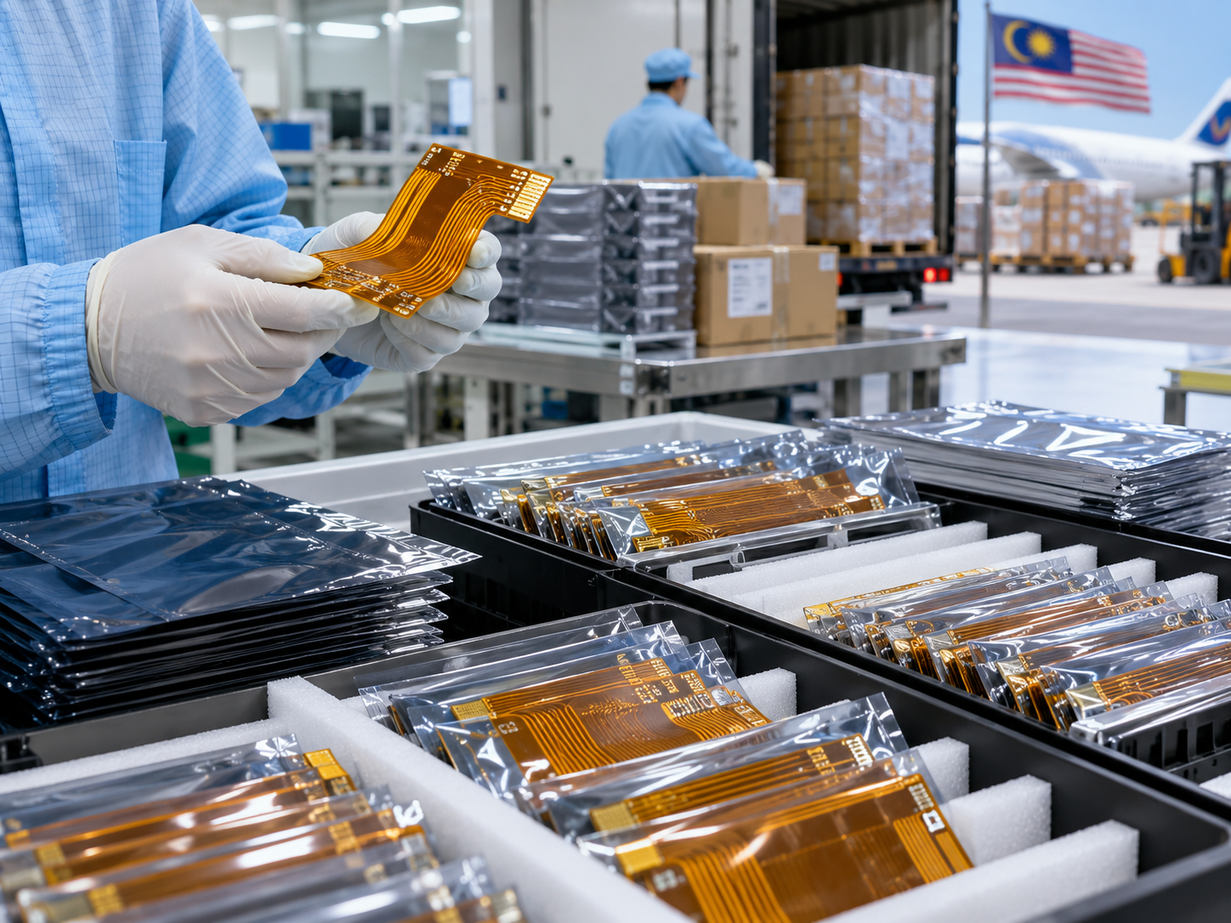
- Protective Packaging: Specify protection against bending damage, contamination, moisture, and electrostatic exposure where applicable.
- Receiving Requirements: Confirm part numbers, revision labels, packing quantities, lot separation, and any required inspection records.
For example, an EMS facility in Penang may require FPC panels with specific identification labels and separated production lots. Confirm these requirements before shipping to avoid delays during incoming inspection.
Include international transportation, customs clearance, and material inspection in your production schedule. The factory completion date is not the same as the date the boards become available for SMT assembly.
BestFPC 2-Layer Flex PCB Manufacturing Case for Medical Diagnostic Equipment
BestFPC provides custom 2-layer flexible PCBs for medical diagnostic equipment, where limited installation space, precise connector alignment, and reliable electrical connections place specific demands on manufacturing.
This FPC solution uses a polyimide-based construction, with material thickness, copper specifications, and connector dimensions selected according to the product requirements. BestFPC supports manufacturability reviews, precision fabrication, and quality inspection to address these requirements before the circuits are approved for use.
Application Background
Medical diagnostic equipment may use flexible circuits to connect sensors, control electronics, and compact internal modules. Mechanical fit, circuit thickness, and manufacturing consistency can be critical when the FPC is installed inside a confined enclosure.
Published Product Specifications
BestFPC's product listing describes a 2-layer FPC and includes the following available specifications:
- PCB Construction: 2-layer flexible PCB.
- Finished Thickness Range: 0.10–0.44 mm.
- Base Material: Polyimide with several thickness options.
- Copper Thickness: Multiple options, including 1/3 oz, 1/2 oz, and 1 oz.
- Fine-Line Capability: Published manufacturing capability includes 0.05 mm line width and spacing under specified conditions.
These are published product and manufacturing options, not independently verified measurements from a particular customer order.
Manufacturing Considerations
For this type of product, the supplier should confirm the approved stackup, connector geometry, critical tolerances, and any required assembly support before fabrication.
Medical applications may also require additional material records, inspection documentation, or qualification testing according to the customer's specifications.
What Buyers Can Verify
BestFPC publishes product photographs and manufacturing specifications for this FPC category. The listing does not provide a named Malaysian customer, specific qualification results, or a documented delivery outcome.
For Malaysian buyers evaluating similar products, this example provides a starting point for requesting relevant manufacturing samples, confirmed process capabilities, and project-specific inspection evidence.
Why Choose BestFPC for Flex PCB Manufacturing and Delivery to Malaysia?
BestFPC is a China-based flexible PCB manufacturer providing custom fabrication, prototyping, rigid-flex PCB manufacturing, and assembly services for international customers. Our factory is located in Shenzhen, China.
- Direct Factory Manufacturing: Work directly with a China-based manufacturer for custom single-sided, double-sided, multilayer, and rigid-flex PCBs.
- Custom Manufacturing Capabilities: Support specialized materials, fine-line fabrication, stiffeners, controlled impedance, and other approved processes.
- Free Preliminary DFM Review: Identify potential issues involving stackup, conductor geometry, coverlay, and manufacturing tolerances before fabrication.
- Prototype to Volume Production: Support engineering samples, small batches, and production quantities based on project requirements.
- Fabrication and Assembly Services: Coordinate FPC manufacturing, component sourcing, SMT assembly, and agreed inspection requirements.
- Quality Management: BestFPC publishes ISO 9001, ISO 13485, and UL certification information. Applicable certificates and project-specific quality documents can be reviewed during supplier qualification.
BestFPC provides DFM guidance and manufacturing reviews for customer-supplied designs, rather than original circuit design services.
For industrial control equipment, medical electronics, automotive modules, or wearable devices, our team can review your fabrication package and confirm the manufacturing requirements before quotation.
What Information Should You Send for a Flex PCB Quote?
Send your fabrication files, technical specifications, order quantities, and required delivery date. Special materials, bending conditions, or assembly requirements should be identified when applicable.
- Manufacturing Files: Gerber or ODB++, drill files, board outline, and fabrication drawings.
- PCB Specifications: Layer count, materials, copper weight, finished thickness, surface finish, and critical tolerances.
- Mechanical Requirements: Bend radius, static or dynamic bending, stiffener positions, and connector specifications.
- Order Quantities: Prototype quantity and estimated production volumes.
- Quality Requirements: Applicable IPC class, inspection criteria, and required reliability tests.
- Assembly Requirements: BOM, pick-and-place files, and assembly drawings if PCBA is required.
- Delivery Information: Malaysian delivery address, target arrival date, and preferred trade terms.
Clearly identify any materials, dimensions, or processes that cannot be substituted. This helps the manufacturer prepare a quotation based on your approved requirements.
FAQs About Flex PCB Suppliers in Malaysia
Q1: Can multiple flex PCB revisions be included in one purchase order?
A1: Yes, if each revision is controlled separately. Provide individual manufacturing files, quantities, and revision labels to prevent mixed deliveries.
Q2: What happens if Gerber files and fabrication drawings contain conflicting dimensions?
A2: The discrepancy must be resolved before fabrication. The manufacturer should obtain customer approval rather than select a dimension independently.
Q3: Can a flex PCB have different surface finishes on connector fingers and solder pads?
A3: Selective finishes may be possible, depending on manufacturing capabilities. Identify each finish and its application area in the fabrication drawing.
Q4: Can different stiffener thicknesses be used on the same FPC?
A4: Yes. Different regions may use different approved stiffener constructions. Specify the material, location, and finished thickness of each section.
Q5: Can adhesive backing be applied only to selected areas?
A5: Yes, when supported by the manufacturing process. Define the adhesive material, placement, thickness, and operating conditions.
Q6: Can individual flex PCBs carry serial numbers?
A6: Yes, if a suitable identification method is available. Confirm the marking location, legibility, and requirements for linking serial numbers to production records.
Q7: Can plated through-holes be placed in a dynamic bending area?
A7: They should generally be kept outside regions subjected to repeated bending. Plated holes introduce local stiffness and stress concentrations that may reduce fatigue life.
Q8: Can I request an NDA before sharing confidential flex PCB files?
A8: Yes, subject to agreement between both parties. Establish confidentiality and file-handling requirements before sharing proprietary designs.
Q9: When is a rigid-flex PCB preferable to a separate flexible cable?
A9: Rigid-flex construction may be suitable when rigid circuitry and flexible interconnections must form an integrated assembly. Consider space constraints, connector requirements, assembly complexity, and overall cost.
Q10: Can solder mask replace polyimide coverlay on a dynamic flex PCB?
A10: Polyimide coverlay is generally preferred for repeatedly bending areas. Conventional solder mask may not provide suitable fatigue resistance under the intended operating conditions.
Conclusion
A reliable flex PCB supplier in Malaysia should be selected based on manufacturing capability, quality evidence, prototype performance, and delivery commitments. Compare local and overseas manufacturers against your actual specifications rather than relying on price or factory location alone.
BestFPC provides custom flex PCB fabrication, rigid-flex PCB manufacturing, and assembly services from China for international customers. Send your Gerber files, technical requirements, and order quantities to sales@bestfpc.com for a free preliminary DFM review and quotation.


.png)
.png)
.png)
.png)

.png)