


 2026-10-21

 BEST
A high volume flex PCB manufacturer must match your circuit construction, assembly requirements and repeat-order schedule. The useful comparison starts with approved materials, critical dimensions, inspection methods and the cost of supplying finished boards.
As a high volume flex PCB manufacturer, BestFPC combines custom FPC fabrication, engineering support, quality control, and turnkey assembly to support consistent repeat production. Our dedicated engineering team helps customers resolve manufacturing challenges, maintain approved specifications, and simplify the transition from prototypes to volume orders. Send your Gerber files, BOM, and production requirements to sales@bestfpc.com for a DFM review and quotation.
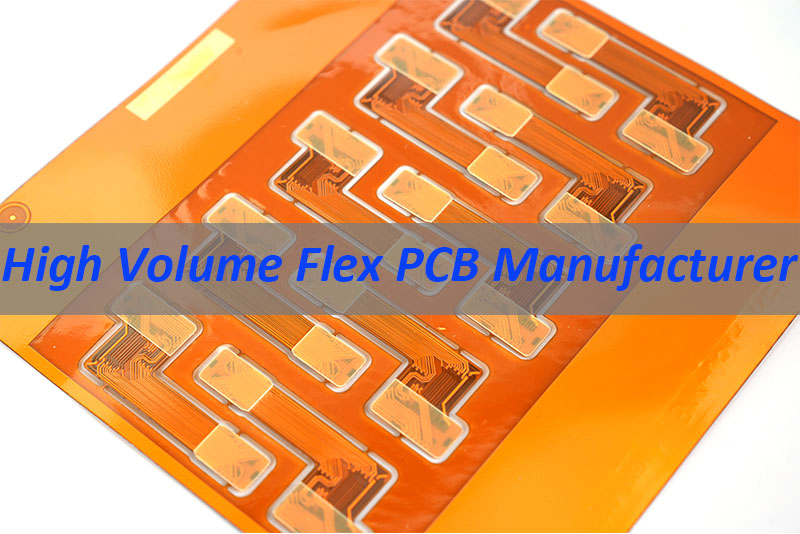
Top 5 High Volume Flexible PCB Manufacturers in China
BestFPC, Zhen Ding, DSBJ/MFLEX, Kinwong and MFS Technology offer flexible-circuit manufacturing options for buyers sourcing in China. The following five-company shortlist compares service scope; it is not a ranking by audited capacity or quality.
| Manufacturer | Product and Service Scope |
|---|---|
| BestFPC | Custom FPC fabrication and turnkey assembly |
| Zhen Ding Technology Group | FPC fabrication and surface-mount assembly |
| DSBJ / MFLEX | Flex circuit design, fabrication and assembly |
| Kinwong | Flexible and multilayer circuit fabrication |
| MFS Technology | Flex, rigid-flex and component assembly |
Send each supplier the same technical package and delivery forecast. Compare the proposed materials, inspection coverage, tooling charges and shipment schedule. A company's overall scale does not establish the capacity available for your specific design.
Why Choose BestFPC for High Volume Flex Manufacturing
BestFPC brings bare-board fabrication, component sourcing and assembly into one project discussion, reducing the coordination required between separate suppliers. Its prototype and production services allow engineering decisions from the first build to inform repeat orders.
- Fabrication and assembly reviewed together: Connector reinforcement, component support and flex handling can be addressed before either manufacturing stage is released.
- Engineering support tied to the drawing: Material, stack-up and dimensional questions are resolved against your actual design rather than a generic capability list.
- A choice of sourcing arrangements: Full turnkey, partial turnkey and consigned assembly accommodate different component-purchasing responsibilities.
This combination is useful when your purchasing team needs an assembled FPC while engineering still has construction or fixture decisions to resolve.
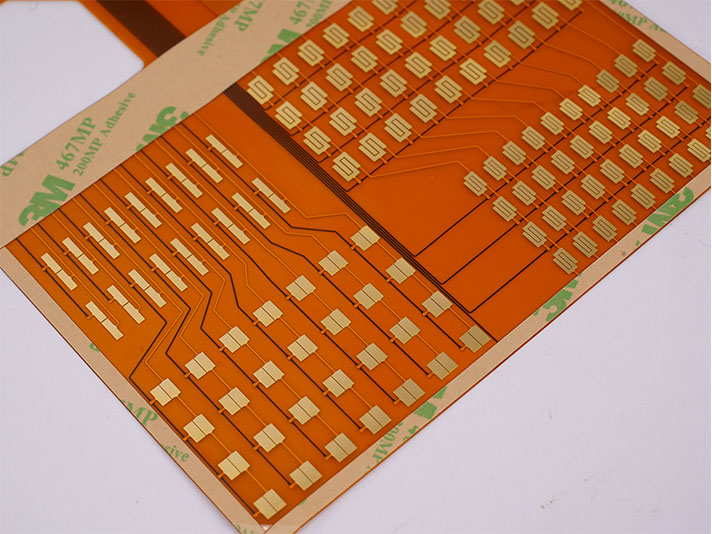
Custom Flex PCB Fabrication for Production Orders
BestFPC manufactures custom single-sided, double-sided and multilayer flexible circuits, with material and reinforcement options selected for the approved design. The following figures describe a documented standard FPC manufacturing route.
| Manufacturing Parameter | Specification | Applicability |
|---|---|---|
| Flex layer count | 1–4 layers | All-flex construction |
| Finished thickness | 0.06–0.60 mm | Approved stack-up |
| Adhesiveless-core PI thickness | 0.5, 1, 2 or 3 mil | Listed material family |
| Adhesiveless-core copper weight | 0.33, 0.5, 1 or 2 oz | Listed material family |
| PI stiffener thickness | 3, 5, 7 or 9 mil | Listed standard options |
| Controlled-impedance tolerance | ±10% | Agreed impedance construction |
These options are reviewed together; the table does not imply that every combination is available. Base copper weight and finished plated copper thickness are different specifications.
For custom flex PCB fabrication, identify the finished connector thickness, bend location and critical contact dimensions. As a custom flexible PCB manufacturer, BestFPC uses these requirements to assess the stack-up, coverlay openings and stiffener arrangement. Specify RA or ED copper where required, and identify repeated movement separately from a fixed installation bend.
DFM, Material Selection and Tooling for Volume Production
BestFPC's engineering review addresses construction, materials, tooling and assembly support before a volume order is released. The aim is to resolve features that could complicate fabrication or repeat assembly.
| Engineering Area | Review Scope | Production Consideration |
|---|---|---|
| DFM | Traces, coverlay openings and stiffeners | Fabrication feasibility |
| Material selection | PI, copper, adhesives and stack-up | Material availability and approved alternatives |
| Outline tooling | Cutting method, geometry and quantity | Tooling investment and revision frequency |
| Assembly preparation | Component support and flex handling | Carrier and fixture requirements |
Laser cutting suits designs still undergoing outline changes; dedicated die tooling is worth evaluating for stable, recurring quantities. A die adds an upfront cost and may require replacement after a design change. Laser cutting avoids that commitment, but processing time must be assessed against the order quantity.
For flex circuit manufacturing, settle material substitutions before purchasing. Special laminates, adhesives or stiffeners can affect availability even when the circuit geometry is straightforward.
Flex PCB Prototyping Before Mass Production
BestFPC supports prototype builds to check the circuit before production quantities are released. Moving into repeat manufacturing requires approval of both the design and the intended build process.
- Build and assess samples. Check connector engagement, installed shape, electrical operation and any required movement or environmental performance.
- Resolve revisions. Update the fabrication drawing, stack-up, BOM and placement data together so the next build uses one approved revision.
- Review production readiness. Confirm panel layout, tooling, assembly support and inspection requirements. Use a pilot build where the process change or project risk warrants it.
Prototype approval confirms the evaluated configuration. A later change to copper, coverlay, reinforcement or assembly support should be assessed for its effect on fit and reliability before scaling.
Quality Control for Repeat Flex PCB Orders
BestFPC's FPC quality controls include incoming inspection, in-process checks, optical inspection and electrical testing before shipment. For assembled circuits, inspection methods are selected for the component packages and agreed acceptance requirements.
| Production Stage | Inspection Method | Inspection Focus |
|---|---|---|
| Incoming materials | Specification, size and appearance checks | Material conformity and visible condition |
| FPC fabrication | In-process checks and circuit-pattern AOI | Circuit geometry and pattern defects |
| Bare-board testing | Electrical open/short testing | Continuity and unintended connections |
| Solder paste printing | Solder paste inspection (SPI) | Paste deposits |
| SMT assembly | AOI; X-Ray where applicable | Component placement and solder joints |
| Final release | Visual inspection and test-record review | Conformity to agreed acceptance requirements |
SPI, AOI and X-Ray are available inspection methods, not a promise that every method applies to every product. Functional testing requires an agreed procedure, fixtures and pass/fail limits.
Batch consistency starts with the same approved material specification, revision and acceptance limits. Request the required lot and inspection records when placing the order. Define how nonconforming boards will be held, reviewed and released after correction, including any root-cause report required before the next batch.
Flex PCB Assembly for Volume Orders
BestFPC's flex circuit assembly service supports full turnkey, partial turnkey and consigned builds. Choose the arrangement according to who can best manage component availability and purchasing.
| Assembly Type | Component Sourcing | Best Suited For |
|---|---|---|
| Full turnkey | BestFPC sources the agreed BOM | Combined fabrication, procurement and assembly orders |
| Partial turnkey | Shared sourcing by agreed BOM allocation | Customer-controlled components with supplier-sourced balance |
| Consigned | Customer supplies components | Assembly using customer-owned inventory |
For a flex PCBA, carrier and fixture planning helps keep the circuit stable during printing, placement and reflow. Component areas and connector terminations also need adequate support without obstructing the intended bend.
Send the BOM and placement file with the bare-board data. Include testing and component-substitution rules in the quotation scope so the delivered assembly matches your production requirements.
Flexible PCB Price and Production Lead Times
Flexible PCB price depends on construction, panel utilization, materials, tooling and the required assembly work. Delivery planning must also account for material availability and engineering approvals.
- Construction: Extra layers, fine features and tight tolerances add processing demands. Identify which requirements are essential to function.
- Panel utilization: Circuit shape and spacing affect how much usable material reaches the finished product. Review panelization before fixing repeat pricing.
- Tooling: Separate one-time die, stencil and fixture charges from recurring unit costs.
- Procurement: Special materials and long-lead components can determine the schedule before fabrication starts.
Compare total delivered scope, not unit price alone. Ask BestFPC to quote the same inspection, assembly and packaging requirements at your planned quantity breaks. Distinguish first-build preparation from repeat-order lead time, and provide shipment dates as well as total demand.
BestFPC Flexible PCB Manufacturing Example
A documented BestFPC two-layer FPC specification shows how thin construction, local reinforcement and SMT requirements are defined within one project. It provides a concrete manufacturing example; the available records do not establish a completed high-volume production result.
Project requirements. The selected revision specifies an adhesiveless PI circuit with ED copper, yellow coverlay, ENIG and two stiffener thicknesses. Its linked assembly record assigns component procurement to BestFPC and requires individual-unit delivery after SMT.
| Product Parameter | Recorded Requirement |
|---|---|
| PCB construction | Two-layer FPC |
| Base dielectric | 20 µm adhesiveless PI |
| Copper type and thickness | 20 µm ED copper |
| Coverlay | Yellow, specified as 0.5 mil |
| Flexible-area thickness | 0.11 ± 0.03 mm |
| Stiffener 1 thickness | 0.20 mm |
| Stiffener 2 thickness | 0.30 mm |
| Surface finish | ENIG; specified gold thickness: 1 µin |
| Silkscreen | White |
| Bare-board delivery format | Panels for SMT assembly |
| Component sourcing | All components supplied by BestFPC |
| Post-SMT cleanliness | No solder balls or foreign residue |
| Functional testing | Not required for this recorded build |
| Final delivery format | Individual units after SMT |
The coverlay value is retained as the recorded designation; it does not establish total film-plus-adhesive thickness. Stiffener values are recorded separately from the flexible-area thickness and are not stated as finished connector insertion thicknesses.
Engineering considerations. A 0.11 mm flexible area requires a handling plan during assembly. The different stiffener thicknesses also make local stack-up and interface dimensions important review points. These are engineering implications of the specification, rather than documented defects encountered on the project.
Recorded manufacturing approach. The instructions require customer approval of production data and the stack-up before fabrication, panel delivery for SMT, and inspection for poor soldering and surface contamination. They also identify changes to both the FPC and BOM in this revision, reinforcing the need to release those files together.
Verified scope. The records establish the product specification, sourcing responsibility and assembly requirements. They do not provide measured yield, completed shipment quantity or delivery performance. For a comparable production order, these defined requirements form the starting point for the build and inspection plan.
Request a Flex PCB Quote for Your Production Schedule
Send BestFPC the manufacturing files and order forecast needed to quote the complete build. A useful RFQ connects technical requirements with purchasing and delivery expectations.
- Circuit package: Gerber and drill files, fabrication drawing, stack-up, surface finish and critical dimensions.
- Mechanical requirements: Bend location, installed radius, movement conditions and stiffener details.
- Assembly package: BOM, placement data, assembly drawing and required tests.
- Production plan: Sample quantity, expected repeat demand, shipment dates and packaging needs.
If you are transferring an existing design, identify the approved materials and any construction that must remain unchanged. BestFPC can review open engineering questions before preparing the flex PCB quote.
FAQs about high volume flex pcb manufacturer
Is there a standard quantity for high-volume flex PCB production?
No. Circuit size, complexity and order frequency affect production planning. Provide both the batch quantity and expected monthly demand.
Can BestFPC supply bare FPCs without assembly?
Yes. You can request fabricated flexible circuits alone or include component procurement and assembly.
Can a repeat order use the same tooling?
It may, if the approved design and tooling condition remain suitable. Outline, panel or assembly changes require a tooling review.
Does an electrical test prove that the circuit will survive repeated bending?
No. Open/short testing checks circuit integrity at the test condition. Dynamic-flex reliability requires testing against the specified bend geometry and operating cycle.
Can deliveries be split across several dates?
Include the proposed quantities and dates in your RFQ. Material commitments, inventory arrangements and shipment releases must be agreed before scheduling.
BestFPC connects custom FPC fabrication, engineering review and turnkey assembly to help buyers coordinate prototype builds and repeat production. Construction, sourcing and inspection requirements can be addressed within the same project.
Ready to plan your next production run? Send your Gerber files, BOM and quantity forecast to sales@bestfpc.com for an engineering review and quotation.


.png)
.png)
.png)
.png)

.png)