


 2026-11-12

 BEST
Flexible PCB manufacturers in Russia include Rezonit, Technotech, Electroconnect, and A-Contract. Other companies, such as ATB Electronics and PCB Technology, provide flexible PCB sourcing and electronics manufacturing services. Their factory locations, production capabilities, and purchasing arrangements differ.
Which Russian suppliers can manufacture your required flexible PCB, and how should you compare them? This 2026 guide covers six suppliers, their manufacturing capabilities, quality requirements, lead times, and costs, along with practical considerations when choosing between Russian and overseas production.
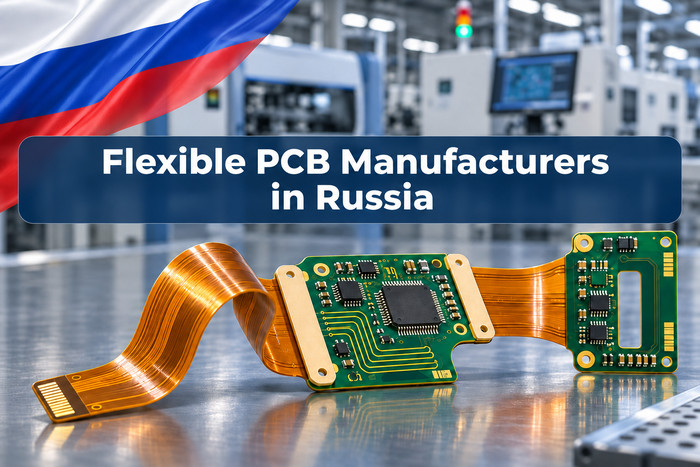
Which Flexible PCB Manufacturers Are Available in Russia in 2026?
Rezonit, Technotech, Electroconnect, and A-Contract provide flexible or rigid-flex PCB manufacturing services in Russia, while ATB Electronics and PCB Technology offer additional sourcing and electronics manufacturing options.
The following companies have identifiable PCB operations serving the Russian market. Their manufacturing locations and business models are important considerations when domestic production is required.
| Company | Russia Location | Flexible PCB Capabilities | Manufacturing and Business Model |
|---|---|---|---|
| Rezonit | Moscow Region | Flexible PCB, rigid-flex PCB, controlled impedance, multilayer fabrication | Russian PCB manufacturer with domestic production facilities |
| Technotech | Yoshkar-Ola | Flexible PCB, rigid-flex PCB, multilayer fabrication, electronic assembly | Domestic PCB manufacturer |
| Electroconnect | Novosibirsk | Flexible PCB, rigid-flex PCB, prototype and series production | Domestic PCB manufacturer |
| A-Contract | St. Petersburg | Flexible PCB, rigid-flex PCB, SMT assembly, electronics manufacturing | PCB and EMS manufacturer |
| ATB Electronics | Moscow | Flexible and rigid-flex PCB sourcing, electronics assembly | Electronics manufacturer using Russian and overseas PCB partners |
| PCB Technology | Moscow / St. Petersburg | Flexible PCB, rigid-flex PCB, HDI sourcing, SMT assembly | PCB manufacturing service provider and sourcing coordinator |
Rezonit
Rezonit manufactures flexible and rigid-flex PCBs in Russia, supporting up to 24 total rigid-flex layers and 8 flexible layers. Its capabilities include controlled impedance and complex multilayer constructions. The company also handles PCB assembly and large-volume sourcing, with manufacturing locations varying by order arrangement.
Technotech
Technotech operates a PCB factory in Yoshkar-Ola, producing flexible, rigid-flex, and multilayer PCBs with up to 20 layers. Its services include fine-line fabrication, several polyimide material options, and electronic assembly for prototype and production requirements.
Electroconnect
Electroconnect manufactures flexible and rigid-flex PCBs in Novosibirsk. The company supports prototype and series production, including customized board constructions for industrial and electronic equipment applications.
A-Contract
A-Contract provides flexible and rigid-flex PCB manufacturing services in St. Petersburg, along with SMT assembly and electronics contract manufacturing. Its manufacturing and assembly capabilities are relevant to projects requiring both bare boards and populated electronic assemblies.
ATB Electronics
ATB Electronics coordinates PCB manufacturing through partner factories in Russia, China, and Taiwan. Its services include flexible and rigid-flex PCB sourcing, manufacturing coordination, and electronic assembly, with the actual fabrication location determined by the selected partner.
PCB Technology
PCB Technology supplies flexible, rigid-flex, multilayer, and HDI PCBs through its manufacturing and sourcing services. The company also offers engineering coordination and electronic assembly in Russia. Buyers should confirm the actual bare-board fabrication location for each order.
What Flexible PCB Types and Applications Do Russian Suppliers Cover?
Russian flexible PCB suppliers provide single-sided, double-sided, multilayer flexible PCBs, and rigid-flex constructions. The most suitable option depends on the circuit's routing density, installation space, and mechanical requirements.
-
Single-Sided Flexible PCB: Used for sensor connections, control interfaces, and simple electrical interconnections.
-
Double-Sided Flexible PCB: Provides additional routing and interlayer connections for compact electronic modules.
-
Multilayer Flexible PCB: Supports higher-density routing in medical instruments, communication modules, and industrial electronics.
-
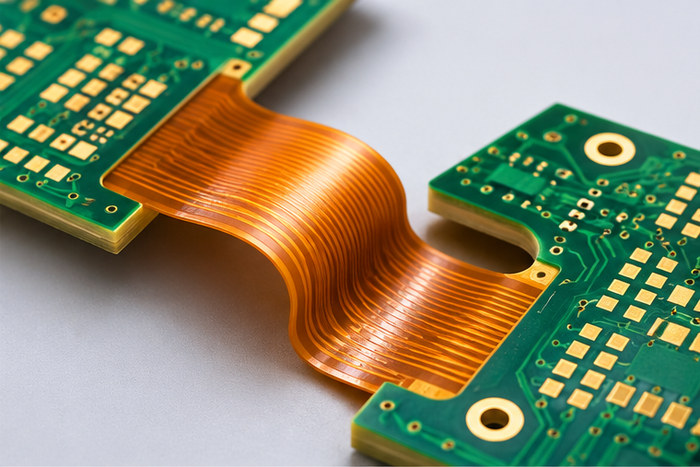
Rigid-Flex PCB: Combines rigid component-mounting areas with flexible interconnections, reducing separate connectors and cables where the design allows.
-
Flexible PCB With Stiffeners: Uses local reinforcement around connectors, mounting points, and component areas to improve mechanical support.
Common applications include:
-
Medical Electronics: Compact sensor connections, portable diagnostic instruments, and patient-monitoring equipment.
-
Industrial Automation: Sensors, robotics, and control modules requiring flexible interconnections or repeated movement.
-
Communications Equipment: Optical modules and networking electronics requiring fine-pitch routing or controlled impedance.
-
High-Reliability Electronics: Compact control and instrumentation assemblies requiring defined mechanical and electrical performance.
A supplier capable of manufacturing standard flexible PCBs may not support complex multilayer rigid-flex structures or demanding dynamic-bending applications.
Can Russian Flexible PCB Manufacturers Support Prototypes and Series Production?
Rezonit, Technotech, Electroconnect, and A-Contract offer prototype or production manufacturing services, although minimum quantities and available processes depend on the supplier.
The main considerations change as a project moves toward production.
-
Engineering Prototypes: Samples should use the intended materials, copper thickness, and critical mechanical features. A simplified prototype may not represent the final design.
-
Pilot and Small-Batch Production: Confirm that the factory can maintain the approved stackup and manufacturing requirements while producing limited quantities for product validation.
-
Series Production: Check available capacity, material continuity, manufacturing revision control, and agreed inspection requirements.
When prototype and production orders are assigned to different factories, changes in materials or processing may require additional validation.
For repeat production, maintaining the approved construction is essential to avoiding unexpected differences between sample and production boards.
What Manufacturing Capabilities Should Buyers Compare?
Trace width and spacing, layer count, hole size, copper thickness, flexible materials, and bending construction are the main manufacturing parameters to compare.
Published process limits can help narrow the supplier shortlist, but several requirements must often be achieved together.
-
Trace Width and Spacing: Rezonit lists 0.10/0.10 mm for its flexible PCB service, while its rigid-flex manufacturing can achieve 0.075/0.075 mm under specified 18 µm copper conditions. For 35 µm copper, its published extreme limit is 0.15/0.15 mm. Technotech lists 0.075/0.075 mm for applicable flexible and rigid-flex constructions.
-
Layer Count and Stackup: Rezonit lists up to 24 rigid-flex layers, including 8 flexible layers. Technotech lists up to 20 layers. The total number of layers must be considered alongside the layers extending through the flexible region and the finished thickness of each section.
-
Hole Size and Interconnections: Rezonit lists a 0.15 mm minimum hole with a 0.35 mm pad for applicable rigid-flex constructions. Technotech lists options including 0.15 mm finished holes with 0.30 mm pads. Blind or buried vias require separate confirmation of layer connections, drilling methods, and pad dimensions.
-
Copper and Flexible Materials: Rezonit lists 18 µm and 35 µm copper options for rigid-flex constructions. Technotech offers several polyimide material options, including DuPont, Arlon, and Taiflex products. Material grade, copper type, adhesive construction, and finished thickness should be specified.
-
Bending Performance: Static installation bending and repeated dynamic bending require different mechanical evaluations. Define the bend radius, expected operating cycles, copper construction, and position of holes or solder joints relative to the bending area.
-
Surface Finish and Stiffeners: Confirm available finishes, coverlay openings, reinforcement materials, and stiffener thicknesses. Connector areas must meet the mechanical and electrical requirements of the mating component.
The complete construction must fall within the manufacturer's confirmed process limits. An advertised minimum trace width does not guarantee compatibility with every copper thickness or multilayer stackup.
Which Quality Certifications and Inspection Records Should Russian Flexible PCB Manufacturers Provide?
Flexible PCB manufacturers should provide applicable quality certifications and inspection evidence for the actual production facility and finished boards. Requirements vary by application and customer specifications.
-
ISO 9001: Verify that the certificate is valid and covers the relevant manufacturing operations.
-
ISO 13485, IATF 16949, or AS9100/EN 9100: Check these when required by medical, automotive, or aerospace supply chains.
-
IPC-6013F: Specify the applicable flexible or rigid-flex PCB performance class and acceptance requirements. This is a product standard, not a factory certification.
-
IPC-A-600: Define the relevant visual acceptance criteria and standard revision.
-
Inspection Records: Request electrical test results, dimensional inspection, material traceability, and additional reliability reports where required.
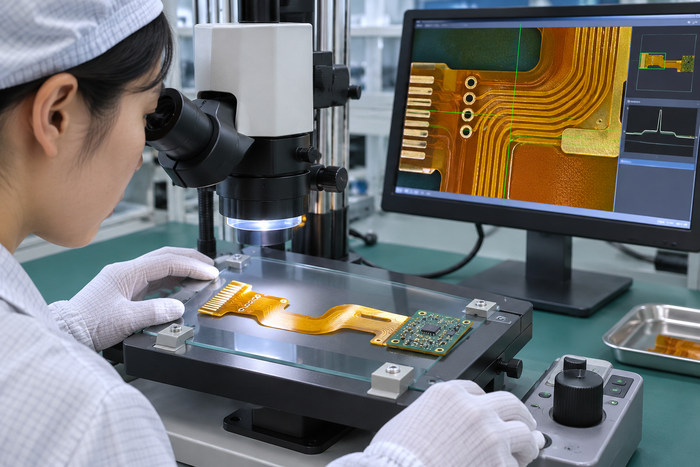
Testing availability should be confirmed for the exact product category. For example, Rezonit's published standard flexible PCB service lists a limitation on electrical testing, so buyers should not assume that every flexible circuit will receive the same test coverage as a rigid-flex board.
Agree on the required certifications, acceptance criteria, and test documentation before production.
What Are the Main Risks When Sourcing Flexible PCBs in Russia?
The main sourcing risks involve unclear manufacturing origin, changes between prototype and production, incompatible technical requirements, and international purchasing restrictions.
-
Unclear Production Location: Some Russian PCB suppliers coordinate manufacturing through overseas partners. If Russian-origin production is mandatory, identify the actual fabrication facility and establish the required origin documentation.
-
Unapproved Production Changes: Moving production to another factory may involve different materials, tooling, or manufacturing processes. Changes affecting the approved construction should receive engineering review before repeat production.
-
Incompatible Manufacturing Requirements: Fine conductors, thick copper, complex interconnections, and repeated bending may impose conflicting process requirements. These combinations should be resolved before order acceptance.
-
International Trade Restrictions: Cross-border transactions may be affected by applicable sanctions, export controls, payment restrictions, or shipping arrangements. Confirm that the order can be fulfilled lawfully before committing to a purchase.
A supplier should be able to identify the responsible factory, confirm the accepted specifications, and provide commercially workable delivery terms.
What Is the Lead Time for Flexible PCB Manufacturing in Russia?
Flexible PCB manufacturing in Russia can start from five working days for qualifying orders, but actual lead time depends on the construction, materials, manufacturing capacity, and order requirements.
The following manufacturers advertise these starting schedules:
-
Rezonit: Flexible PCB fabrication from 5 working days; urgent rigid-flex manufacturing from 7 working days. Standard rigid-flex orders are quoted individually.
-
Technotech: Prototypes from 5 working days, express orders from 8, urgent orders from 10, and standard production from 14 working days. Order acceptance and delivery days are excluded.
-
Electroconnect: Flexible PCB fabrication from 5 days and rigid-flex production from 9 days.
These are advertised starting times, not guaranteed schedules for every design.
Special materials, complex multilayer structures, and additional inspection requirements may extend production. For urgent projects, request confirmed dates for material readiness, fabrication, inspection, and shipment.
Manufacturing lead time should be calculated separately from transportation time, particularly when comparing domestic and overseas suppliers.
How Much Does Flexible PCB Manufacturing Cost in Russia?
Flexible PCB manufacturing costs depend on materials, layer count, conductor geometry, structural complexity, and production quantity. Two boards of the same size may have very different prices because their manufacturing requirements differ.
The main cost factors and practical ways to control them include:
-
Materials and Copper Thickness: Specialized polyimide laminates, adhesiveless constructions, and nonstandard copper thicknesses can increase cost. Use standard material grades when they meet the approved requirements.
-
Layer Count and Interconnections: Additional layers, complex via structures, and multiple rigid-to-flex transitions require more processing. Avoid unnecessary structural complexity.
-
Fine Lines and Tight Tolerances: Features approaching the factory's process limits may increase difficulty and affect manufacturing yield. Apply tight tolerances only where necessary.
-
Board Outline and Panel Utilization: Irregular flexible circuits can create material waste. Improving panel utilization may reduce cost without changing the electrical design.
-
Order Quantity and Special Processes: Prototype setup, controlled impedance, stiffeners, and additional testing affect the quotation. Request separate prototype and production prices when comparing suppliers.
For repeat orders, maintaining approved materials and fabrication revisions can reduce additional engineering work.
Any cost reduction involving changes to copper geometry, stackup, or bending construction should receive engineering approval before production.
How Do Russian and Chinese Flexible PCB Manufacturers Compare?
Russian manufacturing may simplify domestic coordination and delivery, while Chinese suppliers provide additional options for specialized flexible and rigid-flex PCB fabrication. The better choice depends on the actual factory, technical requirements, and purchasing conditions.
| Comparison Factor | Russian Flexible PCB Suppliers | Chinese Flexible PCB Manufacturers |
|---|---|---|
| Manufacturing Location | Domestic factories available; some suppliers also source overseas | Fabrication at the agreed Chinese production facility |
| Manufacturing Capabilities | Flexible and rigid-flex manufacturing available from selected factories | Capabilities vary by factory, including multilayer and HDI options |
| Prototype Lead Time | Some suppliers advertise manufacturing from 5 working days | Depends on construction, material availability, and factory schedule |
| Production Cost | Affected by local manufacturing arrangements, materials, and quantity | Affected by production process, materials, and order volume |
| MOQ | Depends on supplier and board construction | Depends on factory and project requirements |
| Quality Management | Verify facility certifications and product inspection records | The same supplier qualification requirements apply |
| Communication | Domestic coordination may be easier for Russian buyers | Confirm technical language support and revision control |
| Logistics | Domestic transportation may simplify delivery | International freight, customs, and payment arrangements must be considered |
For projects requiring Russian-origin fabrication, prioritize factories that can document domestic production.
When overseas manufacturing is permitted, compare suppliers using identical technical specifications, quantities, inspection requirements, and delivery conditions.
Total purchasing costs should include fabrication, inspection, transportation, customs responsibilities, and any necessary qualification expenses.
What Should Buyers Check When Comparing Flexible PCB Quotations?
Flexible PCB quotations should be compared by manufacturing scope, materials, inspection requirements, and delivery terms—not unit price alone.
Submit the same technical package to each supplier, including:
-
Manufacturing Files: Gerber or ODB++ data, drill files, fabrication drawings, and the approved revision.
-
Material and Stackup Requirements: Laminate grade, copper thickness, layer arrangement, coverlay, and finished thickness.
-
Mechanical Specifications: Bend areas, bend radius, stiffeners, mounting features, and critical tolerances.
-
Order Quantities: Prototype quantity and anticipated production volume.
-
Quality Requirements: Applicable IPC class, electrical testing, inspection reports, and traceability requirements.
-
Commercial Details: Tooling charges, manufacturing lead time, required delivery date, delivery location, and delivery terms.
Check whether each quotation covers bare-board fabrication only or includes assembly and other services.
If a supplier proposes substitute materials, reduced inspection, or a different manufacturing facility, the quotation should be revised before comparison.
A competitive quotation must cover the complete approved specification and clearly identify the total charges and delivery responsibilities.
Why Choose BestFPC for Custom Rigid-Flex PCB Manufacturing?
For buyers considering overseas fabrication, BestFPC provides custom rigid-flex PCB manufacturing in Shenzhen, China, based on customer-approved drawings, materials, and technical specifications.
BestFPC offers the following manufacturing services for projects involving compact multilayer structures, dense interconnections, and demanding rigid-to-flex transitions.
-
Manufacture Custom Rigid-Flex Constructions: We fabricate boards with specified rigid and flexible regions, supporting compact electronic assemblies that require integrated interconnections.
-
Support Complex Multilayer and HDI Requirements: For fine-pitch routing, blind or buried vias, and complex stackups, we review the complete fabrication files to determine manufacturing feasibility.
-
Identify Problems Before Fabrication: Our free DFM check examines conductor spacing, hole structures, coverlay openings, stiffeners, and rigid-to-flex transitions so potential fabrication problems can be addressed before production.
-
Support Prototype and Production Orders: We manufacture according to customer-approved drawings and revisions, helping maintain consistent manufacturing requirements between engineering samples and subsequent orders.
-
Provide Defined Quality Inspection: Electrical testing and other agreed inspection requirements allow customers to evaluate finished boards against their specified acceptance criteria.
Explore BestFPC's rigid-flex PCB manufacturing services for custom fabrication options.
FAQs About Flexible PCB Manufacturers in Russia
Q1: Do Russian Flexible PCB Suppliers Accept English Technical Documents?
A1: Some suppliers accept English Gerber files, fabrication drawings, and technical specifications. Contractual documents or production notes may require translation. Confirm the accepted language before ordering.
Q2: Can I Request an NDA Before Sharing Confidential PCB Files?
A2: Yes. You can request a non-disclosure agreement before submitting proprietary design files. If the supplier uses subcontractors, confirm whether the agreement also covers the actual fabrication partner.
Q3: Can I Order Mechanical Samples Before Functional Flexible PCBs?
A3: Some manufacturers may provide nonfunctional samples to check dimensions, enclosure fit, and assembly clearances. Specify whether the samples must use the final materials and thicknesses. Mechanical samples cannot replace electrical or reliability testing.
Q4: Can Flexible PCBs Be Supplied With Adhesive Backing?
A4: Yes. Certain flexible PCB constructions can use pressure-sensitive adhesive (PSA) for attachment to housings or mounting surfaces. Adhesive selection depends on the enclosure material, operating temperature, surface condition, and required bond strength.
Q5: Can Flexible PCBs Withstand Multiple Reflow Cycles?
A5: Some constructions can withstand multiple reflow cycles within their qualified thermal limits. The allowable temperature profile and number of cycles depend on the laminate, adhesives, coverlay, surface finish, and complete board construction.
Q6: How Should Unassembled Flexible PCBs Be Stored?
A6: Keep flexible PCBs in protective packaging that prevents contamination, compression, and excessive bending. Follow the manufacturer's storage recommendations for the specified laminate and surface finish.
Q7: What Should I Do if Delivered Flexible PCBs Have Creases or Physical Damage?
A7: Photograph the damage, retain the packaging, and notify the supplier before assembly. Request inspection or replacement under the agreed acceptance conditions. Creases affecting critical conductor areas require engineering evaluation.
Q8: What Shipping Documents Are Needed for International Flexible PCB Orders?
A8: Common documents include a commercial invoice, packing list, and transportation document. Additional customs, origin, or export-control documents may be required depending on the destination and applicable regulations.
Request a Quote for Custom Rigid-Flex PCB Manufacturing
Looking for a manufacturer for your custom rigid-flex PCB project? Whether your design requires multilayer routing, fine-pitch interconnections, or complex rigid-to-flex transitions, BestFPC can review your approved specifications and confirm available manufacturing options.
Send your Gerber files, fabrication drawing, quantity, required delivery date, and delivery location to sales@bestfpc.com for a custom quotation and free DFM check. Our team can identify potential fabrication issues before production and confirm the manufacturing requirements for your project.


.png)
.png)
.png)
.png)

.png)