


 2026-10-26

 BEST
Finding reliable flex PCB manufacturers in Germany can be difficult when suppliers differ in manufacturing capabilities, production locations, pricing, and delivery schedules. A German office does not always mean local manufacturing, and a low quotation may exclude tooling, inspection, or international shipping costs.
Which suppliers offer fast prototypes, complex rigid-flex manufacturing, or reliable volume production? This comparison covers 15 companies serving Germany, along with the technical capabilities, lead times, quality requirements, and purchasing considerations that matter when selecting a flex PCB manufacturer.
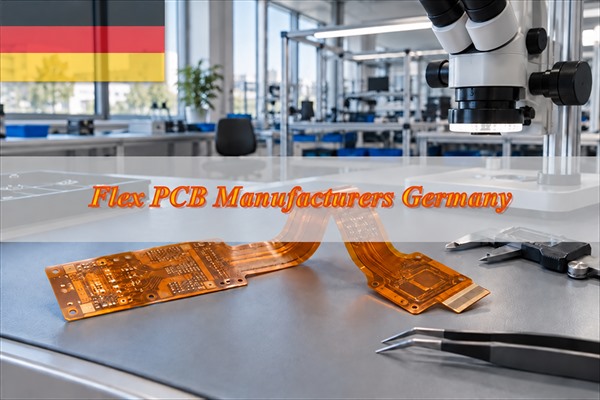
Who Are the Top 15 Flex PCB Manufacturers in Germany?
The 15 flex PCB manufacturers and suppliers serving Germany include domestic factories, German-managed manufacturing networks, and PCB sourcing companies. Their main differences are production location, technical specialization, prototype services, and delivery options.
| Company | Manufacturing Model | Suitable Projects | Flex PCB Capabilities | Lead-Time Guidance |
|---|---|---|---|---|
| Würth Elektronik Circuit Board Technology | German plants plus an Asian partner network | Technology selection and scaling from development to series | PURE.flex, SEMI.flex, RIGID.flex, and SLIM.flex | Quote required; the assigned German or Asian production route affects timing |
| CONTAG AG | German factory in Berlin | Express prototypes and very small series with direct engineering support | Flexible PCBs up to 6 layers and rigid-flex | Express service available; flex-specific date requires review |
| Kubatronik Leiterplatten GmbH | German factory plus European and Chinese partners | Complex prototypes, low-to-medium volumes, and planned transfer to series production | Flex up to 8 layers, rigid-flex up to 32 layers, and HDI | Quote required; timing depends on the selected factory |
| Neuschäfer Elektronik GmbH | German factory | German-origin FPC with in-house optical and electrical inspection | Custom FPC, rigid-flex, marking, and testing | Quote required for prototypes and series |
| MECO Elektronik GmbH | German factory in Aßlar | Medical, sensor, and industrial projects in small-to-medium volumes | Flex and rigid-flex from 1 to 6 layers | Quote required; construction and quantity determine scheduling |
| ILFA GmbH | German factory with partner-supported volume options | High-complexity and high-reliability development work | Flexible, rigid-flex, HDI, blind, buried, and stacked vias | Quote required after design and material review |
| KSG GmbH | Own factories in Germany and Austria | European-origin rigid-flex for documentation-intensive projects | Rigid-flex manufacturing and complex multilayer constructions | Quote required; stackup and material availability are decisive |
| Becker & Müller Schaltungsdruck GmbH | German factory | Prototypes, low volumes, and fast rigid-flex development | Two-layer flex, rigid-flex, semiflex, and impedance control | Standard flex around 10 working days; selected rigid-flex express from about 5 |
| Ätzwerk GmbH | German supplier; manufacturing site confirmed per order | Special constructions requiring DFM, polyimide, HDI, or impedance control | Flex, rigid-flex, polyimide, HDI, and 75 µm structures | Quote required; factory and delivery arrangements need confirmation |
| Leiton GmbH | German engineering with production assigned by project | Online low-volume orders and custom flex up to 6 layers | 1–6-layer flex, rigid-flex, adhesive and adhesiveless PI | Selected one-layer online options from about 6 working days; custom builds by quotation |
| Beta LAYOUT GmbH | German Flex-POOL plus overseas production options | Standard 1–2-layer prototypes with optional assembly | 1–2-layer polyimide flex | Board time depends on the selected service; assembly may add around 12–16 working days |
| Multi Circuit Boards Ltd. | German supplier; manufacturing site confirmed per order | Online ordering for multilayer flex and rigid-flex projects | Flex up to 10 layers and rigid-flex up to 24 layers | Eligible builds may take 8–12 working days for flex and 15–17 for rigid-flex |
| NCAB Group Germany | German support with selected global partner factories | Managed high-mix, low-volume supply with local technical coordination | Flex, rigid-flex, and semiflex; flex up to 8 UL-listed layers | Quote required; factory selection and freight affect arrival |
| B&B Group | German prototype production plus European and Asian partners | German prototypes followed by partner-supported series | Rigid-flex, FlexLam, HDI, and additional partner technologies | Quote required; prototype and series manufacturing may use different facilities |
| TOP-PRINT Electronic GmbH | German engineering and EMS with partner-supported series | Flex PCB supply combined with component sourcing, assembly, and testing | Flexible and rigid-flex PCBs, prototypes, and assembly | Quote required; board manufacturing and assembly scope determine timing |
For urgent prototypes, CONTAG, Becker & Müller, Leiton, and Multi Circuit Boards offer useful starting points for comparing published delivery options. Projects requiring confirmed German manufacturing can be shortlisted by factory location, while larger production orders may benefit from international supply networks.
What Manufacturing Capabilities Should You Compare Among Flex PCB Manufacturers?
Layer count, minimum trace width, finished thickness, copper construction, and bending performance are the most important capabilities to compare. These specifications determine whether a factory can manufacture the required circuit without compromising its electrical or mechanical requirements.
The following ranges provide practical references for supplier quotations.
| Capability | Typical Planning Range |
|---|---|
| Flex PCB layer count | 1–4 layers |
| Rigid-flex PCB layer count | 4–12 total layers |
| Minimum trace/space | 0.075/0.075 mm (3/3 mil) |
| Mechanical drilled hole | Approximately 0.15–0.30 mm |
| Laser microvia diameter | Approximately 0.10–0.15 mm |
| Finished flex PCB thickness | Approximately 0.06–0.60 mm |
| Copper thickness | Commonly 9–35 µm |
| Controlled impedance tolerance | Commonly ±10% |
| PI stiffener thickness | Approximately 0.05–0.25 mm |
| FR4 stiffener thickness | Approximately 0.10–2.00 mm |
| Surface finish | ENIG is widely available |
A manufacturer may support fine traces, thin materials, or multilayer construction individually without being able to combine all those features in one design. For example, minimum trace spacing can change with copper thickness, while finished thickness and copper construction affect bending performance.
For circuits that bend repeatedly, copper selection, conductor routing, bend radius, and dielectric thickness need to be evaluated together. The actual stackup is more important than a supplier's advertised minimum specification.
What Is the Typical Lead Time for Flex and Rigid-Flex PCBs in Germany?
Flex PCB prototypes in Germany typically require approximately 3–12 working days for simple one- or two-layer constructions, while multilayer flex and rigid-flex PCBs generally take longer.
Typical manufacturing planning ranges after engineering approval are:
-
One- or two-layer flex PCB prototypes: Approximately 3–12 working days.
-
Multilayer flex PCBs: Approximately 10–20 working days.
-
Rigid-flex PCBs: Approximately 15–25 working days or longer.
Actual lead times depend on four main factors:
-
Material availability: Nonstandard polyimide, copper, adhesives, or stiffeners may require additional procurement time.
-
Manufacturing complexity: Fine traces, laser microvias, controlled impedance, multiple lamination stages, and rigid-flex transitions increase processing requirements.
-
Inspection and assembly: Microsection reports, impedance testing, component sourcing, assembly fixtures, and functional testing may extend the schedule.
-
Delivery destination: International freight and customs processing can add time after the boards leave the factory.
Complete fabrication files, approved materials, and early DFM confirmation help prevent unnecessary delays. For German buyers, the quotation should distinguish the manufacturing completion date from the expected delivery date.
What Affects Flex PCB Manufacturing Costs in Germany?
Flex PCB manufacturing costs depend on circuit complexity, materials, quantities, and the required manufacturing processes. Simple flexible circuits generally cost less than multilayer or rigid-flex boards that require additional lamination, reinforcement, or inspection.
| Cost Factor | How It Affects Manufacturing Cost |
|---|---|
| Circuit size and panel utilization | Long or irregular outlines may leave unused panel material, increasing the cost per usable circuit |
| Layer count and construction | Multilayer flex and rigid-flex require additional registration, lamination, drilling, and inspection |
| Polyimide, copper, and adhesives | RA copper, adhesiveless PI, unusual thicknesses, and small material purchases may increase material costs |
| Fine features and vias | Narrow traces, small holes, laser vias, and tight tolerances require more demanding processes |
| Stiffeners and adhesives | Additional materials, machining, bonding, and positioning increase processing costs |
| Surface finish and contacts | ENIG, selective hard gold, connector fingers, and wear contacts require different processes |
| Testing and documentation | Electrical tests, microsections, impedance reports, first-article inspection, and traceability add work |
| Order quantity | Prototype setup and tooling costs are distributed across fewer boards |
| Manufacturing location and delivery | Freight, customs handling, applicable duties, and other delivery costs affect the total cost |
Order quantity can have a significant effect on unit price. Prototype orders carry a larger share of tooling and setup costs, while repeat orders can benefit from improved panel utilization and more efficient production planning.
When comparing German and overseas manufacturers, the most useful figure is the total delivered cost for the same approved PCB specification. Fabrication, tooling, inspection, packaging, freight, and applicable import charges should be considered under the same quotation terms.
What Quality Standards and Certifications Should German Flex PCB Manufacturers Meet?
Flex PCB manufacturers should meet the applicable IPC requirements and maintain quality controls appropriate to the customer's application. Medical, automotive, and aerospace projects may require additional certifications, traceability, and inspection records.
| Standard or Requirement | Relevant Use |
|---|---|
| IPC-2223 | Flex and rigid-flex PCB design |
| IPC-6013F | Flex and rigid-flex qualification and performance |
| IPC-A-600 | Visual and microsection acceptability |
| ISO 9001:2026 | General quality-management system |
| IATF 16949 | Automotive quality-management requirements |
| ISO 13485 | Medical-device quality-management requirements |
| UL recognition | Recognized PCB constructions, materials, or marking |
| RoHS and REACH | Applicable substance and chemical compliance |
ISO 9001:2026 is the current edition, with a transition period for organizations certified to ISO 9001:2015. For flex and rigid-flex PCBs, the applicable IPC revision, product class, and customer-specific acceptance requirements should be established before production.
A certificate alone does not confirm the quality of a specific circuit. The actual manufacturing facility, certificate scope, material controls, and product inspection records provide the evidence needed for supplier qualification.
How Can You Evaluate a Flex PCB Manufacturer Before Volume Production?
A reliable flex PCB manufacturer should demonstrate manufacturing capability, consistent quality, and dependable delivery before volume production. The following checks help identify suitable suppliers:
-
Manufacturing Capability: Verify the required layer count, minimum trace/space, copper thickness, finished thickness, bend radius, and stiffener tolerances. Confirm that the factory can meet these specifications within the same stackup.
-
DFM Support: Check whether the manufacturer provides specific feedback on bend areas, coverlay openings, via placement, connector dimensions, and potential fabrication risks before production.
-
Prototype Quality: Evaluate electrical testing, dimensional accuracy, coverlay alignment, stiffener bonding, and connector fit. Dynamic-flex applications should also undergo bending tests under defined operating conditions.
-
Quality Certifications: Verify ISO 9001, IPC-6013 requirements, and any application-specific certifications. Request relevant inspection reports and confirm that certificates cover the actual manufacturing facility.
-
Pilot Production: Compare prototype and pilot-batch quality, including materials, critical dimensions, inspection results, and defect rates. Confirm that volume production will follow the approved manufacturing process.
-
Traceability and Change Control: Check whether the supplier maintains material records, production lot identification, and PCB revision history. Material substitutions or production-site changes should require customer approval.
-
Cost and Delivery: Compare quotations at prototype and production quantities, including tooling, testing, shipping, and applicable import charges. Review confirmed lead times, production capacity, and delivery performance.
The best supplier is one that can consistently reproduce your approved flex PCB specifications at the required quantity, quality level, and delivery schedule.
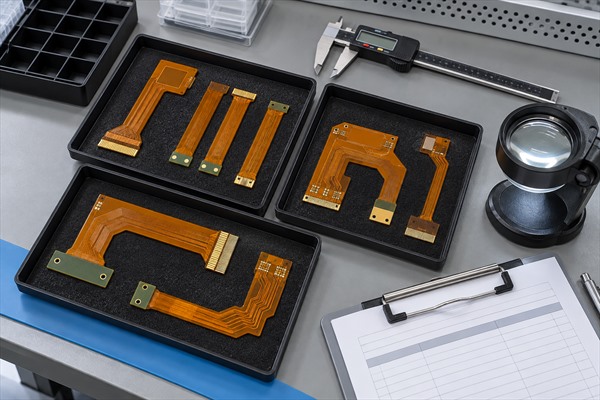
German Flex PCB Manufacturers vs. Offshore Suppliers: Which Fits Your Project?
German manufacturing offers local engineering access and shorter domestic logistics, while offshore manufacturing can provide competitive pricing and additional production capacity. Germany-based sourcing companies using international factories offer a third option.
| Comparison Factor | German Manufacturing | German-Managed Offshore Supply | Direct Offshore Manufacturer |
|---|---|---|---|
| Quality | Easier factory access; quality depends on manufacturing controls | Local supplier manages partner-factory quality | Depends on direct factory qualification and inspection controls |
| Price | Often higher labor and operating costs | Includes local service and partner manufacturing costs | May offer lower unit costs at volume; freight and import costs apply |
| Prototype lead time | Shorter transport and local engineering communication | Depends on factory coordination and delivery | Fast manufacturing may be offset by international transportation |
| Volume lead time | Depends on factory capacity and material availability | Multiple factory options may support production scaling | Competitive for stable designs and planned quantities |
| Manufacturing capabilities | Specialist flex, rigid-flex, and HDI technologies | Projects can be allocated to suitable partner factories | Broad range of specialized processes may be available |
| Engineering support | Local technical communication and easier factory visits | German contact with overseas production | Direct factory communication across time zones |
| Logistics | Domestic delivery and simpler local handling | International logistics coordinated by supplier | Delivery and customs responsibilities depend on agreed terms |
| Production origin | Confirmed German or European manufacturing where applicable | German office does not establish German production | Overseas manufacturing must satisfy customer requirements |
German manufacturers are often better suited to projects requiring domestic production, frequent engineering changes, or close technical coordination. International suppliers may be attractive when the design is stable and repeat production costs become more important.
Why Consider BestFPC for Flex PCB Supply to Germany?
BestFPC manufactures custom flexible and rigid-flex PCBs in Shenzhen, China, for international customers, including German electronics companies. Its services cover pre-production DFM review, prototype fabrication, repeat production, and assembly coordination.
For German buyers, the main advantages include:
-
Free DFM Review to Reduce Manufacturing Risk: Stackup, bend regions, coverlay, stiffeners, tolerances, and fine features are reviewed before production. Early feedback helps identify potential fabrication problems and reduce avoidable revisions.
-
Custom Multilayer Flex PCB Manufacturing: BestFPC supports routine 1–4-layer FPC constructions and has documented experience manufacturing six-layer flexible circuits. Material combinations, finished thickness, and bending requirements are reviewed against the specific stackup.
-
Fine-Line and Controlled-Impedance Capability: Fine-line manufacturing from 3/3 mil and custom impedance-controlled constructions provide options for compact, signal-sensitive applications when the required stackup supports them.
-
Small-Quantity Prototype Support: Eligible projects can begin without a fixed MOQ. Flying-probe open/short testing supports electrical inspection of small prototype quantities before larger production commitments.
-
Prototype-to-Volume Manufacturing Support: Material specifications, panelization, inspection requirements, and future order quantities can be evaluated together, reducing unnecessary changes during production scaling.
-
Fabrication and Assembly Coordination: Bare-board manufacturing, component sourcing, assembly documentation, and agreed testing can be coordinated through one supplier for projects requiring PCBA services.
Please feel free to contact us if you have any request for overseas flexible circuit board manufacturing and assembly: sales@bestfpc.com.
Six-Layer Flex PCB for Communications Equipment: A BestFPC's Case Study
Project Background
BestFPC manufactured a six-layer flexible PCB for compact communication equipment, combining multilayer routing, blind-via connections, controlled impedance, and localized reinforcement.
Requirements and Challenges
The circuit required a 0.40 ± 0.05 mm finished thickness, excluding the stiffener, with 0.5 oz copper, a 50 Ω impedance target, ENIG surface finish, and 0.5 mil coverlay.
Its construction included three double-layer circuit groups and selectively unbonded interfaces between layers 2–3 and 4–5.
The main challenge was combining dense interconnections with the required flexible sections while maintaining the specified mechanical construction.
BestFPC's Manufacturing Solution
BestFPC used blind-via interconnections and selectively unbonded flexible sections within the six-layer stackup.
A 0.48 mm FR4 stiffener provided local reinforcement. Copper construction, coverlay, surface finish, and thickness requirements were integrated into the manufacturing process.
Project Results
The completed six-layer FPC incorporated blind-via interconnections, selectively unbonded flexible sections, and localized FR4 reinforcement.
The project demonstrates BestFPC's experience manufacturing multilayer flexible circuits that combine compact routing requirements with flexible sections and mechanical support.
FAQs About Sourcing Flex PCBs in Germany
Q1: Can multiple flex PCB designs be combined into one production panel?
A1: Sometimes. The designs need compatible materials, copper thickness, surface finish, and manufacturing processes. Shared panelization may reduce setup costs, depending on panel utilization and quantities.
Q2: Can a German customer request an NDA before sharing Gerber files?
A2: Yes. An NDA can define confidentiality requirements, permitted data access, subcontractor disclosure, and handling of proprietary manufacturing files before they are shared.
Q3: Can flex PCBs be supplied in panels for component assembly?
A3: Yes. Flexible circuits may be delivered with support rails, carriers, or suitable panel fixtures for SMT assembly. The panel arrangement depends on circuit geometry and assembly equipment.
Q4: How are thin flex tails and stiffened connector areas protected during transport?
A4: Flat supports, protective separators, rigid backing, or custom trays can prevent sharp folds and mechanical damage. Exposed connector contacts may require additional protection.
Q5: Do fabrication drawings need to be written in German?
A5: Not necessarily. Many manufacturers accept English technical documents when dimensions, tolerances, material specifications, and revision information are clearly defined.
Q6: Who owns the tooling and manufacturing data after the first order?
A6: Ownership depends on the purchasing agreement. Customer design files generally remain the customer's property, while tooling, CAM data, and production fixtures may be subject to separate contractual terms.
How Do You Get a Free DFM Review and Quick Flex PCB Quote?
BestFPC provides free preliminary DFM reviews and custom flex PCB quotations for customers in Germany. Complete fabrication files and clearly defined requirements help the engineering team assess manufacturability, pricing, and delivery schedules.
A typical RFQ package includes:
-
PCB manufacturing files: Gerber or ODB++, drill and routing files, fabrication drawing, and current revision.
-
Material and stackup requirements: Layer count, polyimide construction, copper thickness, coverlay, stiffeners, and surface finish.
-
Mechanical specifications: Bend radius, bend location, connector thickness, critical dimensions, tolerances, and impedance requirements.
-
Purchasing information: Prototype quantity, expected production volume, requested delivery date, German delivery address, and preferred Incoterm.
-
Quality requirements: Applicable IPC class, electrical testing, inspection records, material traceability, and packaging requirements.
-
Assembly information: BOM, component placement files, assembly drawing, and functional testing requirements when needed.
BestFPC can review the submitted manufacturing package and provide feedback on potential fabrication concerns, required adjustments, estimated production lead time, and quotation details. Welcome to contact us if you have any request for flexible circuit board manufacturing and assembly: sales@bestfpc.com.


.png)
.png)
.png)
.png)

.png)