


 2026-02-25
 BEST
BESTTable of Contents
- What Is TS 16949 and Why It Matters for Automotive Flexible Circuit Boards (FPCs)
- Automotive Flexible Circuit Board Design Requirements Under TS 16949
- US Automotive Industry Standards Impacting Flexible PCBs
- Critical Decision Factors for Automotive FPC Supplier Selection in the USA
- FAQ: Automotive Flexible Circuit Board and TS 16949
- Why BESTFPC Is an Ideal Partner for Automotive Flexible Circuit Boards
- Conclusion & Next Steps for US Automotive Engineers and Buyers
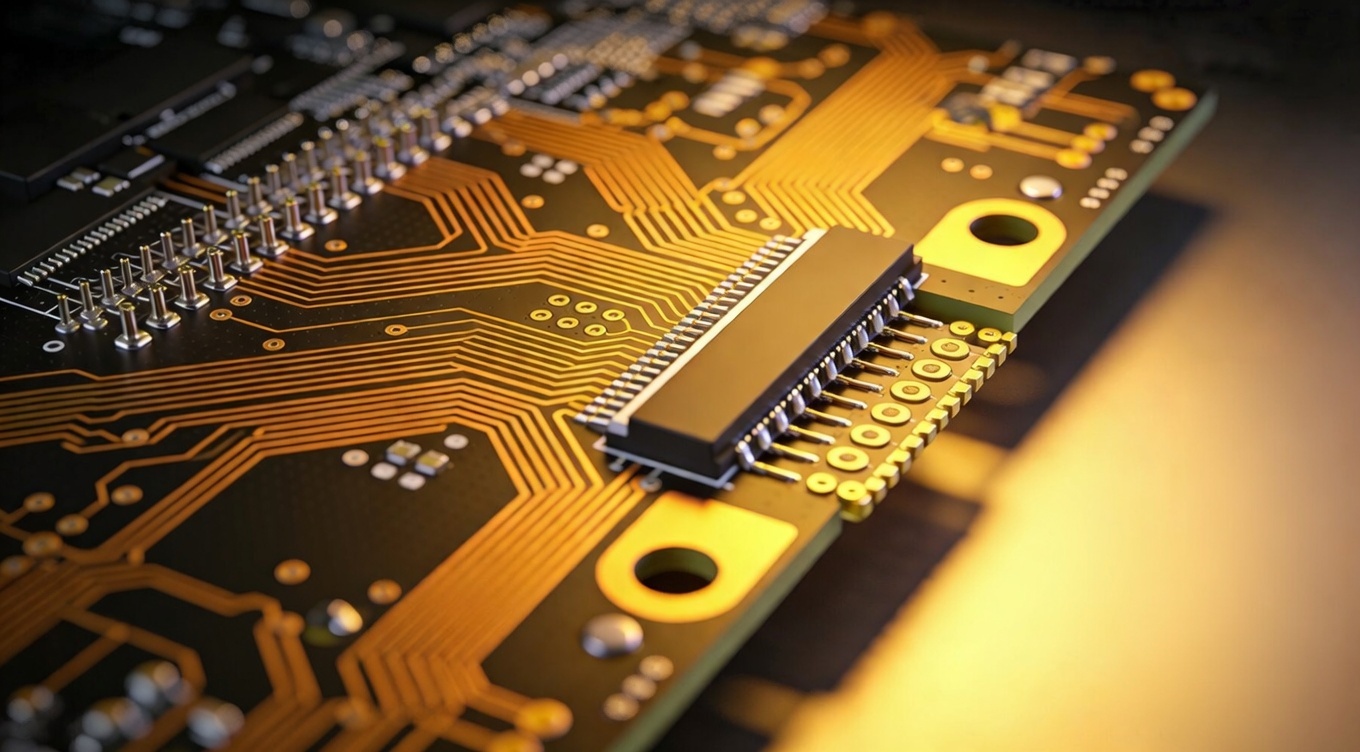
What Is TS 16949 and Why It Matters for Automotive Flexible Circuit Boards (FPCs)
Automotive flexible circuit boards, also known as flex PCBs, are integral components in modern vehicles. They are used in advanced driver assistance systems (ADAS), infotainment modules, battery management systems, and powertrain control units. Unlike rigid boards, flexible circuits bend, twist, and fit into compact assemblies — making reliability and quality especially critical.
TS 16949 is a globally recognized quality management standard for the automotive industry, developed by the International Automotive Task Force (IATF). In the United States, automotive OEMs and Tier 1 suppliers commonly require TS 16949 (now also aligned with IATF 16949:2016) certification for all suppliers in the automotive supply chain, including flexible PCB manufacturers.
This standard emphasizes defect prevention, process variability reduction, and continuous improvement — elements that are crucial for automotive flex PCBs subjected to vibration, thermal cycling, and long service life conditions.
Under TS 16949, flexible circuit boards are expected to meet stricter quality assurance controls than general-purpose FPCs. These include documented process controls, advanced inspection techniques, corrective action systems, and rigorous supplier audits. For US automotive applications, compliance with TS 16949 demonstrates that a flexible PCB supplier possesses the discipline and traceability required by safety-critical vehicle systems.
Automotive Flexible Circuit Board Design Requirements Under TS 16949
Automotive flex circuit design under TS 16949 is guided by performance expectations, reliability targets, and manufacturing process controls that minimize field failures. Below are key technical considerations that US automotive engineers prioritize.
Minimum Line Width and Spacing
Minimum line width and line spacing are critical design parameters that directly impact electrical performance, impedance control, and mechanical durability in automotive flex circuits:
- Minimum line width: For automotive FPCs, 0.075 mm (75 µm) or finer may be specified for signal layers, depending on complexity and space constraints.
- Line spacing: Similar spacing is chosen to maintain dielectric strength and reduce crosstalk in high-speed communication paths.
In automotive systems where high vibration and thermal cycling occur, designers often choose slightly conservative line/space tolerances compared to consumer electronics, to ensure long-term reliability. Short runs with tighter spacing are reserved for controlled environments such as infotainment displays, while power or high-current paths use wider traces.
Automation systems and simulation tools help determine optimized line width and spacing for each functional region on the flex circuit, balancing manufacturability and performance.
Material Selection for Automotive FPCs
Material choice is a decisive factor in automotive flex PCB performance:
- Base substrate: Polyimide (PI) is widely used for its thermal stability and mechanical strength.
- Coverlay films: Specialized coverlays with enhanced adhesion help prevent delamination under vibration.
- Copper thickness: Thicker copper (e.g., 35 µm and above) supports higher current capacity and improved heat conduction.
Automotive flex circuits often experience extended temperature ranges from sub-zero cold starts to elevated under-hood heat. Therefore, thermally stable materials with low coefficient of thermal expansion (CTE) are prioritized.
Durability and Flex Life Standards
TS 16949 emphasizes durability verification through controlled testing. Automotive FPCs must be subjected to:
- Dynamic flex tests: Simulate repeated movement in vehicle harnesses or connectors
- Humidity and thermal cycling: Mimic long-term environmental exposure
- Adhesion tests: Confirm material bonding integrity
Reliable suppliers provide documented test reports that align with automotive product qualification processes — a requirement for Tier 1 acceptance in the US.
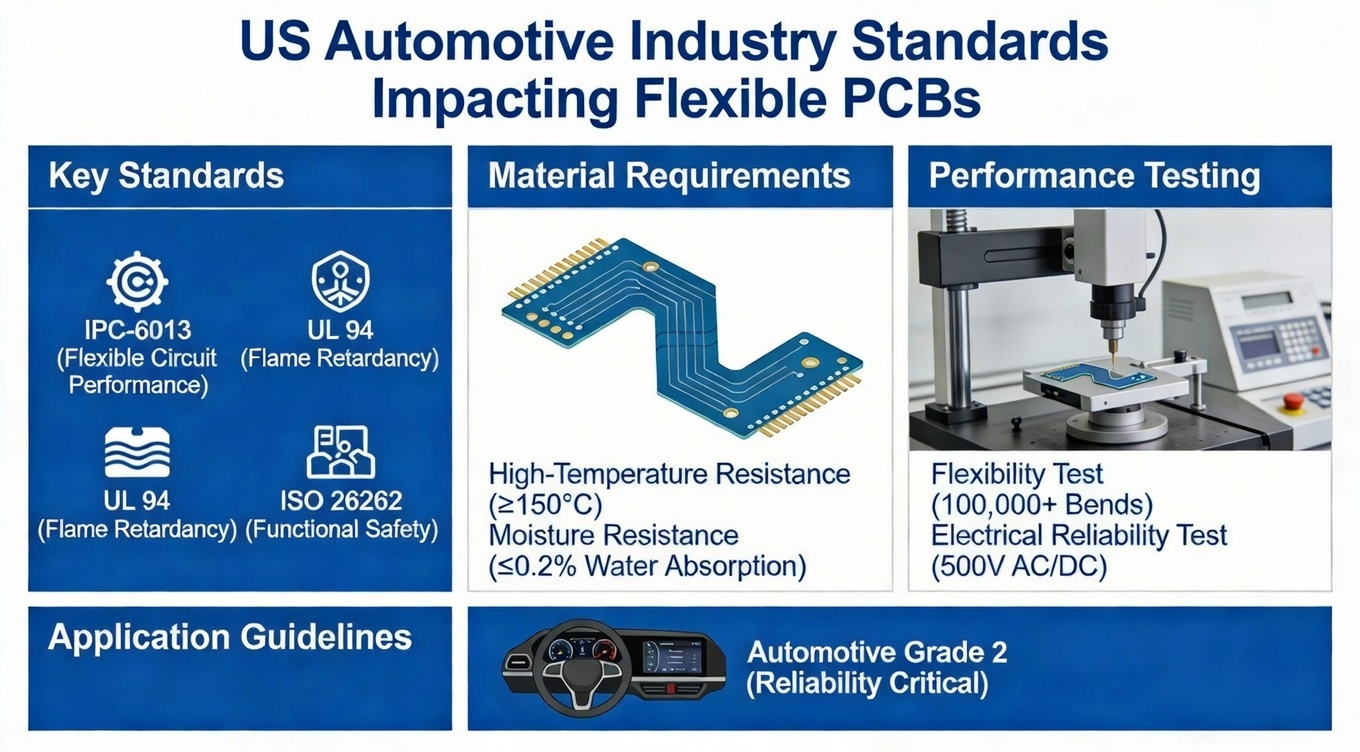
US Automotive Industry Standards Impacting Flexible PCBs
Beyond TS 16949, several standards influence automotive FPC design and qualification in the United States:
- J-STD-001: Soldering process requirements for electronic assemblies
- IPC-6013: Qualification and performance specification for flexible circuits
- IPC-2223: Design standard for flexible printed boards
- ISO 9001: Quality management systems
Automotive contract manufacturers and OEM engineering teams often request compliance with multiple standards simultaneously. For example, a flex PCB may need to meet IPC-6013 performance specifications while being produced in a TS 16949 certified environment. This dual compliance ensures that both product performance and process discipline satisfy automotive reliability expectations.
Critical Decision Factors for Automotive FPC Supplier Selection in the USA
Selecting a partner for automotive flexible circuit boards requires a combination of technical capability, quality systems, and engineering support.
Quality Systems and Traceability Requirements
US automotive buyers often list TS 16949 certification as a prerequisite in RFQs. Additionally, suppliers must demonstrate strong traceability for materials, process parameters, and test outcomes. Certification alone is not enough — documented evidence of process control and deviations handling is essential.
Testing & Inspection Capabilities
Automotive flex circuits are verified using methods such as:
- Automated Optical Inspection (AOI)
- Electrical testing with continuity and isolation checks
- Environmental test chambers for temperature and humidity stress
- Flex life cycling machines
Suppliers with robust inspection systems reduce defect rates and improve repeatability — key performance indicators for automotive quality.
Engineering Support and DFM Expertise
Engineering support is a differentiator. Automotive projects often require design refinement for manufacturability (DFM) and robustness under dynamic conditions. A supplier that offers early design feedback, simulation support, and iterative prototypes accelerates development cycles and reduces risk.
Internal high-engagement pages from your site, such as Automotive FPC Capabilities, Quality Assurance Processes, and FPC Material Guide, should be linked in this section to increase dwell time and internal link authority.
FAQ: Automotive Flexible Circuit Board and TS 16949
Q1: What does TS 16949 mean for automotive flexible circuit boards?
It indicates that the supplier’s quality management system meets automotive industry expectations for defect prevention, process control, and continuous improvement — essential for high-reliability vehicle systems.
Q2: Can automotive flex PCBs achieve fine line width like consumer PCBs?
Yes — advanced fabrication techniques can achieve fine line widths (down to 0.05–0.075 mm) required for signal layers, but designers must balance this with durability under vibration and flex.
Q3: Are TS 16949 flexible circuit boards tested differently than standard FPCs?
Yes — automotive FPCs undergo more rigorous testing, including dynamic flex cycles, thermal cycling, and adhesion tests, to mimic vehicle conditions.
Why BESTFPC Is an Ideal Partner for Automotive Flexible Circuit Boards
BESTFPC combines global certification readiness with in-depth engineering capability:
- Production environment aligned with TS 16949 quality principles
- Senior engineers with automotive DFM experience
- Capability to deliver multi-layer flex and rigid-flex boards with strict traceability
- Comprehensive testing and inspection systems
By working collaboratively with automotive engineers in the USA, BESTFPC anticipates design challenges — from minimum line width requirements to flex durability and environmental stress factors — and delivers production-ready solutions that reduce risk and accelerate qualification.
Conclusion & Next Steps for US Automotive Engineers and Buyers
For automotive applications in the United States, flexible circuit boards must be designed and manufactured to meet demanding reliability, performance, and quality expectations. TS 16949 serves as an essential benchmark for quality systems, and automotive FPCs must be developed with meticulous attention to material selection, line width/spacing, and mechanical durability.
Choosing the right supplier — one that aligns with TS 16949 principles and offers engineering support from design through production — is critical. BESTFPC delivers on these fronts with a combination of robust manufacturing, engineering expertise, and automotive industry insight.


.png)
.png)
.png)
.png)

.png)