


 2026-05-09
 BEST
BESTTable of Contents
- The Australian LED Lighting Boom — Why PCB Choice Determines Your Product’s Success in 2026
- How HDI Rigid-Flex PCBs Solve the Five Core Challenges of LED Control
- Precision Brightness Control — Constant Current Driving, PWM Dimming, and PCB Layout Strategies
- Beam Angle and Illumination Range — How Rigid-Flex 3D Architecture Redefines Optical Design
- Thermal Management — Why HDI Rigid-Flex PCBs Outperform MCPCBs in Confined LED Luminaires
- Multi-Channel LED Synchronization — HDI Interconnect Density for Large Arrays
- Space Efficiency and Industrial Design — How Rigid-Flex Frees Your Product’s Aesthetic
- How Australian Engineers and Procurement Teams Evaluate LED Control PCB Suppliers — 8 Critical Decision Factors
- Why Australian Engineering Teams Partner with BESTFPC for LED Control PCB Projects
- Frequently Asked Questions About LED Control PCBs
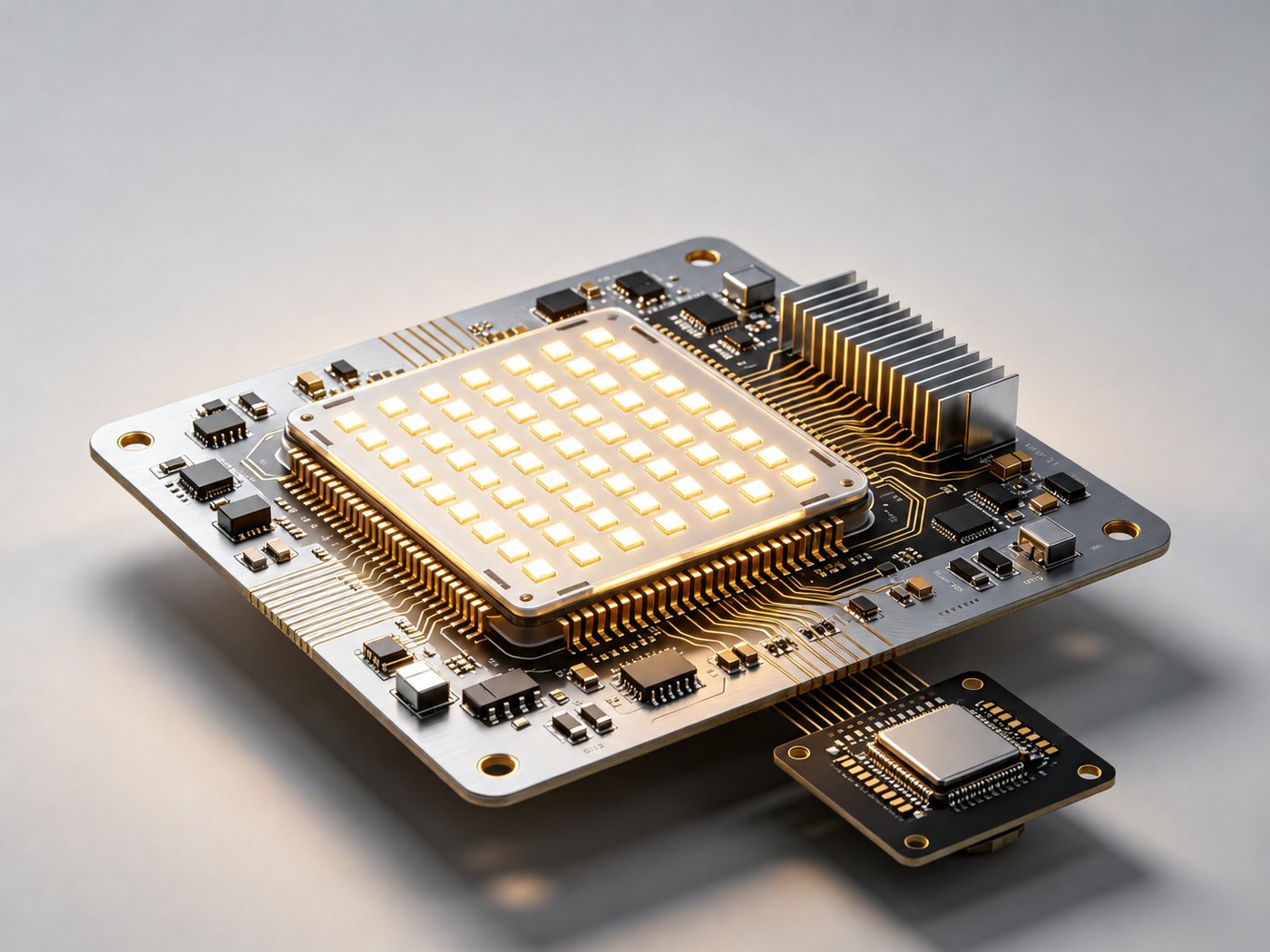
The Australian LED Lighting Boom — Why PCB Choice Determines Your Product’s Success in 2026
The Australian LED lighting market has entered a period of remarkable expansion. Valued at approximately AUD 2.06 billion in 2025, the market is projected to grow at a compound annual growth rate of 9.70% through 2035, potentially reaching AUD 5.20 billion by the end of the forecast period. Multiple research firms confirm this trajectory: Grand View Research pegs 2025 Australian LED lighting revenue at USD 5,906.0 million, forecasting growth to USD 10,946.6 million by 2033 at an 8% CAGR. IMARC Group reports the Australia LED lights market reached USD 1,960.2 million in 2025 and is expected to reach USD 3,955.6 million by 2034, exhibiting a growth rate of 7.87%. Australia accounts for approximately 5.5% of the global LED lighting market.
This growth is fueled by government energy efficiency programs, the phase-out of incandescent and halogen lighting, rising demand for smart building automation, and the expansion of architectural and horticultural lighting segments. The market is witnessing a shift towards LED lighting across residential, commercial, industrial, and outdoor applications.
Behind every luminaire, every smart downlight, every adaptive automotive headlamp, and every horticultural grow-light array sits a printed circuit board — and the quality of that PCB directly determines the product’s optical performance, thermal longevity, and regulatory compliance. In 2026, the PCB is no longer a passive carrier of LEDs. It must function as an integrated control platform managing precise current regulation, heat dissipation, multi-channel coordination, and three-dimensional form factor integration — all simultaneously.
This is where HDI (High-Density Interconnect) rigid-flex PCB technology has emerged as the definitive solution for advanced LED control applications. By combining rigid FR-4 sections for component mounting and driver circuitry with flexible polyimide interconnects that enable three-dimensional folding, and by deploying microvias and fine-line geometry for dense routing, HDI rigid-flex PCBs address every critical challenge in modern LED system design.
Google Trends Insight (Past 12 Months — Australia): Search interest in “LED control PCB” and “HDI rigid-flex PCB” has grown steadily in Australia, driven by increased sourcing from lighting manufacturers and IoT device developers. The fastest-growing related queries include “LED driver PCB design,” “rigid-flex LED PCB manufacturer,” and “LED PCB thermal management” — all signaling that Australian engineers are actively researching PCB-level solutions to LED system challenges. Meanwhile, “Australia LED lighting market growth” queries have risen in parallel, confirming that commercial evaluation and technical sourcing are happening simultaneously.
How HDI Rigid-Flex PCBs Solve the Five Core Challenges of LED Control
Modern LED systems — from architectural façade lighting to automotive matrix headlamps to medical phototherapy devices — impose five interconnected design requirements that conventional rigid PCBs struggle to satisfy simultaneously. HDI rigid-flex PCB technology addresses all five through an integrated architecture that combines the structural advantages of flex circuits with the routing density of HDI manufacturing.
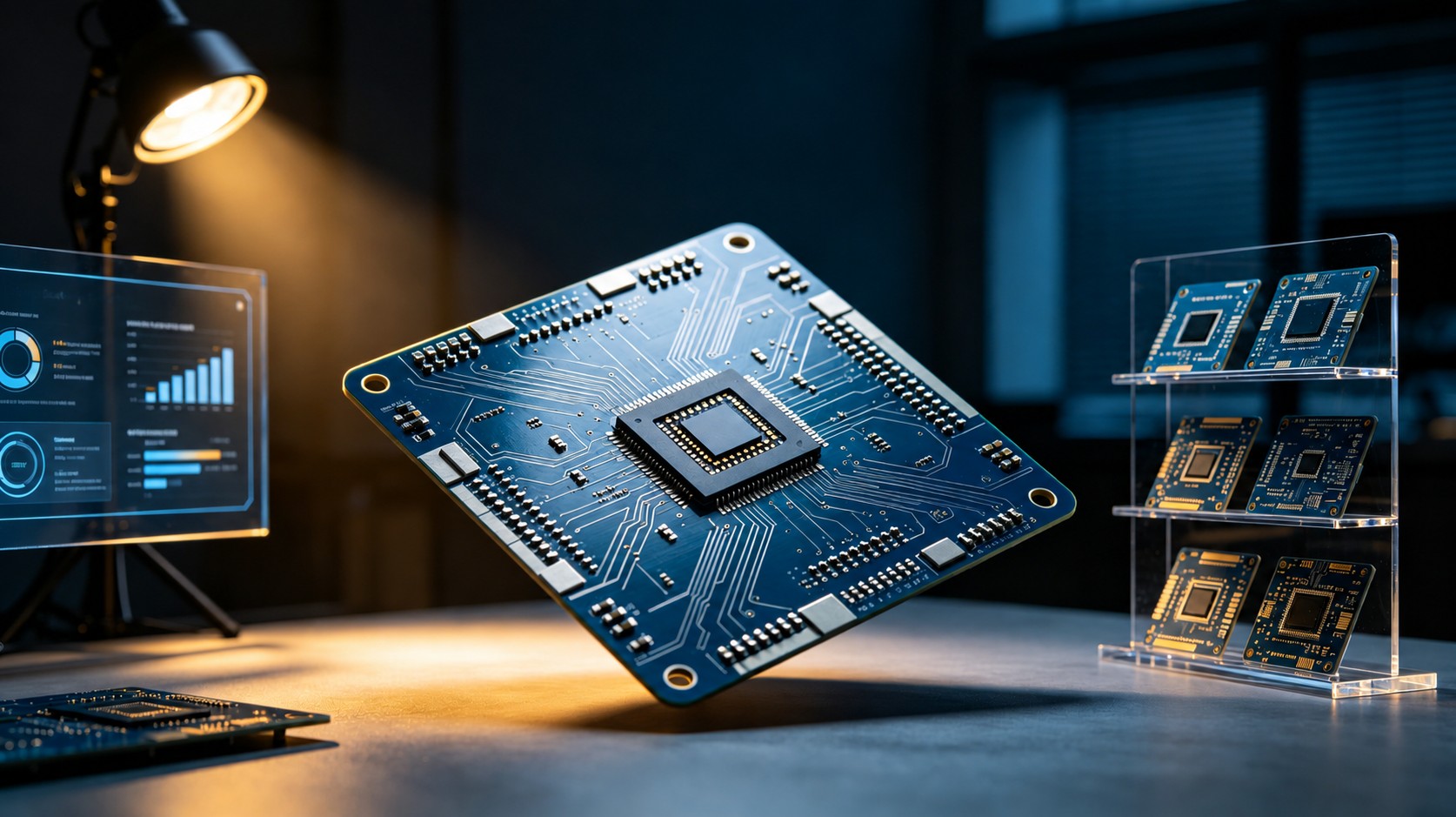
The Five Challenges — And How HDI Rigid-Flex Solves Each
Challenge 1: Precision Current Control and Dimming. LEDs require stable, precisely regulated current to maintain consistent brightness and color temperature. Constant-current driver ICs generate switching noise that must be managed through careful layout. HDI rigid-flex PCBs enable shorter, impedance-controlled traces between driver ICs and LED pads by using microvias and fine-line geometry to condense the control circuit footprint. This minimizes parasitic inductance and voltage drop, ensuring the current reaching each LED matches the driver’s output specification with minimal degradation. Modern LEDs are not simply “on or off” — they incorporate drivers, sensors, and ICs directly on the board.
Challenge 2: Beam Angle and Optical Geometry. Traditional flat PCBs restrict LED placement to a single plane, limiting beam pattern design. Rigid-flex technology allows the circuit to become the structure itself — designers can fold the PCB into a 360-degree light fixture, mount LEDs on multiple planes at precise angles, and eliminate the connectors and wiring harnesses that add bulk and failure points. The result is superior optical control without mechanical complexity.
Challenge 3: Thermal Management in Confined Spaces. Heat is the primary killer of LEDs — when an LED light circuit board overheats, light output shifts in color, dims, and the LED eventually fails. HDI rigid-flex PCBs support sophisticated thermal management strategies including dense thermal via arrays under LED thermal pads, thick copper pours on internal layers acting as heat spreaders, and thermal stiffeners that combine mechanical support with heat dissipation.
Challenge 4: Multi-Channel Synchronization. Large LED arrays — architectural installations, video walls, automotive matrix headlamps — require dozens or hundreds of LEDs to operate in precise coordination. HDI technology enables the routing density needed to connect multiple driver ICs, communication buses, and individual LED channels without expanding board dimensions. Blind and buried vias allow signal routing through internal layers, freeing surface area for LED placement.
Challenge 5: Form Factor Integration and Aesthetic Design. Modern lighting products are defined by their industrial design as much as their optical performance. Ultra-thin pendants, curved wall washers, and compact downlights leave minimal internal volume for electronics. Rigid-flex PCBs fold into available space, eliminating the connectors and cables that consume volume and introduce reliability risks. Flex and Rigid-Flex allow the circuit to be the structure itself, creating design possibilities unavailable with flat rigid boards.
Why Australian Conditions Demand HDI Rigid-Flex
Australia’s unique environmental conditions add another layer of requirement. High ambient temperatures in outdoor and ceiling-mounted installations accelerate LED degradation when thermal management is inadequate. Stringent electromagnetic compatibility (EMC) regulations under the RCM framework demand clean circuit design with controlled EMI emissions. And the Australian market’s emphasis on premium architectural lighting creates demand for luminaires with distinctive form factors that conventional rigid PCBs cannot accommodate.
An HDI rigid-flex PCB approach — designed with these five challenges and Australian conditions in mind from the earliest schematic stage — represents the engineering foundation for LED products that perform reliably across their intended service life.
Precision Brightness Control — Constant Current Driving, PWM Dimming, and PCB Layout Strategies
Brightness control in LED systems is fundamentally a current regulation challenge. Unlike incandescent bulbs that respond predictably to voltage variation, LEDs exhibit a steep current-voltage curve where small voltage changes produce large current swings — and current directly determines luminous output. For Australian engineers designing commercial and architectural lighting, maintaining consistent brightness across multiple fixtures and throughout the product’s lifetime is a non-negotiable performance requirement.
Constant Current vs. Constant Voltage — The Driver Architecture Decision
LED driver architectures fall into two primary categories. Constant-current (CC) drivers maintain a fixed output current regardless of load voltage variation, making them the preferred choice for high-power LEDs where luminous consistency is critical. Modern CC drivers achieve ±2% current regulation accuracy, with some designs capable of flicker-free dimming down to 0.5% of maximum brightness. Constant-voltage (CV) drivers maintain a fixed output voltage — typically 12V or 24V — and rely on series resistors or on-board current regulators to set LED current, offering simpler implementation for low-power applications at the cost of reduced precision.
Primary-side regulated controllers with constant-voltage and constant-current control are increasingly common in Australian-market LED drivers, combining power factor correction with tight output regulation suitable for flyback, buck-boost, or SEPIC topologies. These integrated solutions reduce external component count while meeting the power quality requirements that Australian regulators enforce through the RCM framework.
The choice between CC and CV directly shapes PCB layout requirements. CC designs place the driver IC in proximity to the LED string with short, wide traces to minimize series resistance. CV designs must distribute power across a broader network, often using star or grid topologies to equalize path impedance and prevent current hogging by LEDs on shorter traces.
PWM Dimming and the PCB Layout Implications
Pulse-width modulation (PWM) is the dominant dimming technique in modern LED control — it varies the duty cycle of a high-frequency switching signal to adjust perceived brightness while maintaining constant peak current (and therefore consistent color temperature) across the dimming range. Advanced LED drivers support PWM dimming ratios exceeding 3000:1, enabling smooth, flicker-free dimming from full brightness to near-zero output.
However, PWM dimming imposes specific PCB layout requirements that generic board designs often overlook. The switching edges of the PWM signal generate high-frequency harmonics that can couple into adjacent traces, causing visible flicker in other LED channels or interfering with on-board sensors. HDI rigid-flex PCBs address this through:
- Dedicated ground planes beneath PWM traces providing continuous return paths that minimize loop area and radiated emissions
- Separation of PWM signal routing from sensitive analog traces using internal layer isolation
- Microvia connections between driver IC ground pads and internal ground planes reducing ground bounce during switching transitions
- Flex-zone routing rules that avoid sharp impedance discontinuities, maintaining signal integrity across the rigid-flex boundary
The driver IC should be placed as close as physically possible to the LED array. The traces from the driver IC to LEDs carry switching or constant current, and minimizing this distance reduces line resistance, voltage drop, and power loss — directly improving system stability.
Current Balancing in Multi-String LED Arrays
When multiple LED strings operate in parallel from a single driver, current imbalance becomes a significant challenge. Small differences in forward voltage between LED strings — even a few hundred millivolts — can cause one string to draw disproportionately more current, creating visible brightness variation and accelerating lumen depreciation in the overloaded string.
The PCB-level solutions include series-parallel configurations where LEDs within each independent series branch are sequentially arranged and all parallel branches are physically symmetric and consistent across the board; ballast resistors or active current mirrors placed in close thermal proximity so they track each other’s temperature coefficient; and copper pour current distribution using low-impedance power planes rather than narrow traces, reducing voltage gradients across the board. In HDI rigid-flex designs, internal power planes in the rigid sections connect through controlled-impedance flex layers to remote LED arrays — maintaining current balance even when LEDs are distributed across multiple folding board sections.
Beam Angle and Illumination Range — How Rigid-Flex 3D Architecture Redefines Optical Design
Conventional rigid PCB design constrains LED placement to a single plane. For luminaires requiring specific beam patterns — wide flood, narrow spot, asymmetric wall-wash, or 360-degree omnidirectional output — this planar limitation forces engineers to add secondary optics, reflectors, or multiple interconnected boards, each adding cost, assembly complexity, and potential failure points. Rigid-flex PCB technology fundamentally changes this equation by enabling the circuit itself to adopt the three-dimensional geometry required for the target light distribution.
From Flat Boards to Three-Dimensional Light Engines
A rigid-flex PCB consists of rigid FR-4 sections connected by flexible polyimide layers laminated into a single integrated assembly. The rigid sections host LED packages, driver ICs, and passive components using standard SMT processes — exactly like a conventional rigid board. The flex sections, however, can be folded, bent, or twisted to orient each rigid section at a specific angle relative to the others, creating a three-dimensional LED array from what began as a flat fabrication panel.
For Australian lighting manufacturers, this capability translates into several concrete design advantages. Omnidirectional luminaires can mount LEDs on multiple faces of a folded rigid-flex assembly, achieving uniform 360-degree distribution without the cost and complexity of multiple interconnected boards. Wall-wash fixtures can angle LED rows precisely toward the target surface, optimizing uniformity and minimizing wasted light. Compact downlights and track heads can fold the driver circuit behind the LED plane, fitting advanced control electronics into form factors previously achievable only with simplified, lower-performance circuits. The result is fewer connectors — which are often the first components to fail — lower weight, and a much sleeker product.
Beam Angle Control Through PCB Geometry
The beam angle of an LED luminaire is primarily determined by the LED package’s native emission pattern combined with any secondary optics. However, when multiple LEDs are arranged on a non-planar surface, the geometric relationship between individual LED aiming angles becomes a powerful additional variable for beam shaping.
Rigid-flex fabrication allows each rigid section of the PCB to be positioned at a precisely specified angle. By designing the flex zone length and the folded configuration, engineers can create LED arrays where each row or cluster of LEDs points in a slightly different direction — widening or narrowing the composite beam without changing secondary optics. This approach is particularly valuable for horticultural lighting, where uniform Photosynthetic Photon Flux Density (PPFD) across the plant canopy requires carefully calculated LED spacing and aiming — and where rigid-flex assemblies can conform to curved greenhouse structures or vertical farming racks.
Eliminating Connectors — The Hidden Reliability Advantage
The most underappreciated benefit of rigid-flex architecture for LED beam control is connector elimination. If you are still using connectors to join multiple rigid LED strips, you are literally adding fail points to your design. Each board-to-board connector represents a potential source of intermittent contact, increased resistance, and mechanical failure — particularly in Australian outdoor and industrial environments where temperature cycling and vibration are constant realities.
Rigid-flex PCBs replace these connector-dependent multi-board assemblies with a single integrated circuit where the flexible sections serve as the interconnection medium. There are no mating contacts to corrode, no connector housings to crack, and no wire harnesses to fatigue. For Australian lighting products — especially those deployed in coastal environments where salt spray accelerates connector degradation — this elimination of interconnection failure modes translates directly into longer service life and fewer warranty claims.
Thermal Management — Why HDI Rigid-Flex PCBs Outperform MCPCBs in Confined LED Luminaires
Heat is the number one killer of LEDs. When an LED light circuit board gets too hot, the light shifts color, dims, and eventually dies. For Australian engineers, this thermal challenge is amplified by high ambient temperatures — ceiling spaces in commercial buildings regularly exceed 50°C during summer, while outdoor luminaires face direct solar radiation that compounds internal heat generation. Effective thermal management is not optional; it is the foundation of LED system reliability.
Beyond MCPCB — Why Metal Core Is Not Always the Answer
Metal Core PCBs (MCPCBs) — typically aluminum-backed with a thin dielectric layer — have long been the default thermal solution for LED applications. They offer excellent through-plane thermal conductivity and are straightforward to design. However, MCPCBs impose significant limitations: they are single-layer or at most two-layer constructions, severely restricting routing complexity; they are rigid and planar, offering no form-factor flexibility; and the dielectric layer’s thermal resistance, while low, still creates a bottleneck between the LED thermal pad and the aluminum substrate.
For high-power, space-constrained designs, Flex PCBs combined with specialized thermal vias or thin-film polyimides can actually offer better heat dissipation in 3D spaces. In HDI rigid-flex constructions, thermal management becomes a multi-path strategy rather than a single-path reliance on substrate conduction.
Thermal Via Arrays — The Primary Heat Transfer Mechanism
Thermal vias are the most common and effective method for managing heat in HDI PCBs. These are vias specifically designed to transfer heat from one layer of the PCB to another, acting like miniature heat pipes that move thermal energy from hot components on the top layer to internal or bottom-layer heat-spreading planes. The more thermal vias placed under a heat source, the better the heat transfer — but in HDI PCBs, available space is limited, so via placement must be carefully strategic to avoid interfering with electrical routing.
Recommended thermal via design parameters for LED applications include hole diameters of 0.25–0.35 mm with pitch spacing of 0.8–1.2 mm tied to large copper pours. Thermal vias should be evenly distributed under or around heat sources in a regular array to improve vertical heat transfer, with coverage spanning the entire heat source area and slightly higher density at the center where heat flux peaks.
Copper Management — Internal Planes as Heat Spreaders
Copper pouring is another effective technique — it involves adding large areas of copper on PCB layers to spread heat across a larger area, reducing local temperature at the heat source. HDI rigid-flex PCBs can incorporate multiple copper planes in the rigid sections, using blind and buried vias to create thermal pathways that move heat from the LED mounting surface through internal copper layers to the board’s back surface, where it can dissipate into the luminaire housing or an attached heat sink.
Critical thermal paths should remain continuous and unbroken — unnecessary splits or cutouts create thermal bottlenecks, preventing uniform heat dissipation and potentially creating hot spots. For rigid-flex designs specifically, the transition between rigid and flex zones requires careful thermal modeling, as the flex polyimide layers have different thermal expansion characteristics than the rigid FR-4 sections.
Stiffeners and Mechanical Aids for Additional Heat Dissipation
Stiffeners with thermal properties add both mechanical strength and heat dissipation capability. Aluminum or copper stiffeners bonded to the back of the rigid sections serve dual purposes: they prevent board flexing that could stress solder joints, and they provide additional thermal mass and conduction paths away from heat-generating components. For Australian outdoor luminaires, where the PCB must survive both daytime solar heating and nighttime operating cycles, this combination of mechanical robustness and thermal management is particularly valuable.
Australian Ambient Temperature and LED Lifetime Calculations
The relationship between LED junction temperature and service life is well documented — every 10°C increase in junction temperature approximately halves the LED’s expected lifetime. For Australian installations where ceiling-space ambient temperatures can reach 55-60°C during summer, the thermal budget between ambient and maximum junction temperature (typically 125°C for mid-power LEDs) is compressed.
An HDI rigid-flex PCB with optimized thermal via arrays, multiple internal copper planes, and thermal stiffeners can maintain LED junction temperatures 10-15°C lower than a basic MCPCB design in equivalent operating conditions. This temperature reduction translates into approximately 2-3x longer LED service life — a difference that directly impacts warranty costs and brand reputation for Australian lighting manufacturers.
Multi-Channel LED Synchronization — HDI Interconnect Density for Large Arrays
Large-scale LED installations — architectural media façades, stadium displays, horticultural lighting arrays, and automotive adaptive headlamps — require dozens, hundreds, or even thousands of individual LEDs to operate in precise coordination. A single visible brightness mismatch or timing error in a multi-channel array degrades the entire visual experience. Achieving synchronization at this scale demands PCB architectures capable of routing dense control signals, distributing power uniformly, and managing the electromagnetic environment — all without expanding the board footprint beyond practical limits.
The Routing Density Challenge
A typical multi-channel LED control PCB must accommodate power distribution to each LED or string, individual PWM control signals to each driver channel, communication bus routing (I²C, SPI, or DMX512 for architectural lighting), feedback traces for temperature sensing and current monitoring, and ground returns that maintain signal integrity across the full array.
Conventional PCB routing — using through-hole vias and standard trace/space rules — quickly exhausts available routing area as channel count increases. HDI technology addresses this through microvias (typically 0.1-0.15 mm diameter) that connect only the layers needed, preserving routing space on other layers; blind and buried vias that allow signals to transition between internal layers without consuming surface real estate; and finer trace/space geometries (down to 75 μm/75 μm or less) that increase routing channels per layer.
By using microvias and finer traces, control intelligence can be packed directly behind the LED without increasing the board’s footprint — essential for high-density display arrays and compact multi-channel luminaires.
Power Distribution Architecture for Large Arrays
For arrays exceeding approximately 50 high-power LEDs, the power distribution network (PDN) becomes the dominant PCB design challenge. Voltage drop across long power traces causes LEDs at the far end of the array to receive lower voltage than those near the power input — producing visible brightness gradients across the array. HDI rigid-flex PCBs address PDN challenges through several mechanisms.
Internal power planes in the rigid sections provide low-impedance current distribution, minimizing voltage gradients. Multiple power entry points distributed across the board reduce peak current in any single trace. Star and grid topologies equalize path impedance to each LED string, while parallel-only configurations typically use H-pattern or grid-shaped power distribution with LEDs evenly connected to the low-impedance network, preventing current imbalance caused by uneven path lengths.
EMI Control for Multi-Channel PWM Systems
When dozens of PWM channels switch simultaneously at kilohertz frequencies, the resulting electromagnetic interference can disrupt on-board communication buses, couple into adjacent LED channels, and cause visible flicker. HDI rigid-flex PCB design manages EMI through continuous reference planes adjacent to signal layers, minimizing loop area for high-frequency return currents; separation of noisy PWM routing from sensitive analog and communication traces using internal layer partitioning; and flex-zone design rules that maintain consistent impedance and prevent the flex section from becoming an unintended radiating antenna.
For Australian products requiring RCM compliance — which mandates both conducted and radiated emissions testing — this EMI control at the PCB level is not merely a performance consideration but a regulatory requirement.
Space Efficiency and Industrial Design — How Rigid-Flex Frees Your Product’s Aesthetic
In the Australian lighting market, where premium architectural products compete on aesthetics as much as on technical performance, the physical volume occupied by internal electronics directly constrains industrial design possibilities. Slim-profile downlights, minimalist pendants, and curved wall-wash fixtures demand PCB solutions that conform to the available space rather than dictating the product envelope. This is where the rigid-flex architecture delivers its most transformative advantage: it separates the circuit’s functional requirements from its physical geometry, giving industrial designers unprecedented freedom.
The Volume Problem with Conventional PCB Assemblies
A conventional multi-board LED luminaire typically contains an LED board (planar, in the optical cavity), a driver board (planar, in a separate compartment), and interconnecting cables or connectors bridging the two. This architecture consumes substantial internal volume — the driver compartment alone often determines the minimum product depth. Each connector and cable assembly adds not just volume but assembly labor, bill-of-materials cost, and a potential reliability failure point.
Rigid-flex PCBs collapse this multi-board, multi-connector assembly into a single integrated circuit that can be folded to occupy available space in three dimensions. The driver circuitry resides on a rigid section that can be folded behind the LED plane. The flexible interconnects replace wire harnesses entirely. The result is a circuit assembly that typically occupies 40-60% less internal volume than the equivalent conventional multi-board implementation.
Curved and Conformal LED Surfaces
Beyond volume reduction, rigid-flex PCBs enable LED placement on curved and conformal surfaces that are inaccessible to rigid boards. A cylindrical pendant luminaire, for example, can use a rigid-flex assembly with LED-populated rigid sections arranged around the cylinder’s circumference, connected by flex sections that wrap around the internal chassis. The LEDs face outward at precisely controlled angles, providing uniform illumination without the hot spots and dark bands that would result from a flat board placed inside a cylindrical housing.
Flex and Rigid-Flex allow the circuit to be the structure itself — you can fold the circuit into a 360-degree light fixture, creating illumination patterns impossible to achieve with planar boards.
Weight Reduction for Suspended and Track Fixtures
For suspended luminaires and track lighting systems, weight is a critical parameter — it affects mounting requirements, ceiling load calculations, and installation labor. Rigid-flex assemblies eliminate the connectors, cables, fasteners, and multiple board substrates that contribute significant mass to conventional designs. The flexible polyimide layers weigh substantially less than equivalent FR-4 sections, and the elimination of wire harnesses removes both the copper conductor weight and the insulation jacket mass.
For Australian commercial projects where ceiling load restrictions or seismic bracing requirements apply, this weight reduction can be the difference between standard installation and costly structural modifications.
Thermal Considerations in Compact Enclosures
The volume-reduction benefit of rigid-flex PCBs creates a secondary engineering consideration: with less internal air volume for convective cooling, thermal management must be more deliberate. The thermal strategies discussed in Section 5 — thermal via arrays, internal copper planes, and thermal stiffeners — become even more critical in compact rigid-flex designs where the reduced internal volume limits natural convection. Well-designed HDI rigid-flex LED PCBs manage this through conduction-dominant cooling, channeling heat from the LED junctions through the PCB stack-up directly into the luminaire housing, which serves as the primary heat rejection surface.
For Australian engineers and industrial designers, the message is clear: rigid-flex PCB technology removes the physical constraints that have historically forced compromises between optical performance, thermal reliability, and aesthetic design. The circuit adapts to the product — not the other way around.
How Australian Engineers and Procurement Teams Evaluate LED Control PCB Suppliers — 8 Critical Decision Factors
For Australian engineers and procurement professionals, selecting an LED control PCB supplier requires a structured evaluation framework that goes beyond price comparison. The supplier must demonstrate not only fabrication capability but also the engineering expertise to optimize designs for Australian conditions, regulatory requirements, and end-user expectations. Based on analysis of procurement patterns across the Australian LED lighting sector, the following eight evaluation criteria consistently rank highest.
Factor 1 — HDI and Rigid-Flex Manufacturing Capability
Can the supplier actually fabricate the HDI rigid-flex PCB your design requires? Australian engineers evaluate suppliers on key capability indicators including layer count range (from 2-layer flex to 10+ layer rigid-flex HDI), minimum trace width and spacing capability for dense LED array routing, microvia technology (laser-drilled, copper-filled, stacked or staggered configurations), and impedance control capability for high-speed communication buses and PWM signal integrity. A supplier without proven HDI and rigid-flex expertise simply cannot deliver the boards that advanced LED control applications demand.
Factor 2 — Thermal Management Engineering Expertise
A supplier who understands LED thermal management at the PCB level provides value far beyond basic fabrication. The best partners review designs for thermal via placement optimization, recommend copper weight and plane configurations based on expected power density, and identify potential hot-spot locations before fabrication begins. This proactive engineering engagement — rather than simply fabricating whatever Gerber files are submitted — prevents expensive thermal-related field failures.
Factor 3 — Quality Certifications and Australian Regulatory Awareness
Certifications are the baseline filter for any PCB supplier serving the Australian market. The essential certification stack includes ISO 9001 quality management, IATF 16949 for automotive-grade applications, UL recognition for material safety, and IPC-6013 Class 3 for high-reliability flex and rigid-flex boards. For Australian LED lighting products specifically, suppliers should demonstrate awareness of the RCM regulatory framework — the Regulatory Compliance Mark that is the single visible compliance indicator required on all electrical equipment sold in Australia. For LED lighting products, independent LED drivers and movable LED luminaires are mandatory certified products that must pass RCM certification.
Factor 4 — Design-for-Manufacturability (DFM) Engagement
Does the supplier review LED PCB designs before production and flag potential issues? A qualified LED control PCB partner should evaluate LED placement for thermal symmetry, assess current-carrying capacity of planned trace widths against expected LED drive current, review flex-zone bend radii against minimum specifications for the selected polyimide thickness, and verify that stiffener placement and type match the mechanical and thermal requirements. This DFM engagement catches problems before tooling is committed, avoiding costly redesign cycles.
Factor 5 — Australian Supply Chain and Lead Time Reliability
For Australian lighting manufacturers, supply chain predictability is critical. Lead times from offshore PCB fabricators typically range from 7-20 working days for prototypes and 3-5 weeks for production volumes, plus international shipping time. Australian domestic suppliers can deliver prototypes in 5 working days and production volumes in 2-4 weeks. The optimal sourcing strategy for many Australian buyers is a hybrid approach: use domestic suppliers for rapid-turn prototypes and IP-sensitive designs, and qualified offshore partners for cost-optimized volume production. A supplier who can support both modes — and who has a demonstrated track record of on-time delivery — provides maximum flexibility.
Factor 6 — Total Cost of Ownership, Not Unit Price Alone
The unit fabrication price tells only part of the story. Australian procurement teams increasingly evaluate total cost of ownership, which includes unit fabrication cost, tooling and NRE charges, scrap and rework costs from quality issues, international freight and Australian customs clearance costs, inventory carrying costs for safety stock, engineering time spent managing supplier quality problems, and warranty and field-failure costs attributable to PCB quality issues. A supplier whose quality processes prevent defects — maintaining first-pass yield above 98% and on-time delivery above 95% — typically proves cheaper in TCO terms than a lower-quoted supplier whose boards generate quality-related costs downstream.
Factor 7 — Scalability and Volume Flexibility
The ideal partner supports the full product lifecycle: from 5-50 piece engineering validation prototypes, through 50-500 piece pilot production for design verification testing, to 1,000-100,000+ piece volume manufacturing for commercial ramp-up. A supplier who excels at prototypes but struggles with volume — or vice versa — creates costly transition friction. Look for a supplier with in-house capability across the full production chain and capacity to scale with your program.
Factor 8 — Industry Experience and Application-Specific Expertise
LED control PCBs for architectural lighting impose different requirements than those for automotive headlamps, horticultural arrays, or medical phototherapy devices. A supplier with experience in your specific vertical brings practical knowledge that generic fabricators lack — including understanding of Australian-specific standards such as AS/NZS 60598.1 for luminaire general requirements and AS/NZS 61347 for lamp controlgear.
BESTFPC’s 20-year track record in flex and rigid-flex PCB manufacturing, combined with ISO, IATF, SGS, and UL certifications, positions the company as a qualified partner for Australian LED control PCB projects. The company operates a 3,000㎡ facility with 200+ staff and complete one-stop production capability, supporting both prototype and volume production with IPC-6013 Class 3 quality standards. For Australian buyers seeking a fabrication partner who understands the technical demands of LED control applications, BESTFPC offers the engineering expertise, certification portfolio, and manufacturing capability that sophisticated procurement teams require.
Why Australian Engineering Teams Partner with BESTFPC for LED Control PCB Projects
Throughout this guide, we have examined the technical challenges of LED control — precision brightness regulation, beam angle optimization, thermal management, multi-channel synchronization, and compact form-factor integration — and demonstrated how HDI rigid-flex PCB technology addresses each one. BESTFPC’s value proposition aligns with these challenges and with the supplier evaluation criteria that Australian engineers and procurement teams apply.
Proven Flex and Rigid-Flex LED PCB Expertise
BESTFPC has published extensive technical content on LED flexible PCB design and manufacturing. The company’s technical resources document how LED flex PCBs — special circuit boards made from bendable materials — connect and power LEDs by moving electricity through thin, flexible conductive paths. Unlike traditional rigid PCBs that use solid materials like fiberglass, flexible PCBs utilize flexible plastic substrates such as polyimide or polyester, enabling bending, twisting, and shaping to accommodate various lighting applications. This published expertise demonstrates the depth of engineering knowledge that BESTFPC brings to LED control PCB projects.
Comprehensive HDI and Rigid-Flex Manufacturing Capability
BESTFPC operates a 3,000㎡ manufacturing facility with 200+ staff, supporting the full range of LED control PCB requirements — from single-sided flex circuits through 16-layer rigid-flex HDI constructions. The company’s vertical integration means no critical process steps are outsourced, delivering tighter quality control, faster lead times, and clear accountability that multi-vendor supply chains cannot match.
Global Certifications and Australian Regulatory Awareness
BESTFPC maintains ISO, IATF, SGS, and UL certifications, with IPC-6013 Class 3 manufacturing standards for high-reliability flex and rigid-flex PCBs. For Australian customers, the company’s engineering team understands the RCM compliance framework and can support designs that meet the electromagnetic compatibility and safety requirements Australian regulators enforce.
Responsive Engineering Support and DFM Engagement
BESTFPC’s quoting policy catches potential issues before they reach production. The engineering team reviews LED PCB designs for manufacturability — assessing thermal via placement, trace current-carrying capacity, flex-zone bend radii, and stiffener specifications — and provides DFM feedback that prevents costly redesigns and field failures. Rapid quotation turnaround (typically within 12 hours) supports Australian project timelines.
One-Stop Service from Prototype to Assembly
Beyond bare-board fabrication, BESTFPC offers comprehensive services including component purchasing, SMT assembly, IC programming, and functional testing. This one-stop capability is particularly valuable for Australian LED lighting manufacturers who want a single partner for the complete PCB lifecycle — from initial prototype through volume production to box-build assembly.
Ready to Start Your LED Control PCB Project?
Whether you’re developing a multi-channel architectural luminaire, a compact horticultural array, or a high-reliability automotive LED module, BESTFPC’s engineering team is ready to partner with you.
Why Australian engineers choose BESTFPC for LED control PCBs:
✅ 20+ years of focused flex and rigid-flex PCB fabrication expertise
✅ Published technical resources on LED flex PCB design and manufacturing
✅ HDI microvia technology for dense LED array routing
✅ Thermal management expertise — via arrays, copper planes, thermal stiffeners
✅ ISO, IATF, SGS, UL certified — IPC-6013 Class 3 quality standards
✅ Vertically integrated in-house production — no outsourcing
✅ Rapid quotation response — typically within 12 hours
✅ One-stop service: fabrication, component sourcing, assembly, testing
✅ Proven track record with medical, automotive, industrial, and consumer electronics customers


.png)
.png)
.png)
.png)

.png)