


 2026-01-22
 BEST
BESTArticle Directory (Clickable Table of Contents)
- H2: What Is Alignment Accuracy in Rigid-Flex PCB Manufacturing?
- H2: Why Alignment Accuracy Matters for Critical US Markets
- H2: US & Industry Standards for Alignment Accuracy
- H2: Key Factors Influencing Rigid-Flex PCB Alignment Precision
- H2: How BESTFPC Ensures Alignment Precision beyond Industry Norms
- H2: Long-Tail Keywords and Phrases to Increase SEO Exposure
- H2: Conclusion: Choosing the Right High-Precision Rigid-Flex PCB Supplier
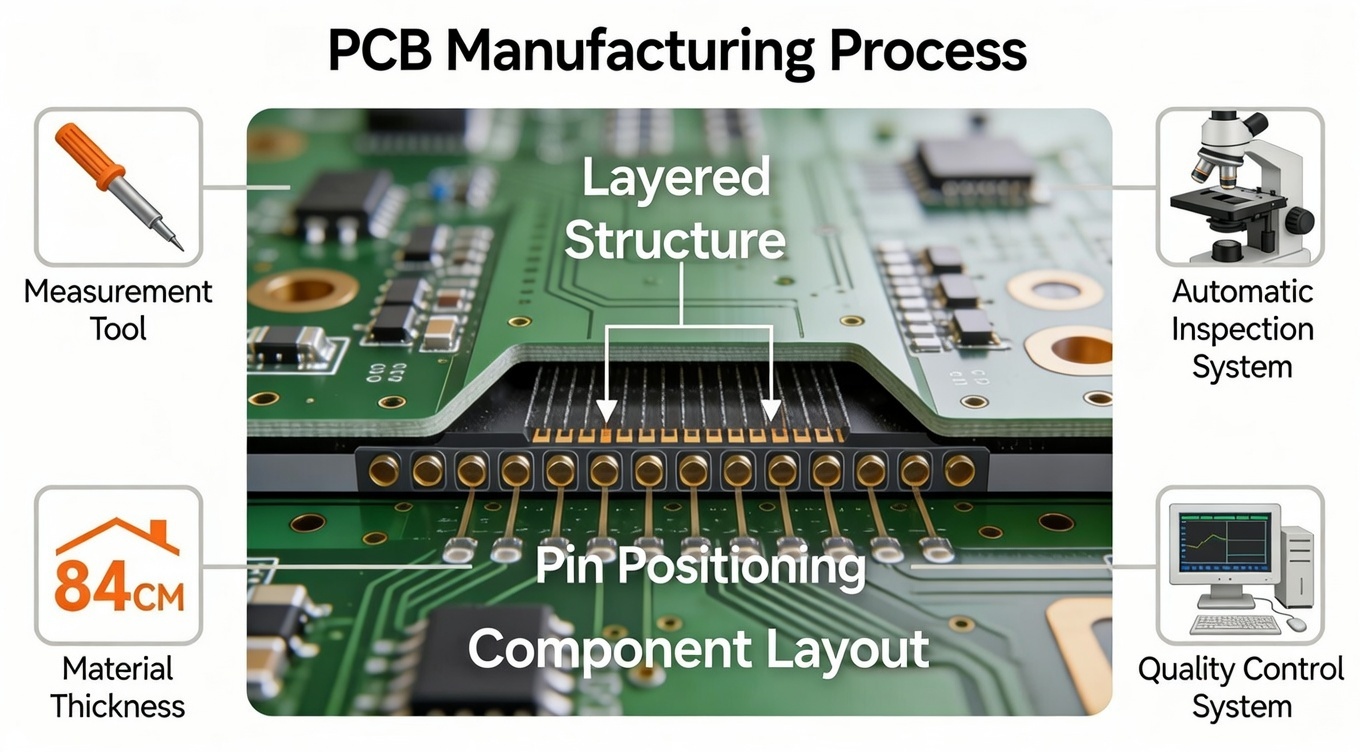
What Is Alignment Accuracy in Rigid-Flex PCB Manufacturing?
In rigid-flex PCB production, alignment accuracy refers to the precision with which the rigid and flexible layers are registered to each other during lamination and throughout drilling, imaging, and etching. Because rigid-flex boards combine different materials with different thermal expansion profiles and mechanical characteristics, even minute misregistration can cause failures in electrical continuity, signal integrity, or final assembly.
Achieving tight alignment tolerance—often specified in microns (μm) or mils (thousandths of an inch)—is a core capability in manufacturing complex rigid-flex structures. For example, modern processes frequently aim for layer-to-layer registration within ±0.05 mm (±50 µm), and advanced systems can meet ±25 µm or better.
This section sets the context for designers, procurement engineers, and OEM technical leads in the United States who need reliable rigid-flex PCB production for advanced applications in aerospace, medical, automotive, and high-speed electronics.
Why Alignment Accuracy Matters for Critical US Markets
For US manufacturers and designers, alignment precision in rigid-flex PCBs is not optional; it directly impacts product performance and regulatory compliance in demanding sectors:
- Medical devices require sub-50 µm registration precision to ensure life-critical functionality under mechanical stress.
- Aerospace and defense electronics demand extremely consistent layer alignment to sustain extreme vibration and thermal cycling.
- Automotive electronics (especially ADAS and EV powertrain systems) depend on precise registration for high-speed signal integrity and robustness.
- High-frequency and RF circuits suffer performance loss with poor alignment due to impedance discontinuities.
US procurement specifications increasingly assume IPC-based performance classes (e.g., Class 3) where tolerances are stringent, and visual inspections coupled with automated optical inspection (AOI) verify registration accuracy.
This section highlights why alignment accuracy influences reliability, yield rates, and life cycle performance in products destined for US and global markets.
US & Industry Standards for Alignment Accuracy
Industry compliance for rigid-flex PCB manufacturing is dominated by a suite of IPC standards, which US buyers and engineers routinely reference in RFQs, technical specifications, and supplier evaluations:
- IPC-6013 (Qualification & Performance): Defines performance classes and mechanical requirements for rigid, flex, and rigid-flex boards. Class 3 is typical for high-reliability designs.
- IPC-2223 (Design Standard for Flex & Rigid-Flex): Provides design and layout guidance that influences lamination scheduling, bend radius, and trace/via layout, indirectly affecting alignment outcomes.
- IPC-TM-650 Testing Methods: Includes peel strength and other tests indicating effective layer bonding, which correlates to alignment integrity.
Manufacturers targeting US markets will include specific tolerance requirements in specifications (e.g., ±25 µm for HDI drills, ±50 µm for layer registration, laser registration systems with precision around ±0.01 mm).
This section guides US engineers on interpreting IPC standards, what tolerance metrics matter for compliance, and how these parameters translate into procurement language.
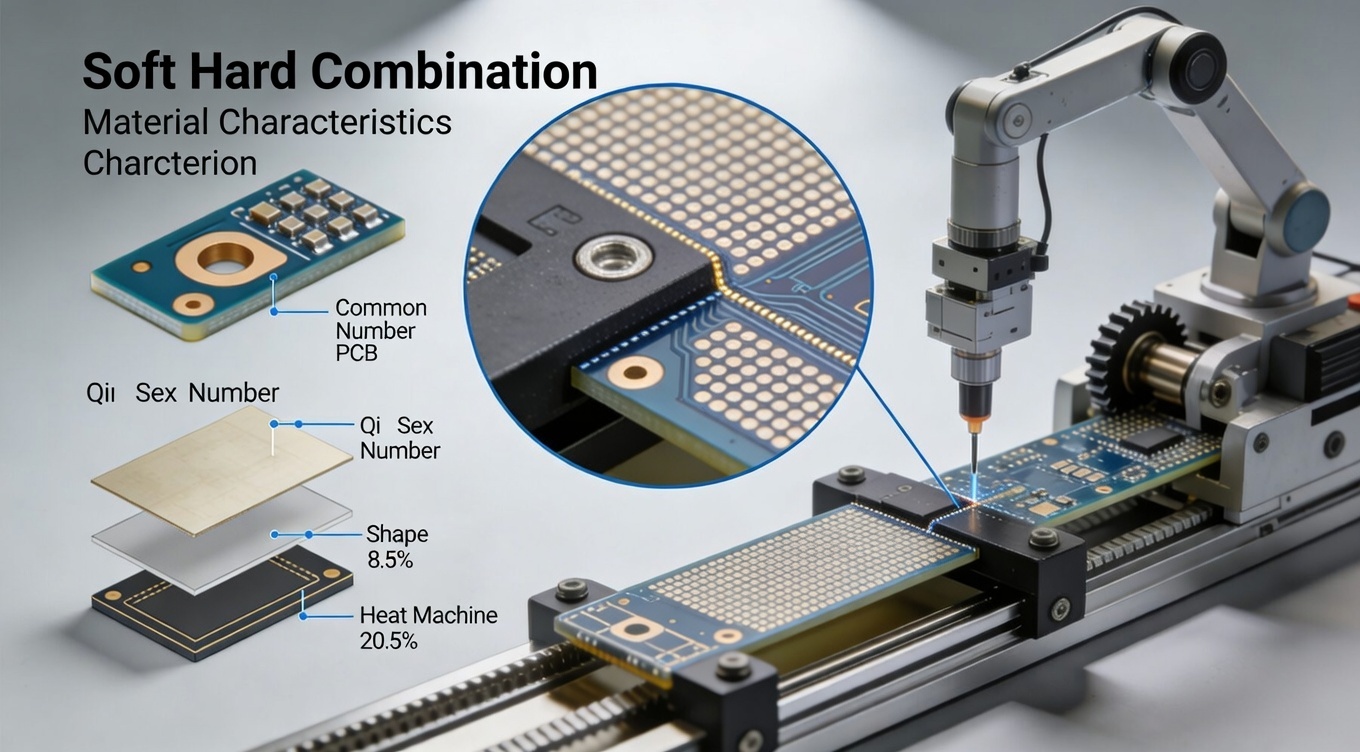
Key Factors Influencing Rigid-Flex PCB Alignment Precision
Several technical and process-driven factors determine whether a supplier can consistently meet alignment accuracy expectations:
1. Lamination & Thermal Control:
Accurate temperature and pressure profiles during lamination reduce material distortion and registration errors. Excessive heating/cooling rates can cause flex region deformation.
2. Automated Optical & Laser Alignment:
CCD vision systems and laser registration tools provide micron-level accuracy for layer stacking and drill registration.
3. Stack-Up Design & Material Selection:
Material coefficient of thermal expansion (CTE) mismatches require engineering compensation; selecting compatible prepregs and adhesives influences ultimate dimensional stability.
4. Inspection & Testing Protocols:
AOI, X-ray, and electrical tests validate alignment and connectivity, ensuring boards meet IPC performance class criteria and customer specifications.
5. Yield & Batching Control:
Processes like master board calibration, statistical process controls, and real-time monitoring help reduce batch variation and maintain tight tolerance yields.
This analysis helps US technical buyers differentiate suppliers based on measurable capabilities rather than generic claims.
How BESTFPC Ensures Alignment Precision beyond Industry Norms
At bestfpc.com, our rigid-flex PCB manufacturing process integrates advanced automation, real-time measurement systems, and stringent quality governance to support US buyers’ high precision requirements:
- Automated laser registration systems calibrated to meet ±0.02 mm alignment tolerances or better.
- In-house AOI and final inspection stations that immediately detect registration variance.
- Material engineering support to map CTE profiles and adhesives for stable lamination outcomes.
- US-centric technical support for specification alignment with IPC standards and design DFM advice.
Embedded internal links (GSC-driven, high-CTR) to boost engagement:
- Rigid-Flex PCB Capabilities & Tolerance Overview (internal bestfpc.com page)
- IPC-Compliant Manufacturing Standards Explained (internal technical page)
- Rigid-Flex vs. Standard Rigid / Flex Boards Comparison (internal blog)
This section aims to build trust and credibility (EEAT) by demonstrating BESTFPC’s alignment precision relevant to US procurement criteria.
Long-Tail Keywords and Phrases to Increase SEO Exposure
To further expand visibility and capture additional organic search demand, integrate long-tail phrases within the article where contextually suitable:
- high precision rigid-flex PCB USA manufacturer
- IPC-6013D alignment tolerance for rigid-flex PCB
- rigid-flex PCB ±25 µm registration tolerance
- medical grade rigid-flex circuit alignment standards
- rigid-flex PCB HDI alignment accuracy
- automotive rigid-flex PCB supplier US compliance
These terms help your content rank not only for broad queries but also deeper, lower-competition searches that purchase-ready engineers perform.
Conclusion: Choosing the Right High-Precision Rigid-Flex PCB Supplier
Alignment accuracy in rigid-flex PCB manufacturing is a defining factor in product performance and reliability for critical US sectors. By understanding IPC standards, real-world tolerance expectations, and precision engineering factors, technical buyers can choose suppliers that meet stringent requirements.
For US OEMs, working with a supplier like BESTFPC means:
- Verified manufacturing alignment precision aligned with IPC and performance class expectations.
- Transparent capability documentation and direct technical support.
- Continuous quality monitoring for high-reliability rigid-flex applications.
Engage with BESTFPC to optimize your rigid-flex PCB outcome, reduce product risk, and accelerate your time to market.


.png)
.png)
.png)
.png)

.png)